 Pin it
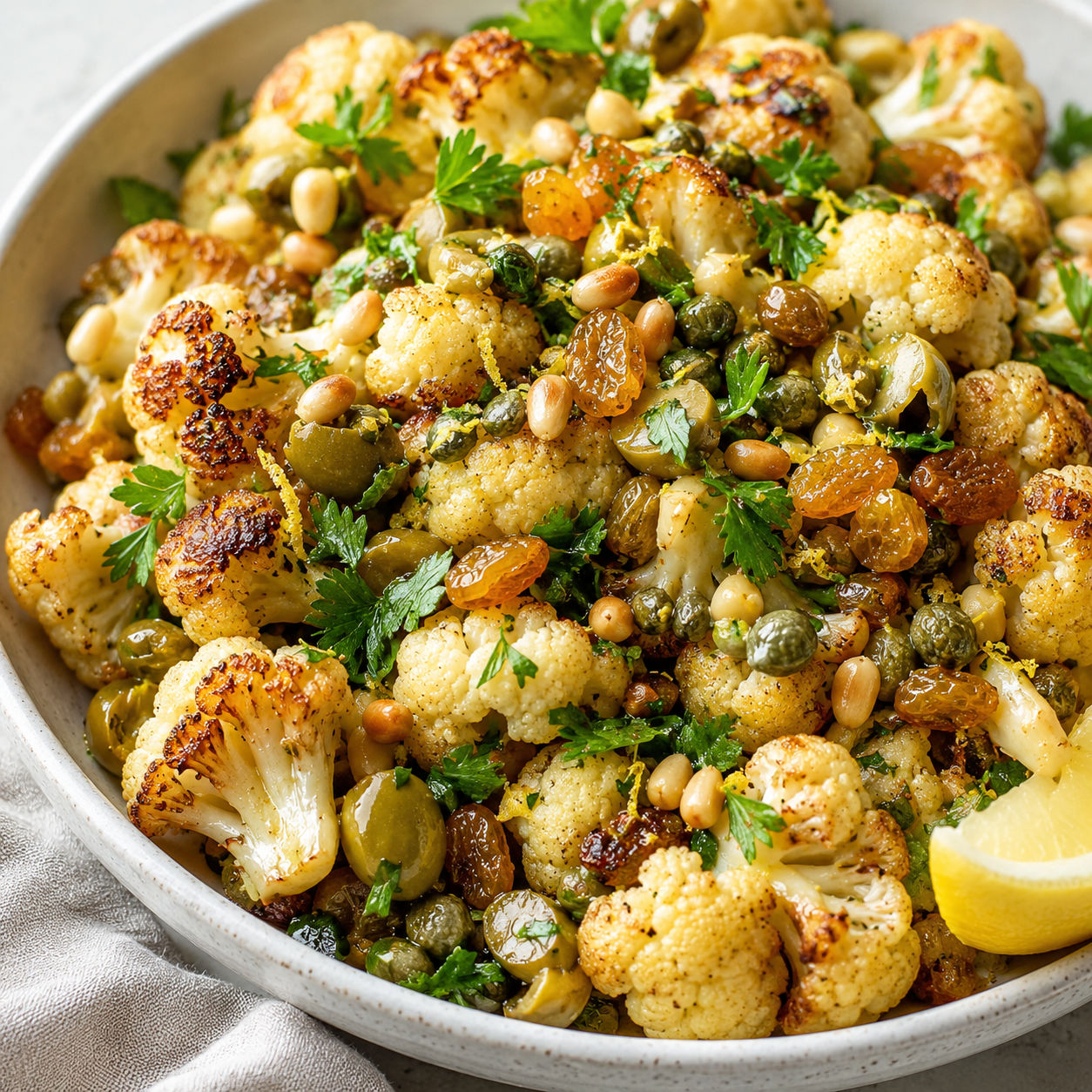
Sicilian Cauliflower with Fresh Flavors is the kind of side dish that wakes up a plain dinner plate. The cauliflower gets browned and nutty in the oven, then it meets lemon, parsley, capers, olives, sweet golden raisins, and toasted pine nuts.
I like it warm, but it is just as good at room temperature. That makes it useful for weeknights, holiday spreads, and any meal where you want a vegetable that has real personality.
Bright Sicilian Cauliflower Lineup
This recipe is built from pantry staples, but the details matter. Choose a firm cauliflower with tight florets, fresh parsley that smells green, and olives you would happily snack on.
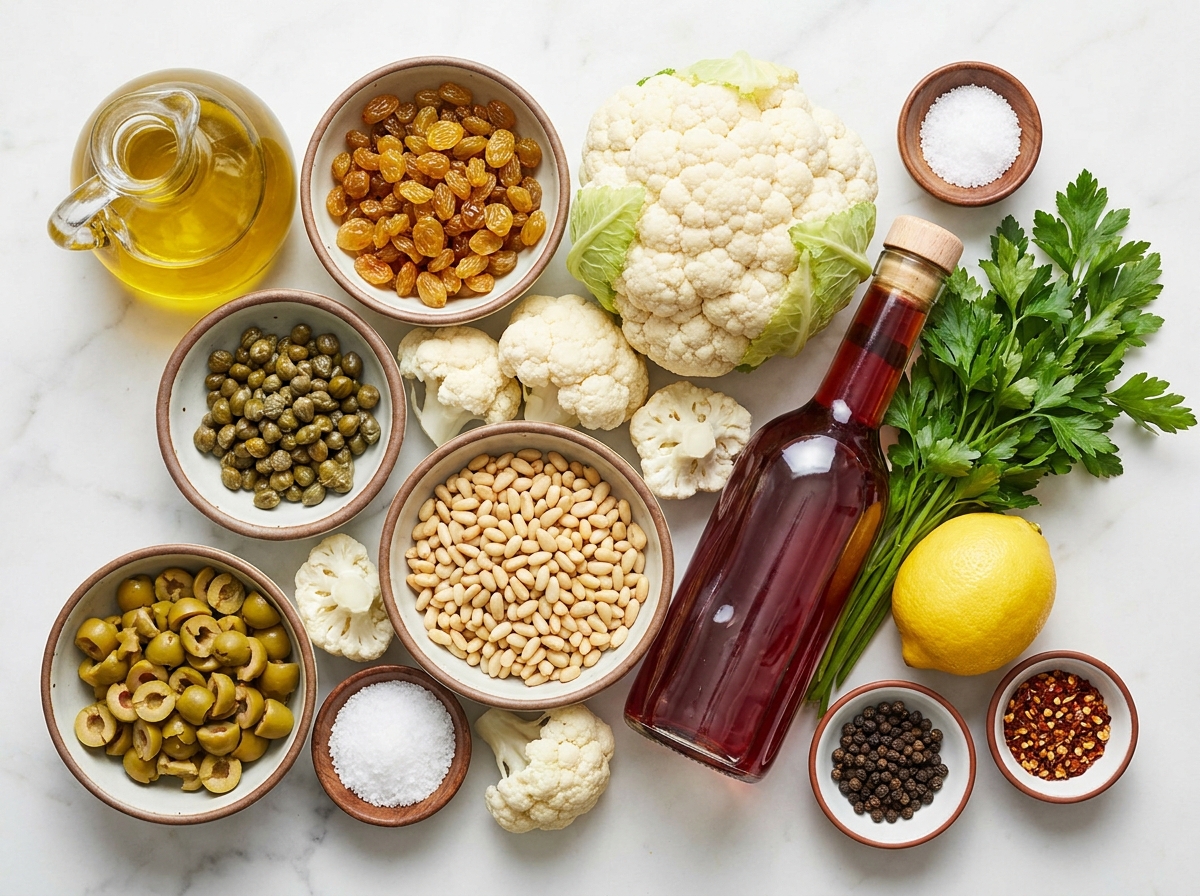
- Cauliflower. Roasts into sweet, nutty florets with browned edges and tender centers.
- Extra virgin olive oil. Helps the florets caramelize and carries the lemony dressing.
- Golden raisins. Add little pockets of sweetness that balance the capers and olives.
- Capers. Bring sharp, salty pop without making the dish heavy.
- Castelvetrano olives. Add a buttery brine and a pretty green color.
- Pine nuts. Give the finished bowl a soft crunch and toasted richness.
- Lemon and red wine vinegar. Keep the roasted cauliflower bright instead of flat.
- Fresh parsley. Adds the clean, fresh finish this dish needs.
Sicilian Cauliflower Method
- Heat the oven. Set the oven to 425°F and line a rimmed baking sheet so the cauliflower can roast hard without sticking.
- Season the florets. Toss cauliflower with olive oil, salt, pepper, and red pepper flakes. Spread it in one layer with space between the pieces.
- Roast until browned. Cook for 22-25 minutes, turning once, until the stems are tender and the edges are deeply golden.
- Wake up the raisins. Soak the raisins in hot water for a few minutes, then drain. They turn plump and blend into the dressing better.
- Toast the pine nuts. Stir them in a dry skillet until golden and fragrant. Watch closely because they darken fast.
- Toss and finish. Combine the hot cauliflower with raisins, capers, olives, lemon, vinegar, parsley, and pine nuts. Taste and add more lemon or salt as needed.
Sicilian Cauliflower with Fresh Flavors
The best bite has a little of everything. You want a browned cauliflower edge, a caper, a raisin, and a few pine nuts on the fork. That mix is why the dish feels lively even though the cooking is simple. The sweet and sour idea shows up in many Sicilian vegetable dishes, and cauliflower handles it well because it has enough body to stand up to brine and vinegar.
If you love cauliflower sides, try this next to crispy cauliflower with golden edges or use it as the brighter option beside easy cauliflower gratin with Gruyère. They live in the same vegetable family, but the mood is completely different.
Roast For Brown Edges
Cauliflower needs room on the pan. If the florets overlap, trapped steam softens the edges before they can brown. Use the largest rimmed sheet pan you own, or split the cauliflower across two pans if the head is big. The flat sides should touch the hot metal. That is where the deeper color happens.
Do not pull the pan too early. Pale cauliflower tastes mild, but golden cauliflower tastes nutty and sweet. For a whole-head version with a different presentation, the same browning idea carries into easy whole roasted cauliflower with garlic butter.
Smart Swaps That Fit
No Castelvetrano olives? Use green olives that are mild and meaty. Kalamata olives work too, but they make the dish sharper and darker. If you are out of capers, add extra olives and a splash more vinegar. Currants can stand in for golden raisins. They are smaller, so they scatter through the bowl more evenly.
For a more filling side, add one cup of drained chickpeas during the last 10 minutes of roasting. Cleveland Clinic has a Sicilian cauliflower version that also leans on chickpeas and Mediterranean add-ins at their recipe page.
Serving It Well
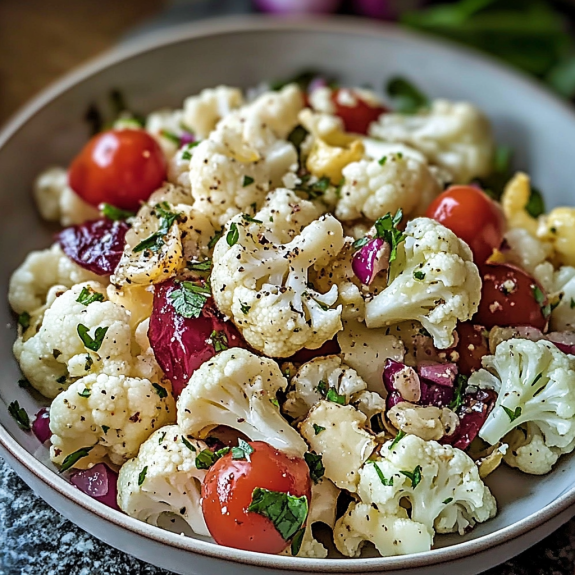
This side is flexible. Serve it warm with roast chicken or grilled fish, or let it cool and spoon it over dressed greens for a salad-style plate. It also sits nicely next to Sicilian cauliflower salad dish if you are building a vegetable-heavy spread.
A little bread on the table is useful because the lemony olive oil collects at the bottom of the bowl. If you want cheese, keep it light. A small shaving of pecorino works, but too much cheese dulls the fresh flavor.
Storage And Leftovers
Store leftovers in an airtight container in the refrigerator for up to 4 days. The cauliflower softens a bit, but the flavor gets deeper. Reheat it on a sheet pan at 375°F for 8-10 minutes, or serve it cold as a salad topping.
For produce handling and general storage guidance, the FDA keeps a useful food safety section at Buy, Store and Serve Safe Food. I would not freeze this dish. The cauliflower gets watery and the pine nuts lose their snap.
FAQs
- What makes this cauliflower Sicilian-style?
The flavor mix is what gives it a Sicilian feel. Sweet raisins, briny capers and olives, toasted nuts, herbs, lemon, and vinegar bring that sweet-sour balance often found in Sicilian vegetable dishes.
- Can I make Sicilian cauliflower ahead of time?
Yes. Roast the cauliflower and toast the pine nuts earlier in the day, then toss everything together before serving. It tastes good warm or at room temperature, so it is friendly for entertaining.
- What can I use instead of pine nuts?
Slivered almonds, chopped pistachios, or toasted walnuts all work. Toast them lightly first so they add crunch and a deeper nutty flavor.
- Can I leave out the raisins?
You can. Chopped dried apricots or currants are good substitutes, or you can skip the sweet element and add more olives for a saltier version.
- How do I keep roasted cauliflower from turning soggy?
Use a hot oven, dry the florets well, and spread them out on the pan. If the pieces are crowded, they steam before they brown.
- What should I serve with Sicilian cauliflower?
Serve it with roast chicken, grilled fish, pasta, or a simple bean salad. It also works as part of an antipasto-style meal with crusty bread and a sharp cheese.
