 Pin it
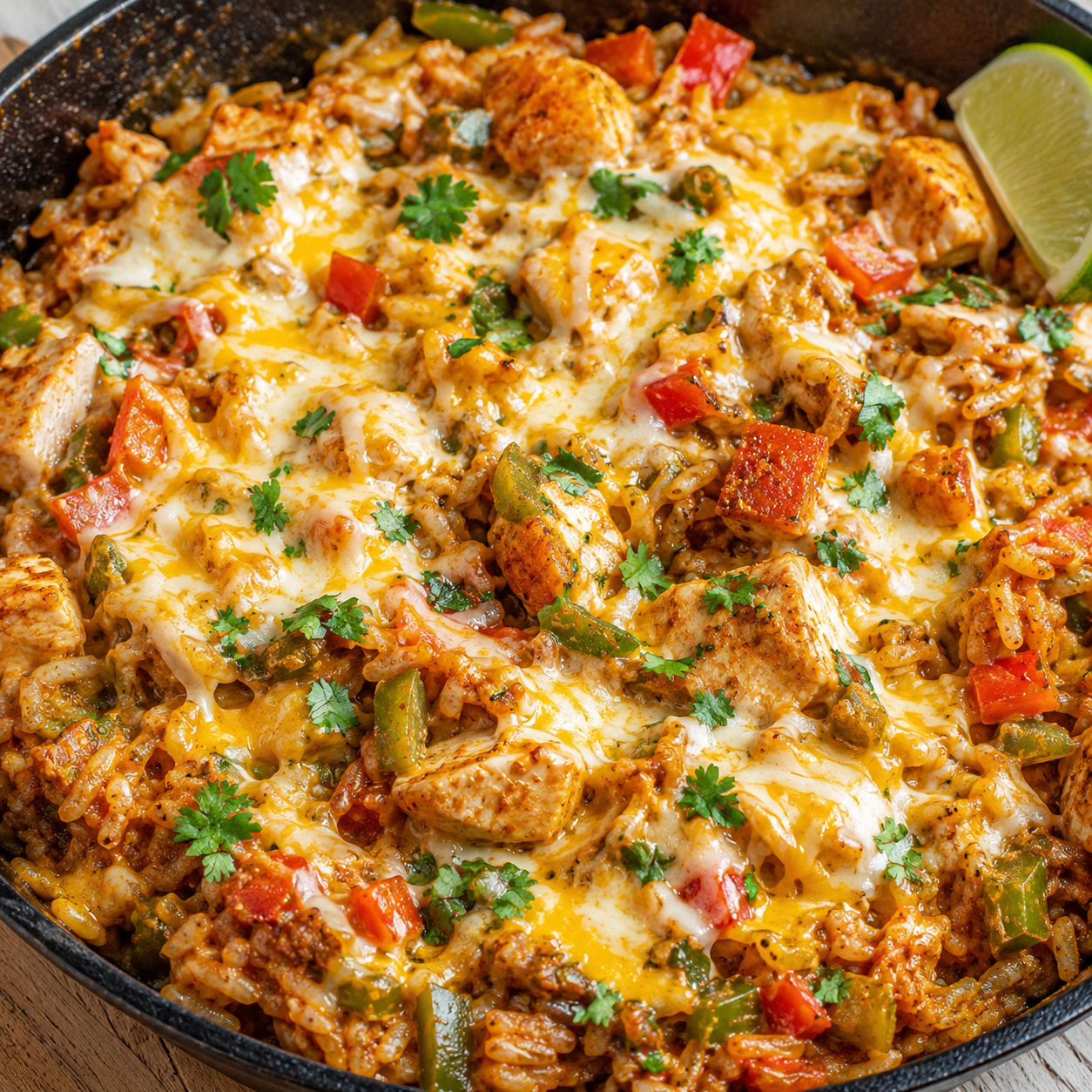
Cheesy Queso Chicken Fajita Skillet with Peppers and Rice is the kind of dinner that makes a weeknight feel handled. The chicken browns first, the peppers soften in those seasoned pan juices, and the rice cooks right in the same skillet.
I like this version because the queso goes in after the rice is tender. That keeps the sauce smooth instead of grainy, and it gives you creamy pockets of cheese without weighing down the whole pan.
Fajita skillet building blocks
Start with chicken pieces that are all about the same size so they cook evenly. Choose firm bell peppers with glossy skin, and use long-grain white rice because it stays fluffy instead of turning heavy.
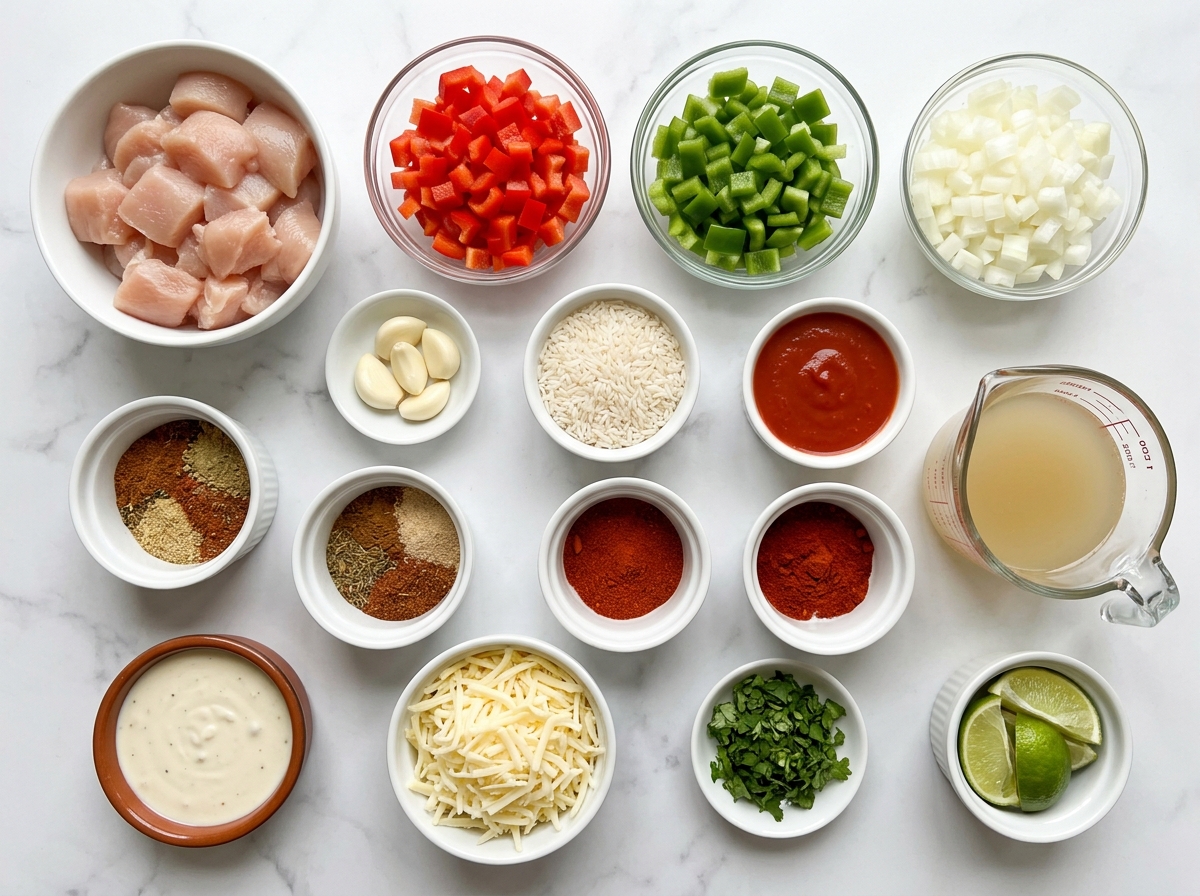
- Chicken breast or thighs. Bite-size pieces brown quickly and carry the fajita seasoning through the rice.
- Bell peppers. Red, green, or yellow peppers add sweetness and the classic fajita bite.
- Yellow onion. It softens into the skillet and gives the rice a savory base.
- Garlic. A short cook in the hot pan keeps it fragrant without burning.
- Fajita seasoning. Chili powder, cumin, paprika, and oregano give the skillet its warm Tex-Mex flavor.
- Long-grain white rice. It cooks right in the pan and soaks up the seasoned broth.
- Chicken broth and tomato sauce. They give the rice enough liquid and a gentle tomato flavor.
- Queso dip. Stirred in at the end, it makes the skillet creamy and cheesy.
- Cilantro and lime. Fresh finishes that wake up the rich queso.
Cook it in one skillet
- Season the chicken. Toss the chicken with fajita seasoning, salt, and pepper so every piece is coated before it hits the pan.
- Brown the chicken. Sear it in hot oil until the outside has color and the pieces are nearly cooked through, about 5 minutes.
- Soften the vegetables. Add the peppers, onion, and garlic. Cook until the onion smells sweet and the peppers are still a little crisp.
- Toast the rice. Stir in the rice for 1 minute so the grains pick up the oil and spices.
- Simmer covered. Add broth and tomato sauce, bring it to a steady simmer, then cover and cook until the rice is tender.
- Melt in the queso. Take the skillet off the heat and fold in warm queso. Rest for a few minutes, then finish with cilantro and lime.
Keep the rice fluffy
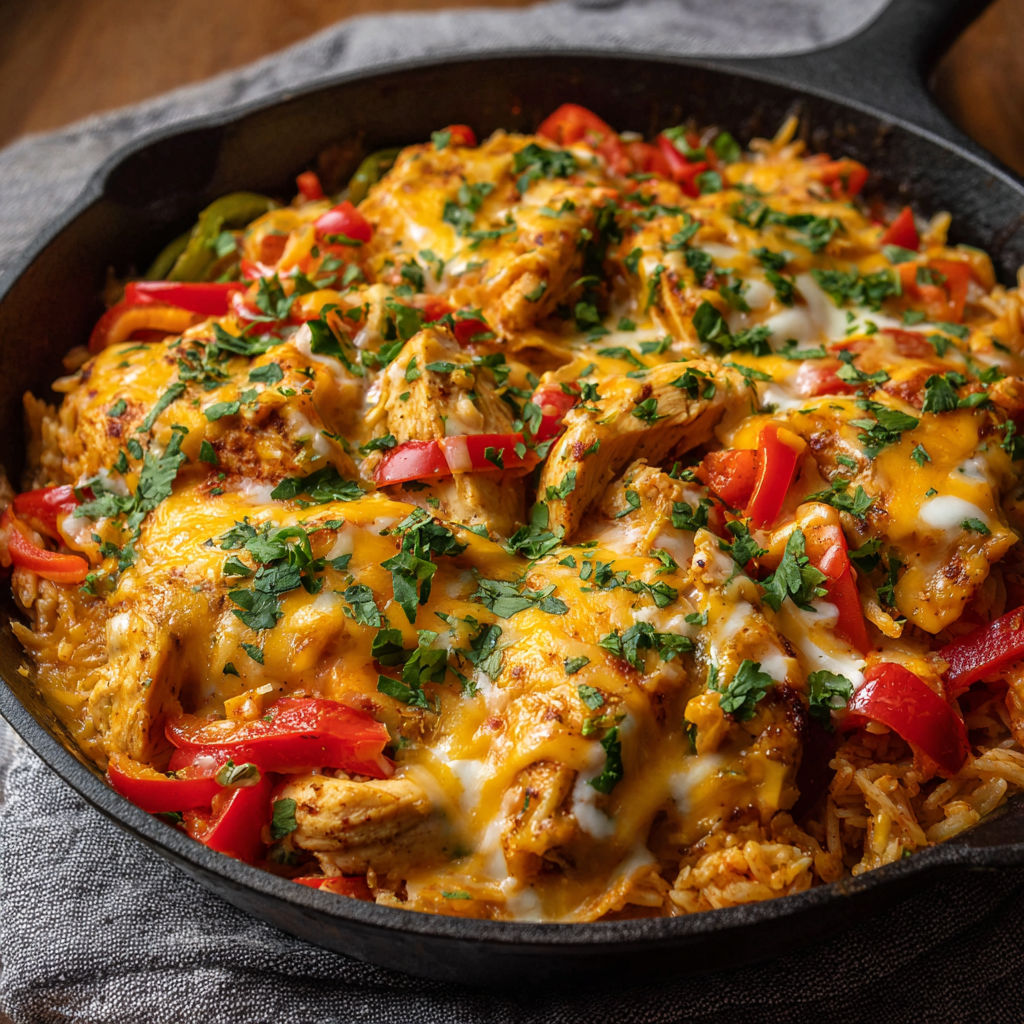
The rice is the part that decides if this skillet feels cozy or heavy. Rinse it first until the water runs mostly clear. That extra minute removes surface starch and helps the grains stay separate. Once the broth goes in, bring the skillet to a true simmer before lowering the heat. You want gentle bubbling under the lid, not a hard boil.
Try not to peek while it cooks. Lifting the lid drops the steam that the rice needs. If you want a similar one-pan dinner without the queso finish, try this one-pot chicken burrito bowl. It uses the same chicken and rice comfort with a different finish.
Make the queso behave
Queso can split if it boils hard, so add it after the rice is cooked and the pan is off the heat. Warm queso folds in more smoothly than cold queso straight from the fridge. If yours is very thick, loosen it with a tablespoon or two of broth before stirring it into the skillet.
This is also where you can control how cheesy the pan gets. Stir in most of the queso, then drizzle a little over the top for that glossy finish. For more creamy chicken and queso ideas, the queso chicken fajita skillet and cheesy chicken taco rice both lean into the same family of flavors.
Smart swaps and heat
Chicken thighs make the richest version, but chicken breast works well if you do not overcook it before the rice goes in. Red and yellow peppers taste sweeter. Green peppers bring that sharper fajita flavor. A poblano is nice if you want a smokier skillet without much heat.
For spice, add jalapeno with the onion or use pepper jack in place of a little queso. If you like steak fajitas, the same skillet idea works in this queso steak fajita skillet. For food safety, cook chicken to 165 F. The USDA has more poultry handling guidance at FoodSafety.gov and FSIS food safety resources.
Leftovers that stay creamy
This skillet keeps well because the rice soaks up flavor overnight. The tradeoff is that it also soaks up moisture. Store leftovers in a shallow airtight container once they cool, then reheat with a splash of broth, milk, or water. Warm it gently on the stove and stir often so the queso loosens instead of scorching on the bottom.
For meal prep, cook the full skillet but hold back a little queso. Add that reserved queso when reheating for a fresher, creamier texture. Serve leftovers with shredded lettuce, pico de gallo, or crushed tortilla chips. A squeeze of lime helps the second-day bowl taste bright again.
FAQs
- Can I use chicken thighs instead of chicken breasts?
Yes. Boneless skinless thighs are very good here because they stay juicy while the rice simmers. Cut them into bite-size pieces and cook them the same way as breast meat.
- What kind of queso works best?
Use a smooth refrigerated or jarred white queso dip that melts easily. A thicker queso can still work, but stir in a splash of broth before adding it so it folds into the rice instead of sitting in clumps.
- Can I make this skillet with brown rice?
Brown rice needs more liquid and a longer cooking time, so it is not a straight swap. For the easiest version, use cooked brown rice and reduce the broth to about 1/2 cup, then simmer only long enough to warm everything through.
- How do I store leftovers?
Cool the skillet, then store leftovers in an airtight container for up to 4 days. Reheat gently with a splash of broth or milk so the queso loosens back into a creamy sauce.
- Can I make it spicier?
Add diced jalapeno with the bell peppers or stir a pinch of cayenne into the fajita seasoning. You can also finish each serving with hot sauce so mild eaters can keep theirs softer.
- Why is my rice still firm?
The heat may have been too low, the lid may not have sealed well, or the rice may need a few more minutes. Add 2-3 tablespoons of broth, cover the skillet, and cook gently until the grains are tender.
