 Pin it
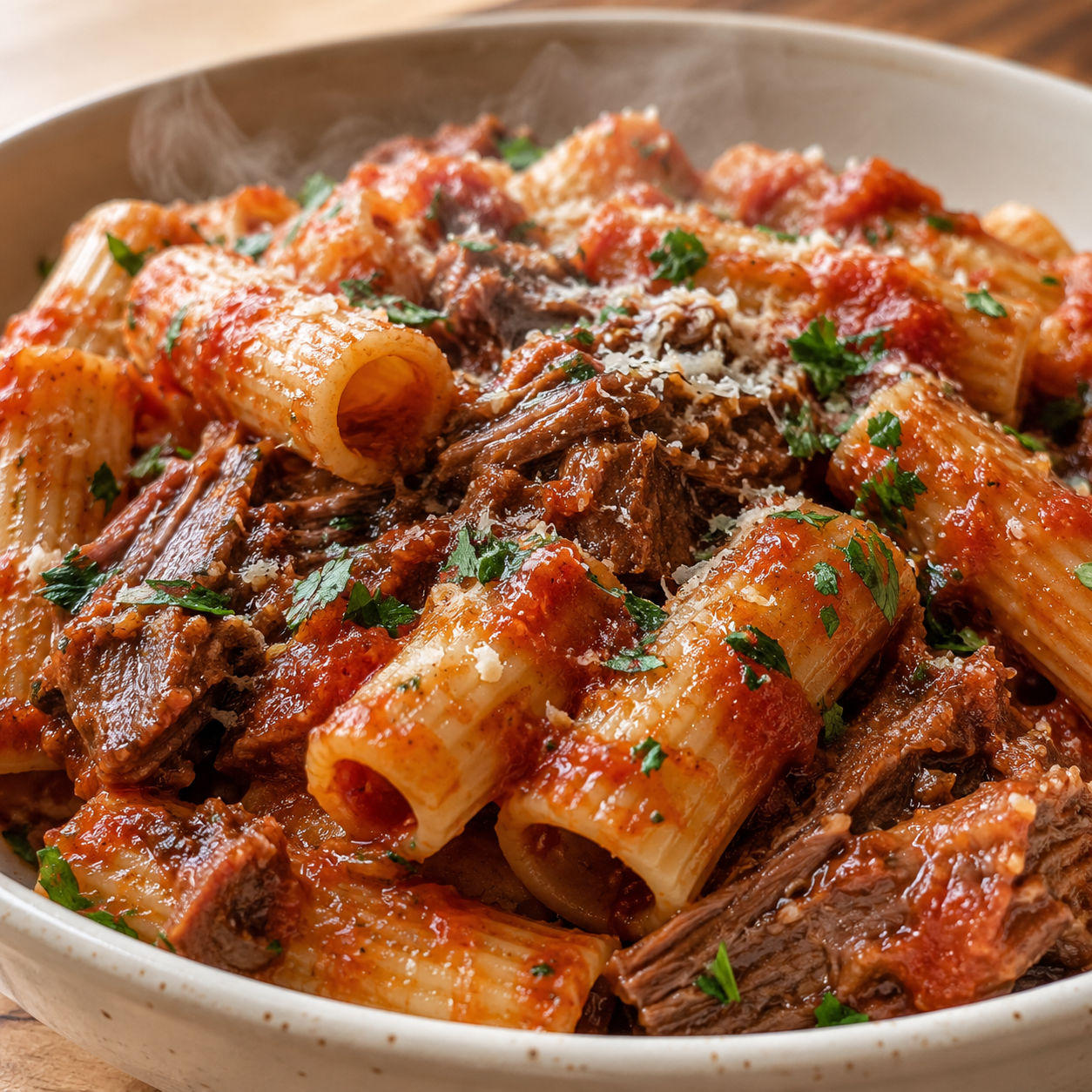
This is the kind of meal that turns a regular Sunday into an event. A whole beef chuck roast braises for hours in red wine and tomatoes until it falls apart with a fork. The sauce becomes thick and rich, clinging to rigatoni in a way that makes everyone at the table go quiet for a minute.
Stracotto literally means overcooked, but in the best possible way. The long, gentle heat breaks down tough connective tissue into silky gelatin while the wine, soffritto, and herbs build layers of flavor you cannot rush. It is the definition of Sunday supper.
I serve it over rigatoni because those fat tubes catch chunks of shredded beef and hold onto the gravy. You could use pappardelle, but there is something about rigatoni that feels right for this plate. Make it once and it will become your tradition too.
The Sunday sauce lineup
This sauce starts with a few humble ingredients that reward patience more than technique. Buy a well-marbled chuck roast and a bottle of dry red wine you would actually drink. The quality of both shows in the final pot.
- Beef chuck roast. All that marbling melts into the sauce and keeps the meat moist through the long braise.
- Dry red wine. A Chianti or Sangiovese adds acidity and depth. The alcohol cooks off and leaves behind a complex backbone.
- Crushed tomatoes. San Marzano tomatoes are sweeter and less acidic, which matters when they reduce for hours.
- Soffritto. The slow-cooked trio of onion, carrot, and celery creates the savory base every great Italian sauce needs.
- Tomato paste. Just a few tablespoons concentrate the flavor and give the sauce its rich color.
- Rigatoni. Wide tubes with ridges catch chunky sauce and shredded meat in every bite.
- Fresh rosemary and thyme. Woody herbs hold up to long cooking better than soft ones like basil.
How the magic happens
- Brown the roast. Pat the meat dry and sear it hard on all sides in a hot Dutch oven. That dark crust is the first layer of flavor.
- Build the soffritto. Cook onion, carrot, and celery in the same pot until they soften and start to caramelize. Scrape up every brown bit.
- Deglaze with wine. Pour in the red wine and let it bubble for a few minutes. The liquid lifts the fond off the bottom and forms the sauce base.
- Add tomatoes and herbs. Stir in tomato paste, crushed tomatoes, beef broth, rosemary, thyme, and bay leaves. Nestle the roast back into the pot.
- Braise low and slow. Cover and cook at 325°F for about three and a half hours until the meat shreds with a gentle pull of a fork.
- Toss with rigatoni. Cook the pasta in salted water until al dente. Shred the beef into the sauce, toss with the rigatoni, and finish with parsley and Parmesan.
Why chuck roast wins
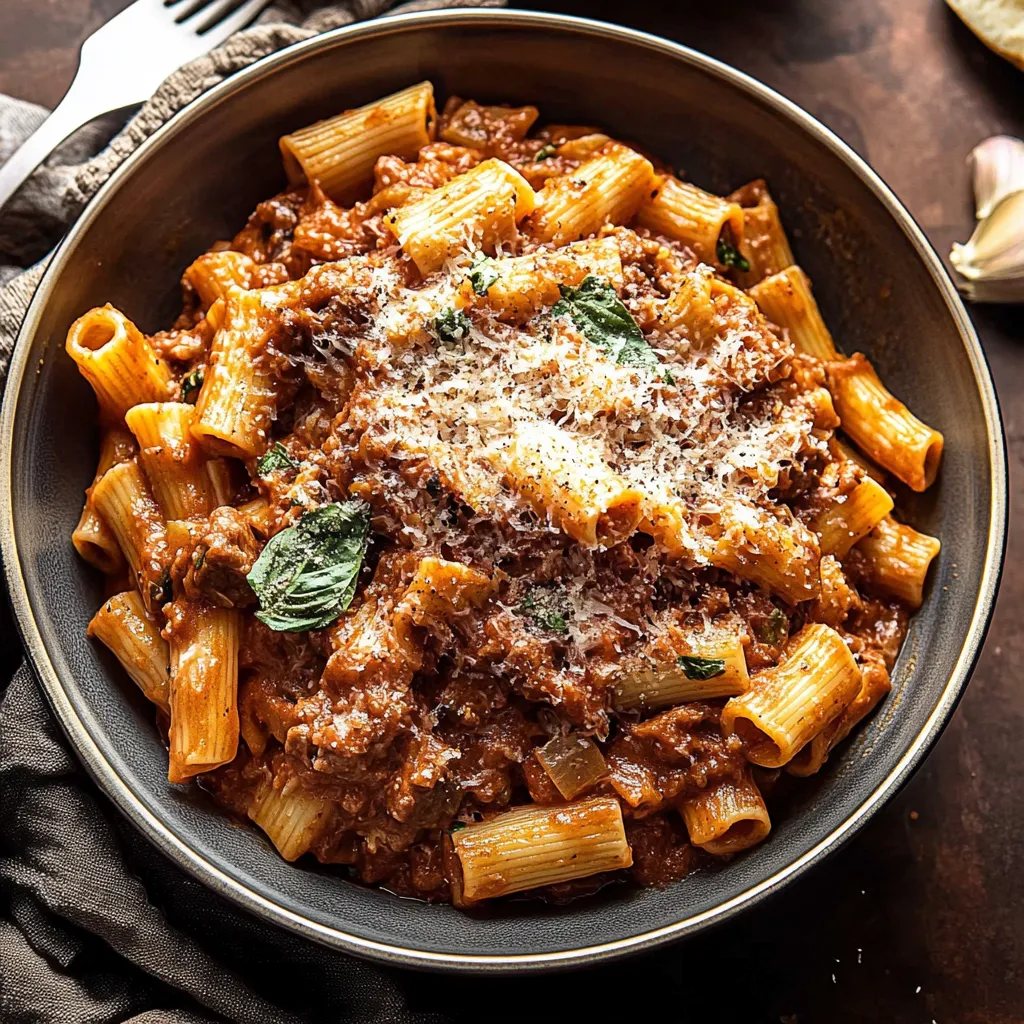
Chuck roast comes from the shoulder and is loaded with connective tissue and intramuscular fat. Those are the exact things that make it tough in a quick cook and magical in a braise. After three hours the collagen turns into gelatin and the meat becomes spoon-tender. You could use brisket or bottom round, but chuck gives you the most reliable texture and the richest sauce. If you want to compare cuts, our Italian pot roast uses the same method with slightly different aromatics.
The low and slow truth
Braising is not boiling. You want the liquid at a gentle shimmer, not a rolling bubble. A covered Dutch oven at 325°F keeps the temperature steady and prevents the meat from tightening up. Check the roast after three hours by piercing it with a fork. If it resists, give it another thirty minutes. Every oven runs a little differently. The USDA beef safety guidelines recommend cooking whole cuts of beef to 145°F, but a braise like this easily exceeds that and stays juicy because of the moist heat and fat.
Turning sauce into Sunday gravy
By the time the beef is done, the sauce will be thin and brothy. That is exactly what you want for pasta. Remove the meat and tent it with foil, then simmer the sauce uncovered on the stovetop while you boil the rigatoni. It reduces just enough to coat the tubes without becoming paste. If you prefer a thicker gravy, mash a few of the cooked carrots against the side of the pot. They dissolve into the sauce and add body without flour or cornstarch. This is the same trick that makes a great classic beef spaghetti sauce so rich and velvety.
Smart swaps that work
No red wine on hand? Replace it with extra beef broth and a tablespoon of balsamic vinegar for acidity. You can swap rigatoni for pappardelle or even polenta if you want a change. For a little heat, add a pinch of red pepper flakes with the garlic. And if you have a Parmesan rind tucked in your fridge, drop it into the braise. It melts into the sauce and adds a subtle savory depth that salt alone cannot replicate.
Storing and reheating leftovers
This dish tastes even better the next day after the flavors have melded. Store the sauce and pasta separately if you can. The sauce keeps in the fridge for up to four days or in the freezer for three months. Reheat gently on the stovetop with a splash of water or broth to loosen it. If you love leftover pot roast, try it spooned over creamy potatoes like our pot roast over mashed potatoes the next night.
A few favorite sides
A crisp green salad with lemon vinaigrette cuts through the richness of the meat. Warm crusty bread is non-negotiable for scraping the plate clean. If you want to keep the Italian theme going, a simple antipasto of olives and marinated vegetables works beautifully before the pasta hits the table. For another rigatoni-centered dinner, our cheesy beef rigatoni bake uses the same pasta shape with a completely different comfort-food angle.

FAQs
- Can I make this without wine?
Yes. Substitute the wine with an equal amount of beef broth and add one tablespoon of balsamic vinegar or red wine vinegar to keep the acidity. The sauce will still be rich and complex.
- What cut of beef works best?
Chuck roast is ideal because its fat and collagen break down into tender, juicy meat during a long braise. Brisket or bottom round also work but may dry out slightly if overcooked.
- Can I use a slow cooker instead of the oven?
Yes. After searing the meat and building the sauce on the stovetop, transfer everything to a slow cooker. Cook on low for eight to ten hours or on high for four to six hours until the beef shreds easily.
- How do I store and reheat leftovers?
Refrigerate the sauce in an airtight container for up to four days. Reheat gently on the stovetop with a splash of broth or water so the sauce does not tighten up.
- Can I use gluten-free pasta?
Yes. Any short tubular pasta or even pappardelle works well. Just cook it separately according to the package directions and toss it with the sauce right before serving.
- Why is my sauce thin?
The sauce is intentionally brothy when the beef comes out. Simmer it uncovered for ten to fifteen minutes to reduce, or mash a few cooked carrots into the liquid for natural thickness.
- Can I freeze the pot roast sauce?
Yes. Freeze the shredded meat and sauce together in portions for up to three months. Thaw overnight in the refrigerator and reheat slowly on the stove.
