 Pin it
Mediterranean Creamy Chicken with Broccoli and Orzo Skillet is the kind of dinner that feels cozy without turning heavy. The orzo cooks right in the pan, so it absorbs the garlic, chicken drippings, broth, and oregano instead of tasting like plain pasta with sauce on top.
I like this most on weeknights when I want one pan and a real meal. The broccoli stays green, the chicken gets a good golden edge, and a little lemon at the end keeps the Parmesan sauce from feeling flat.
Creamy skillet staples
The best version starts with small, practical choices. Use low-sodium broth so you can season as you go, cut the broccoli into small florets, and grate the Parmesan yourself for a smoother sauce.
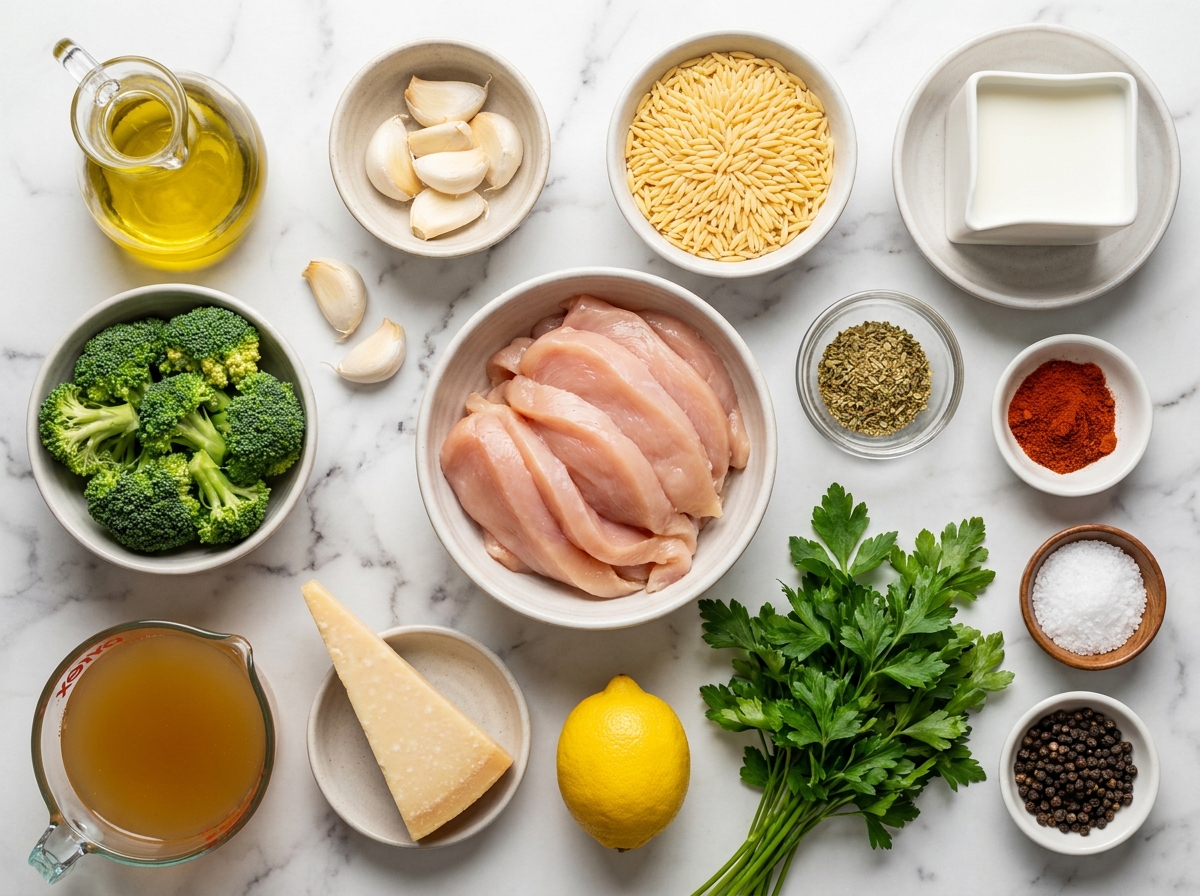
- Chicken. Boneless breasts or thighs bring lean protein and brown quickly when sliced into even strips.
- Orzo. This tiny pasta cooks fast and releases enough starch to help the sauce cling.
- Broccoli. Small florets steam right in the skillet and add a fresh green bite.
- Olive oil. Helps the chicken sear and keeps the flavor in a Mediterranean lane.
- Garlic. Fresh minced garlic seasons the orzo from the start.
- Oregano and paprika. Oregano adds herby warmth, while paprika gives the chicken color.
- Chicken broth. Cooks the orzo and pulls up the browned bits from the pan.
- Milk or half-and-half. Turns the pan liquid creamy without needing a full cream sauce.
- Parmesan. Adds salt, body, and a savory finish.
- Lemon and parsley. Brighten the skillet right before serving.
Build the skillet in layers
- Season the chicken. Toss the sliced chicken with olive oil, oregano, paprika, garlic powder, salt, and pepper so every piece gets coated before it hits the pan.
- Sear until golden. Cook the chicken in a hot wide skillet for 4-5 minutes per side. Move it to a plate as soon as it is cooked through so it stays tender.
- Toast the orzo. Add a little more oil, soften the garlic for about 30 seconds, then stir in the orzo until it smells lightly nutty.
- Simmer gently. Pour in the broth and scrape the bottom of the pan. Cook uncovered for 8-10 minutes, stirring often, until the orzo is just tender.
- Make it creamy. Lower the heat and stir in the milk and Parmesan. Add the broccoli and let it warm through until crisp-tender.
- Finish bright. Return the chicken and any juices to the skillet. Add lemon zest, lemon juice, and parsley, then taste for salt before serving.

Mediterranean chicken broccoli orzo skillet
The Mediterranean feel here comes from olive oil, garlic, oregano, lemon, and a measured hand with dairy. It is creamy, but it still tastes fresh. The Harvard Nutrition Source has a helpful overview of the Mediterranean diet pattern, and this skillet borrows that spirit with lean chicken, vegetables, herbs, and olive oil.
If you already love Mediterranean Creamy Chicken Orzo, this version leans harder into the broccoli and keeps everything in one skillet. The key is adding lemon at the end, not early. Cooked lemon can turn dull, but fresh lemon juice cuts through the cheese and wakes up the pan.
Keep the orzo silky
Orzo can go from creamy to sticky if the heat is too high or the pan gets too dry. Keep the simmer gentle and stir more often near the end. You are looking for tender pasta with a little loose sauce around it. If the orzo is still firm and the pan looks dry, add broth 2 tablespoons at a time.
Do not add the Parmesan over aggressive heat. Lower the burner first, then stir until the cheese melts into the milk and broth. This is the same idea that makes Creamy Broccoli Chicken Pasta taste smooth instead of clumpy.
Broccoli timing matters
Small broccoli florets are important because they cook quickly without turning gray. If your pieces are large, cut through the stems so they match the size of the orzo spoonfuls. Fresh broccoli needs only a few minutes in the creamy skillet. Frozen broccoli works too, but it will soften faster and may thin the sauce.
For brighter broccoli, add it after the orzo is nearly tender. Cover the skillet for 2 minutes, then uncover and stir. That short steam keeps the tops green and lets the stems soften just enough. For a lighter chicken and broccoli dinner without the creamy orzo, try Grilled Chicken and Broccoli Bowl with Garlic Sauce.
Easy swaps and add-ins
Chicken thighs make a richer skillet. Chicken breasts keep it lighter. Either one works as long as you slice the pieces evenly. You can swap half-and-half for milk if you want a thicker sauce, or use whole milk for a gentler finish. I would avoid skim milk because it can taste thin against the Parmesan.
For more color, stir in a handful of baby spinach at the end or add chopped roasted red peppers with the broccoli. A few sliced olives are good if you like a briny bite. If you want another creamy skillet with a similar weeknight rhythm, Quick Creamy Pesto Chicken with Spinach and Tomatoes uses the same fast chicken method.
Store and reheat gently
This dish is best right away, when the orzo is loose and glossy. Leftovers are still worth keeping. Chill them in a shallow container once the skillet cools, then store for up to 3 days. The pasta will keep drinking up sauce in the fridge.
To reheat, add a splash of broth or milk before warming. A skillet over low heat gives the best texture, but the microwave works if you pause and stir halfway through. I do not recommend freezing this one. Dairy sauces can split, and orzo tends to soften too much after thawing.
Summary
Serve this skillet hot from the pan with extra lemon and parsley. Add a splash of broth when reheating to bring the creamy orzo back to life.

FAQs
- Can I use chicken thighs instead of chicken breasts?
Yes. Boneless skinless thighs work very well here and stay juicy if the skillet runs a little hot. Slice them into bite-size strips and cook until they reach 165°F in the thickest piece.
- How do I keep orzo from sticking to the pan?
Stir it every couple of minutes while it simmers, especially near the end when the liquid gets creamy. A wide skillet helps the orzo cook evenly, and a small splash of broth will loosen anything that starts to catch.
- Can I make this with frozen broccoli?
Yes. Add frozen broccoli straight to the skillet during the last few minutes of cooking and cover the pan briefly. It may release a little extra water, so let the sauce simmer uncovered for a minute before adding the chicken back.
- Is this recipe gluten-free?
Regular orzo is wheat pasta, so the recipe is not gluten-free as written. Use a gluten-free orzo or a small gluten-free pasta and watch the liquid closely since different brands absorb broth at different speeds.
- What can I use instead of Parmesan?
Pecorino Romano gives a saltier sharper finish, so use a little less. For a milder sauce, try grated Asiago. Pre-shredded cheese is not ideal because it often melts grainy.
- How long do leftovers keep?
Leftovers keep for up to 3 days in an airtight container in the fridge. Reheat gently in a skillet or microwave with a splash of milk or broth because orzo thickens as it sits.
- What should I serve with chicken broccoli orzo?
This skillet is filling on its own. If you want something alongside it, serve a crisp cucumber tomato salad, warm pita, olives, or a simple lemony green salad.
