 Pin it
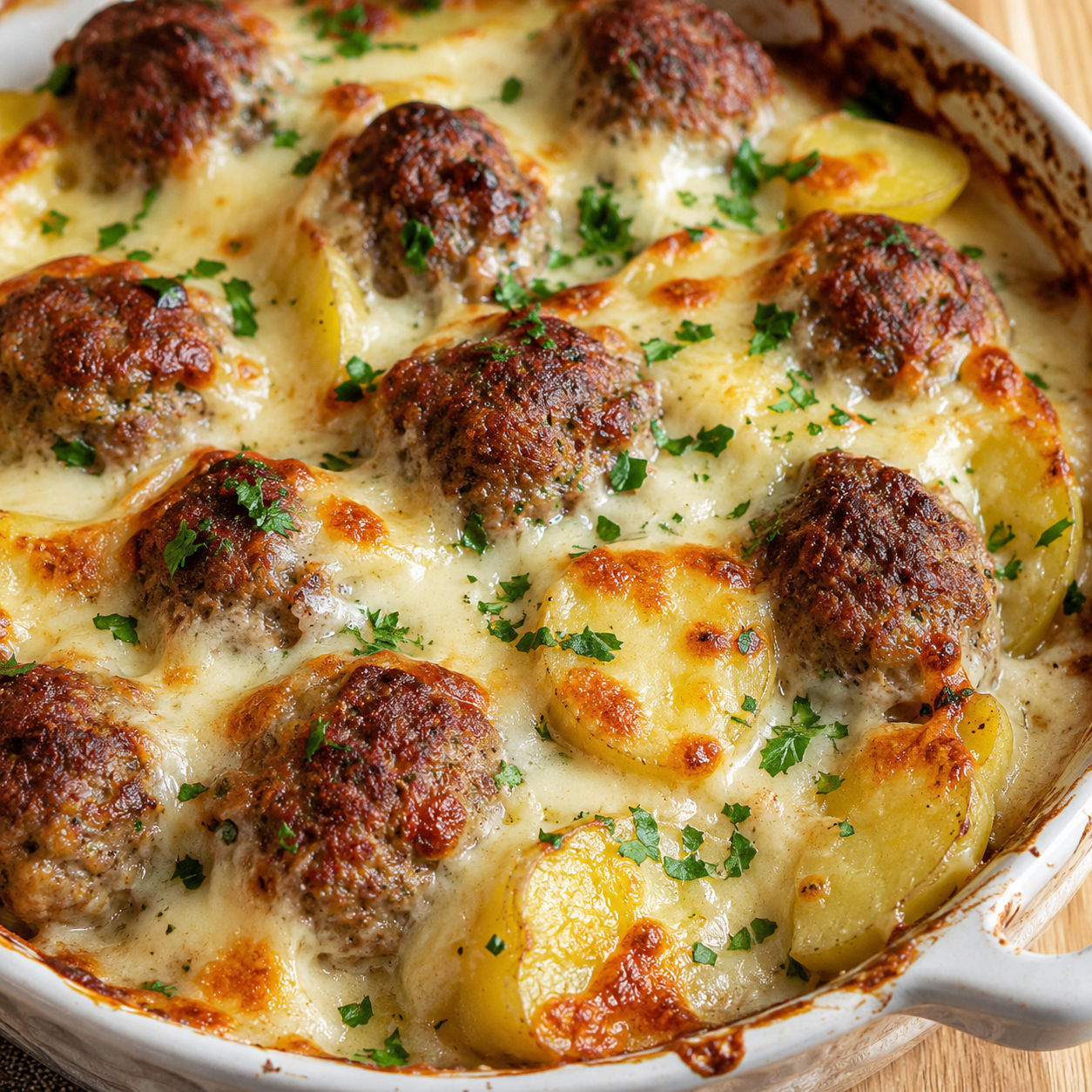
Meatballs baked with potatoes, cheese and creamy bechamel is the kind of dinner that makes the kitchen smell like someone spent all afternoon there. The truth is kinder. You parboil the potatoes, whisk a simple white sauce, and let the oven bring everything together.
I like this version because the potatoes catch the sauce around the edges while the meatballs stay juicy under the cheese. It feels rich, but it is built from plain ingredients that most home cooks already know well.
The Cozy Casserole Lineup
Use starchy potatoes that soften without falling apart and beef with a little fat for tender meatballs. Whole milk makes the bechamel smooth and creamy without needing heavy cream.
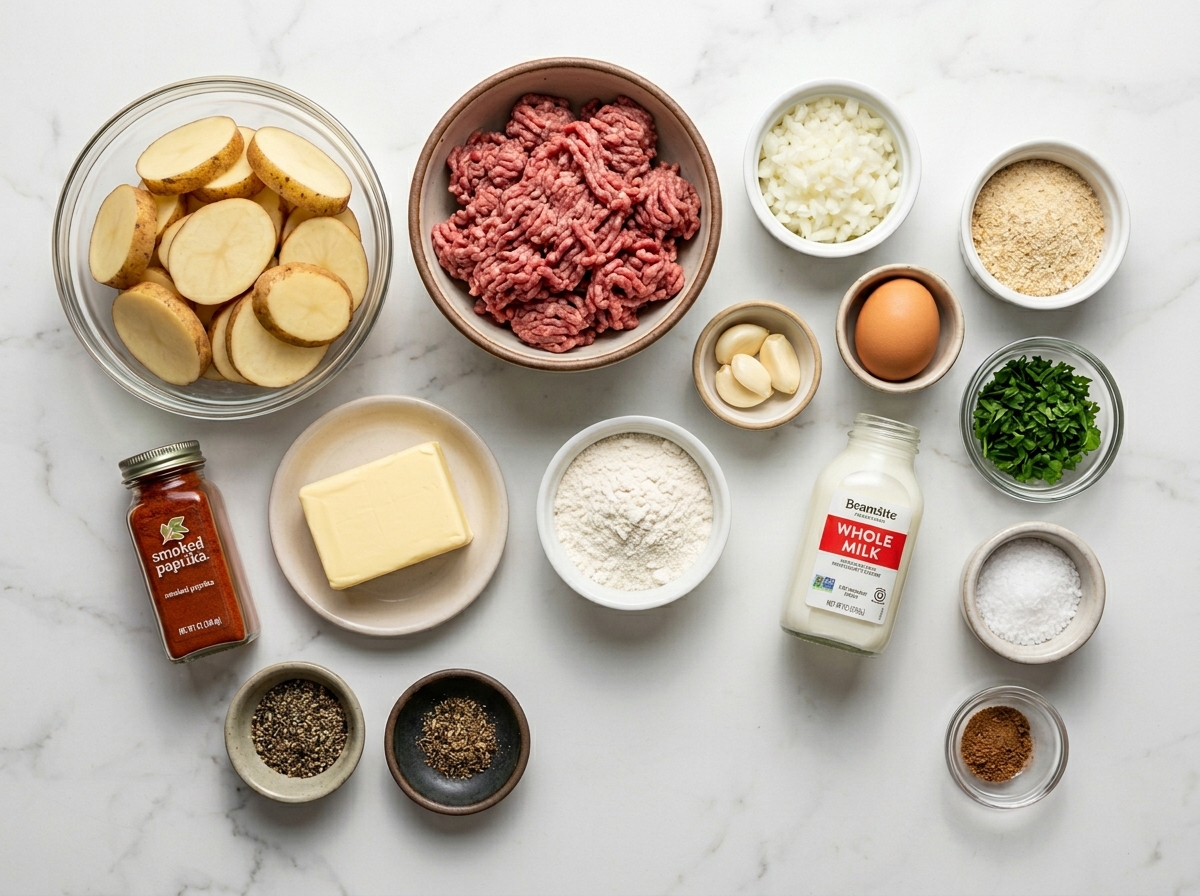
- Ground beef. Gives the meatballs savory depth and stays juicy when baked under sauce.
- Russet potatoes. Turn tender and soak up the bechamel around the edges.
- Onion and garlic. Season the meatballs from the inside instead of sitting only on the surface.
- Breadcrumbs and egg. Help the meatballs hold together while keeping them soft.
- Butter and flour. Create the roux that thickens the bechamel.
- Whole milk. Makes a creamy sauce that pours easily over the casserole.
- Nutmeg. Adds quiet warmth to the white sauce.
- Mozzarella. Melts into a stretchy, browned top.
Build It Before Baking
- Parboil the potatoes. Slice the potatoes about 1/4 inch thick and simmer them until barely tender. They should bend a little but not break apart.
- Shape the meatballs. Mix the beef, onion, garlic, egg, breadcrumbs, parsley, paprika, salt, and pepper. Roll into even meatballs so they bake at the same pace.
- Whisk the bechamel. Cook butter and flour together, then slowly whisk in warm milk. Simmer until it coats the back of a spoon.
- Arrange the dish. Layer potatoes in a greased casserole, nestle in the meatballs, and tuck extra potato slices between them.
- Sauce and cheese. Pour the bechamel over everything, then cover with mozzarella.
- Bake until bubbling. Cover first so the meatballs cook through, then uncover to brown the cheese.
Why Parboiling Matters
The biggest mistake with this kind of casserole is trusting raw potato slices to soften in time. The meatballs cook faster than the potatoes, and the cheese can brown before the center is ready. A short simmer fixes that. You want the slices tender at the edges but still firm enough to lift from the pot.
If you enjoy potato-heavy dinners, the same idea works in creamy garlic chicken potatoes and garlic parmesan chicken and potatoes. Give the potatoes a head start, then let the oven finish the job.
Tender Meatballs, Not Dense Ones
Mix the meatball ingredients just until they hold together. If you knead the beef like bread dough, the meatballs tighten up and lose their soft bite. I use 80 to 85 percent lean beef here because the fat keeps the center juicy while the sauce bakes around it.
Roll the meatballs small enough to cook safely in the casserole. About 1 1/2 inches across is right. The USDA recommends cooking ground meat to 160°F, and you can check the center of one meatball with an instant-read thermometer. Their food safety basics page is a useful reference.
Smooth Bechamel Without Stress
Béchamel is only butter, flour, and milk, but the order matters. Let the butter and flour cook together for a minute or two so the sauce does not taste pasty. Then add warm milk slowly and whisk until each splash disappears. A little nutmeg is classic with creamy white sauces, and it works especially well with potatoes.
The sauce should be pourable but not thin. If it looks like heavy cream, simmer it a few more minutes. If it gets too thick, whisk in a splash of milk before pouring it over the casserole.
Cheese Choices That Melt Well
Mozzarella gives this bake its stretchy, golden top. Low-moisture mozzarella browns better than fresh mozzarella because it has less water. If you want a stronger flavor, mix in a handful of provolone, gouda, or mild cheddar. Keep most of the topping mozzarella so the casserole does not turn oily.
For a cheesier table, pair this with something simple and green, or lean fully into comfort food with classic baked mac and cheese. If meatballs are the reason you are here, spaghetti and meatballs is the weeknight version to keep in rotation.
Make Ahead And Reheat
You can assemble the casserole up to one day ahead. Cover it tightly and refrigerate it before baking. Add 10 to 15 minutes to the covered baking time if it goes into the oven cold. I like to wait on the final handful of cheese until right before baking so it browns cleanly.
Leftovers reheat best covered in the oven. A small splash of milk around the edge helps the bechamel loosen again. The microwave works for a quick lunch, but use medium power and stop before the meatballs get tough.
Summary
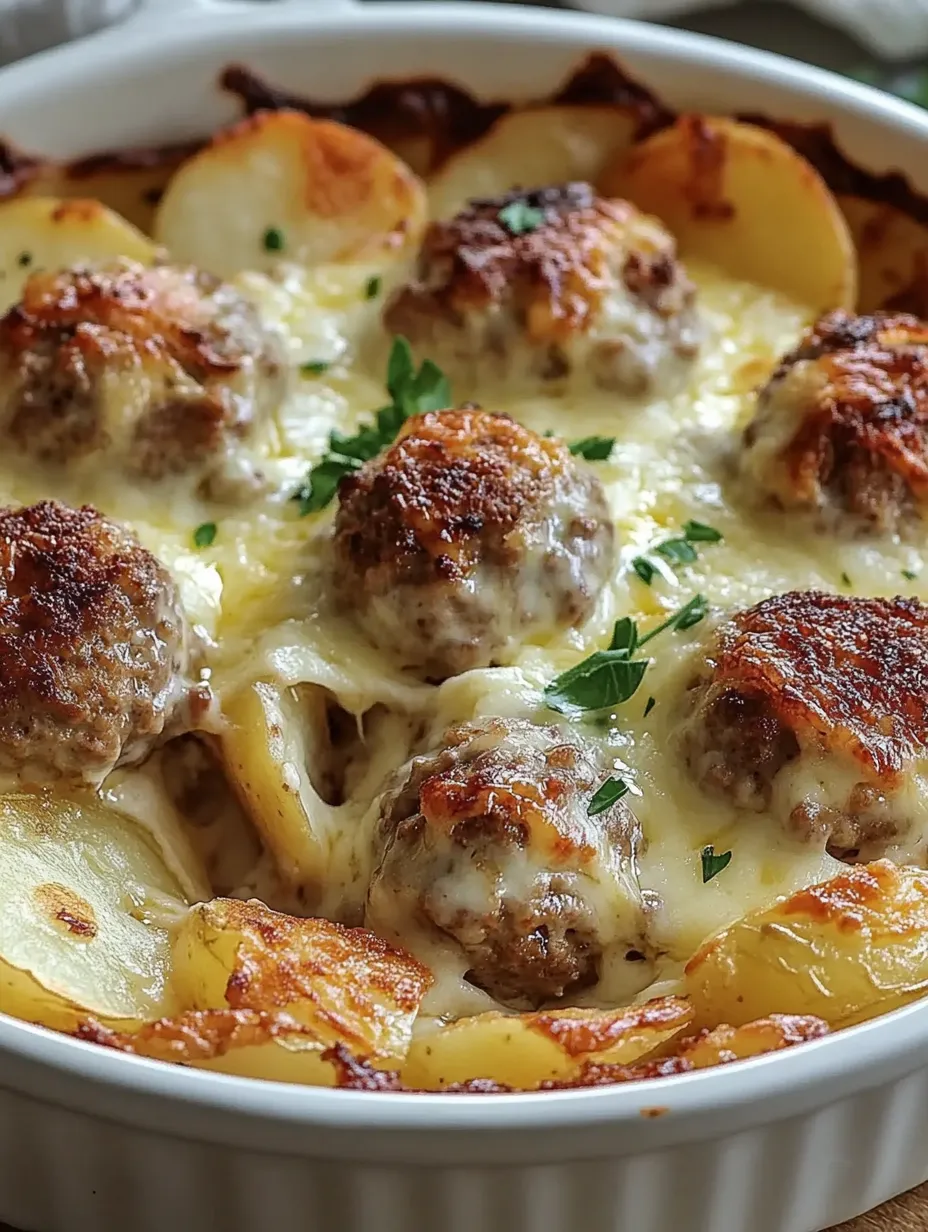
This baked meatball and potato casserole is rich, practical, and built for a family dinner. The key is parboiling the potatoes and making a bechamel thick enough to coat the meatballs without turning heavy.
FAQs
- Can I make this with frozen meatballs?
Yes, but use fully cooked frozen meatballs and thaw them first for the best texture. Bake the casserole until the sauce bubbles and the center is hot.
- Do the potatoes need to be cooked before baking?
They should be parboiled until just bendable. Raw potato slices can stay firm by the time the meatballs and cheese are done.
- Can I use ground turkey instead of beef?
Ground turkey works well. Add one extra tablespoon of olive oil or a splash of milk to the meatball mixture because turkey is leaner than beef.
- How do I keep the bechamel from getting lumpy?
Whisk the flour into melted butter until smooth, then add warm milk slowly. Keep whisking after each pour before adding more milk.
- How long do leftovers keep?
Store cooled leftovers in an airtight container for up to 3 days. Reheat covered in a 325°F oven with a spoonful of milk or water to loosen the sauce.
- What should I serve with this casserole?
A crisp green salad, steamed broccoli, or green beans keep the meal from feeling too heavy. Garlic bread also works if you want a full comfort-food dinner.
