 Pin it
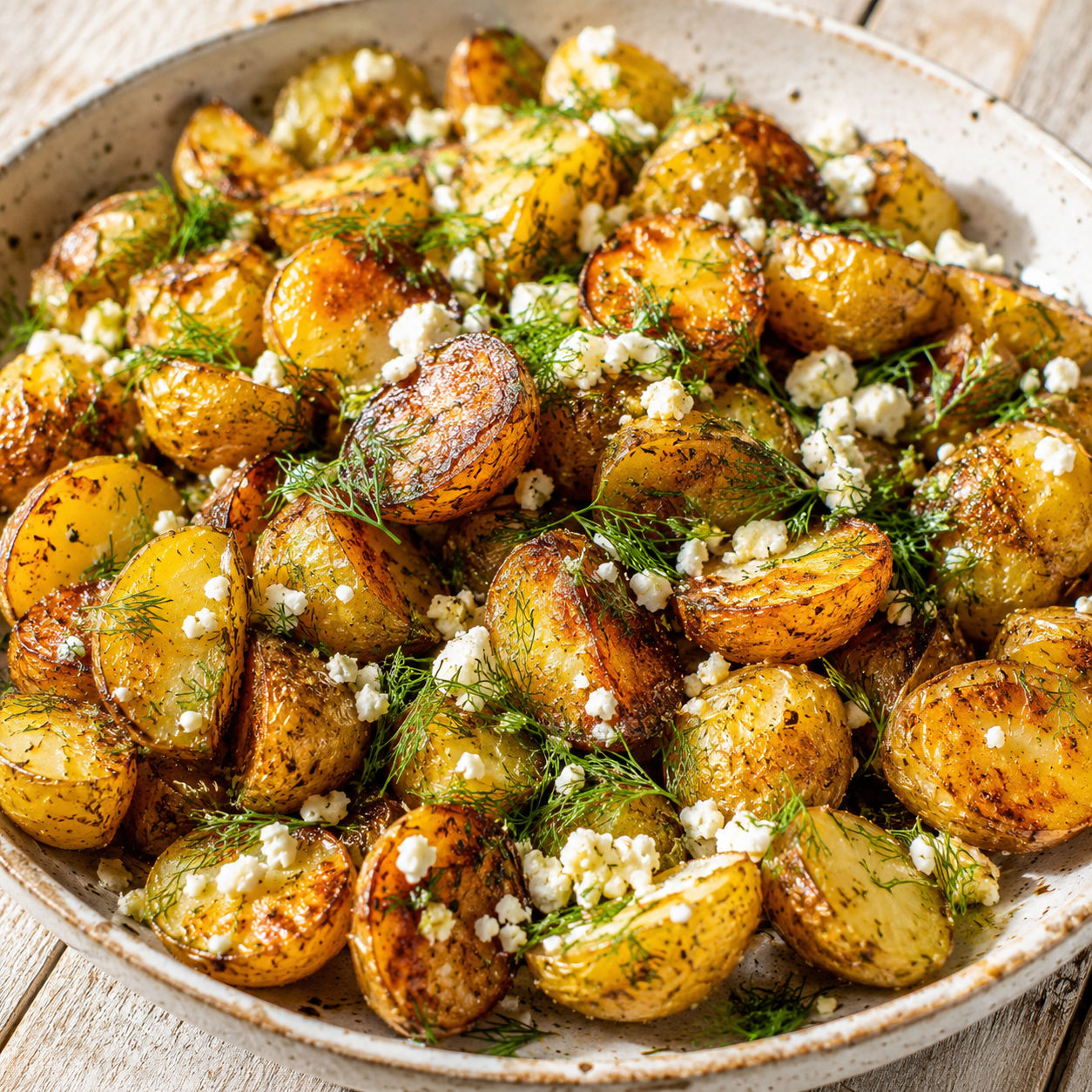
I make these potatoes when I want a side dish that actually gets eaten first. The combination of crispy edges, salty feta, and bright dill feels like summer even in the middle of winter.
The trick is simple. A screaming-hot sheet pan and cut-side-down placement do most of the work. The lemon stays punchy because you add it at the end, and the feta stays in distinct crumbles instead of disappearing into the pan.
What goes into the pan
This is a short list, so buy the best you can find. Block feta holds its shape better than the pre-crumbled kind, and fresh dill is non-negotiable. Dried dill tastes like hay here, so skip it.
- Baby Yukon gold potatoes. Their waxy flesh stays creamy inside while the cut sides turn deeply golden. Halve them so they lie flat.
- Extra-virgin olive oil. Coats the potatoes and helps transfer heat to every edge. A full quarter cup is not too much.
- Fresh garlic and lemon zest. Rubbed onto the hot potatoes, they give you fragrance without burning.
- Dried oregano. A classic Greek note that bridges the lemon and the feta.
- Block feta. Crumbled by hand into rough chunks that soften slightly but keep their shape.
- Fresh dill. Chopped just before serving so it stays bright and grassy.
- Lemon juice. Squeezed over the finished potatoes for sharpness that cuts the richness.
How they get crispy
- Heat the pan and oven. Place a large rimmed baking sheet on the middle oven rack and preheat the oven to 425°F (220°C). A hot pan jump-starts the browning the moment the potatoes hit the surface.
- Toss the potatoes. Cut the potatoes in half lengthwise. Toss them in a bowl with olive oil, lemon zest, garlic, oregano, salt, and pepper until every cut face is glossy.
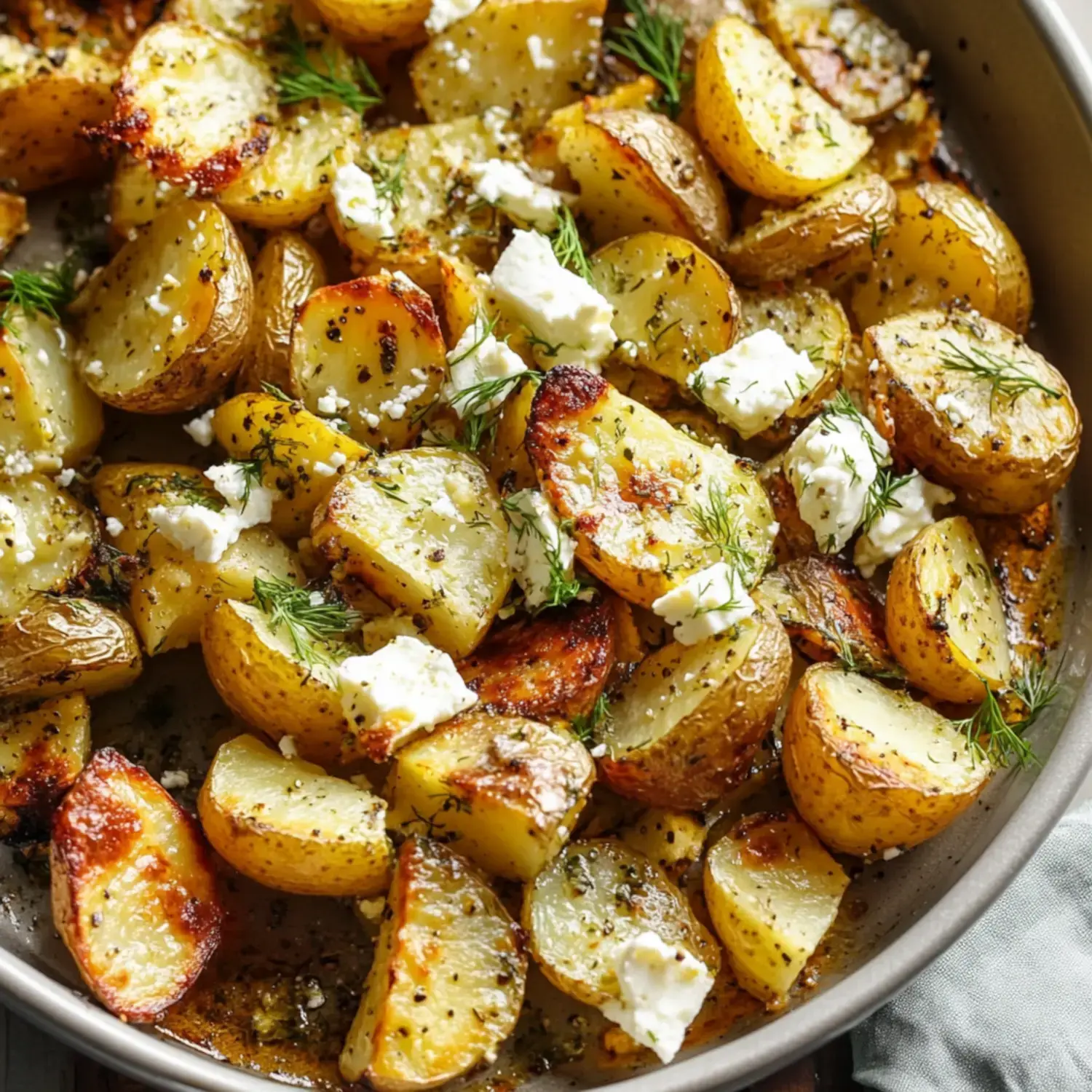
- Roast cut-side down. Remove the hot pan carefully and arrange the potatoes cut-side down in a single layer. Roast for 25 to 30 minutes without moving them, until the bottoms are deeply golden and crisp.
- Flip and finish roasting. Use a thin spatula to flip the potatoes and roast for another 5 to 10 minutes until the rounded sides are spotty and tender.
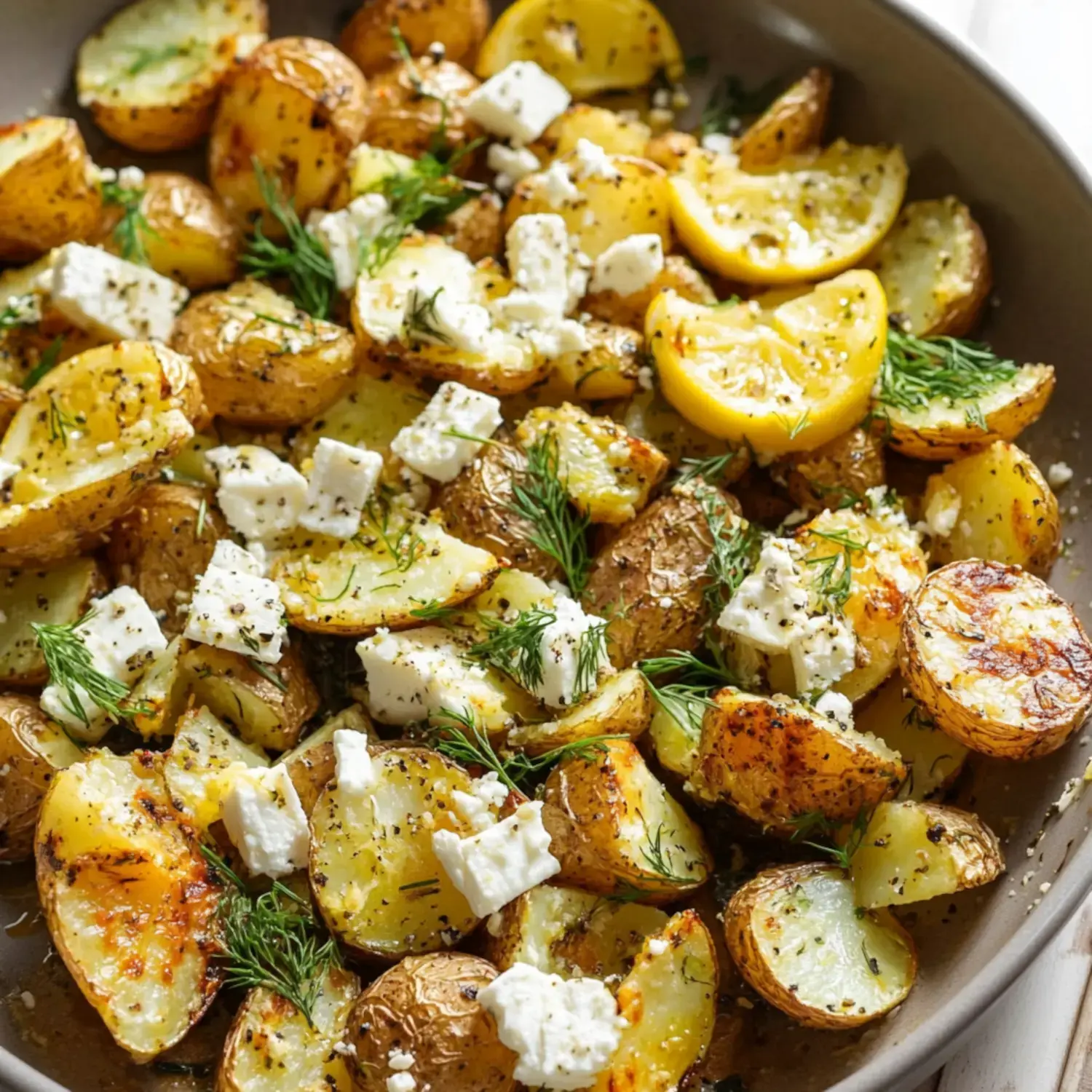
- Add feta and serve. Scatter the crumbled feta over the hot potatoes and return the pan to the oven for 2 minutes just to warm the cheese. Transfer to a platter and shower with fresh dill and a squeeze of lemon juice.
Why the hot pan matters
Starting potatoes on a cold sheet is one of the most common mistakes. They steam in their own moisture instead of searing. When the pan is already hot, the cut surface begins to caramelize instantly. That browning is where the flavor lives. I learned this method from testing roasted potatoes over the years, and it is the single biggest upgrade you can make without adding a single ingredient. For more on the science of roasting vegetables, see Serious Eats.
If you want to explore more roasted potato techniques, our Authentic Greek Potatoes use a braising method that is softer but just as flavorful. For something richer, try Roasted Potatoes with Baked Feta.
The lemon split trick
Zest the lemon into the oil before roasting. The heat toasts the oils in the zest and softens any bitterness. Save the juice for after the potatoes come out of the oven. If you roast lemon juice directly on the potatoes, the acidity can fight the browning reaction and leave you with pale, steamed spots.
This same split approach works anywhere you want real lemon flavor without sacrificing texture. If you love this brightness, our Lemon-Feta Potatoes use a similar profile with a slightly different roasting method.
Feta that holds its shape
Pre-crumbled feta is convenient, but it is coated in anti-caking agents that keep it from melting properly. Buy a block in brine and break it into rough chunks with your fingers. You want pieces big enough to see and taste, about the size of a chickpea. When you scatter them over the hot potatoes and give them two minutes in the oven, they soften at the edges and get a little creamy on the bottom while the tops stay intact.
Serving and pairing ideas
These potatoes are at their best straight from the oven, but they are surprisingly versatile. Serve them alongside grilled chicken or fish, or pile them into a bowl with a fried egg on top for a light lunch. They also work as a warm salad base. Toss them with a handful of arugula while they are still warm and the leaves wilt just slightly.
For a full Mediterranean spread, pair them with our Beet Salad with Feta Dill. The earthy beets and tangy dressing balance the richness of the roasted potatoes perfectly.
Storing and reheating
Leftovers keep in an airtight container in the refrigerator for up to four days. The texture changes, of course. The crispness softens, but the flavor deepens. Reheat them in a 400°F oven on a bare sheet pan for 10 to 12 minutes. The feta will melt more than it did the first time, which is not a bad thing. Avoid the microwave, which turns the potatoes mealy and sad.
FAQs
- Can I use russet potatoes instead of Yukon gold?
Yes, but the texture will be fluffier and less creamy inside. Russets also tend to fall apart when flipped, so handle them gently and consider peeling them first.
- Do I have to preheat the baking sheet?
No, but your potatoes will take longer to brown and may steam before they crisp. If you skip this step, add five to ten minutes to the first roast and do not crowd the pan.
- Can I make these ahead for a party?
You can roast them an hour ahead and hold them uncovered in a warm oven. Add the feta and dill just before serving so the cheese looks fresh and the herbs stay green.
- What if I only have dried dill?
Dried dill lacks the bright, grassy punch this dish needs. If fresh dill is unavailable, use fresh parsley or mint instead. Dried oregano is fine because it goes into the oil before roasting.
- Are these potatoes gluten-free?
Yes, naturally. Potatoes, olive oil, lemon, feta, and dill contain no wheat or gluten. Just check that your dried oregano is not mixed with any anti-caking agents that could contain trace gluten if you are highly sensitive.
- Can I use a different cheese?
Goat cheese works well and softens into little creamy pockets. Ricotta salata is another good option, though it will not melt at all. Avoid mozzarella, which becomes rubbery under dry roasting heat.
