 Pin it
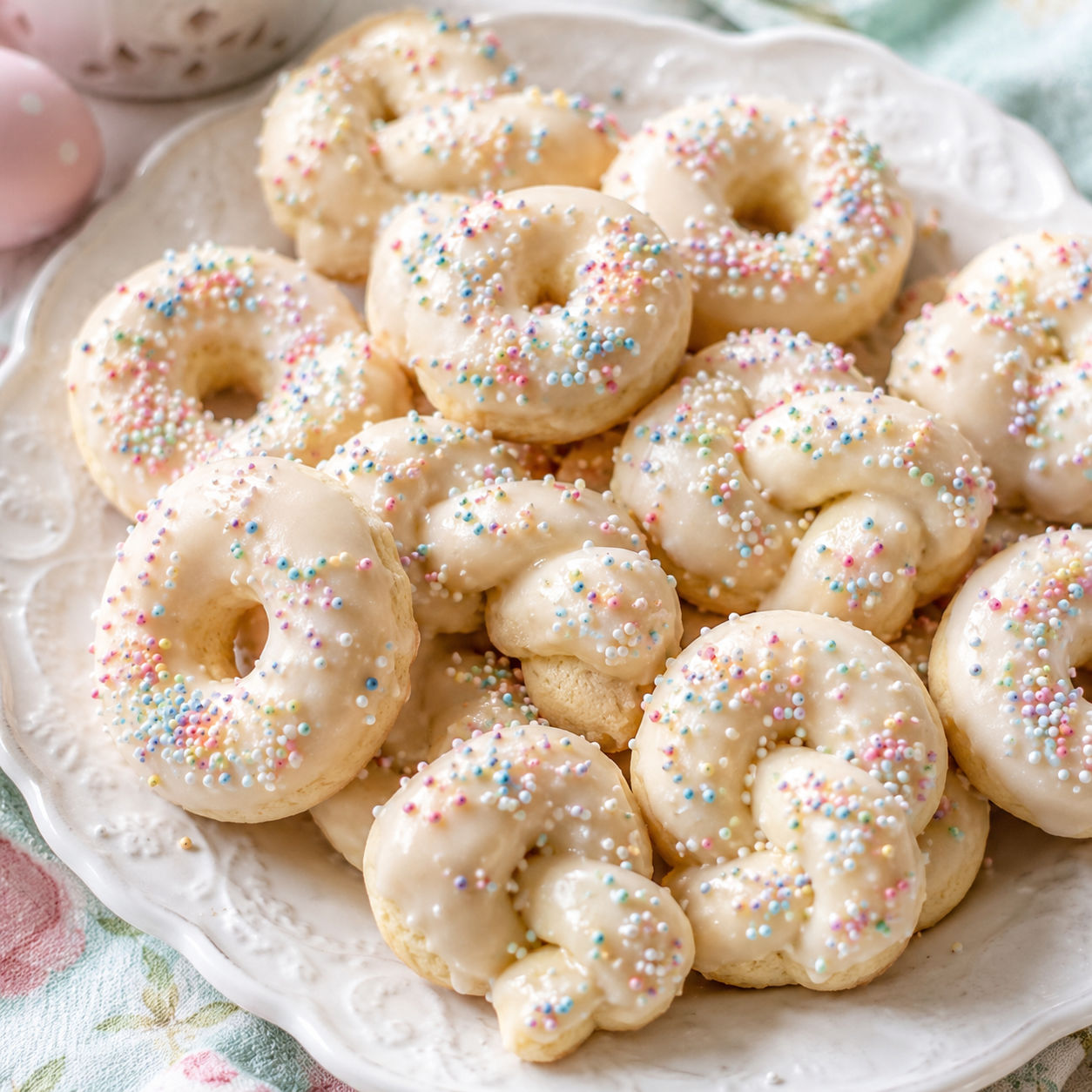
Italian Easter Cookies are the kind of holiday cookie that looks cheerful before anyone takes a bite. The dough is soft and lightly sweet, with lemon zest in the background and a thin glaze that sets into a delicate shell.
I like these shaped as little rings and knots because they feel homemade in the best way. They do not need fussy decorating. A quick dip in icing and a pinch of pastel sprinkles give them that bakery-tray look.
The Easter Cookie Lineup
The best batch starts with simple baking staples and fresh citrus. Use room temperature eggs and butter so the dough mixes evenly and shapes without cracking.
A light hand matters here. These cookies should taste delicate, not dense.
- All-purpose flour. Gives the cookies their structure while keeping the crumb tender.
- Baking powder. Adds a gentle lift so the cookies bake up soft instead of hard.
- Unsalted butter. Brings richness and a clean dairy flavor that works well with lemon.
- Granulated sugar. Sweetens the dough without making the cookies sticky.
- Eggs. Bind the dough and give the cookies their soft, pale crumb.
- Milk. Loosens the dough just enough for easy shaping.
- Lemon zest. Adds fresh aroma without making the dough sour.
- Vanilla or anise extract. Vanilla keeps them gentle, while anise gives them a more old-school Italian flavor.
- Powdered sugar. Turns into a smooth glaze that sets with a light crackle.
- Pastel sprinkles. Give the cookies their Easter color and a little crunch.
Shape Italian Easter Cookies
- Mix the dry ingredients. Whisk flour, baking powder, and salt so the lift is evenly spread through the dough.
- Cream the butter and sugar. Beat them until smooth and a little lighter, then mix in the eggs, milk, lemon zest, and extract.
- Bring the dough together. Add the flour mixture and mix only until no dry streaks remain. Chill the dough briefly so it is easier to handle.
- Form the cookies. Roll small pieces into ropes and shape them into rings, knots, or twists. Keep them about the same size so they bake evenly.
- Bake lightly. Bake until the bottoms are faintly golden and the tops look set, about 10-12 minutes. Do not wait for deep browning.
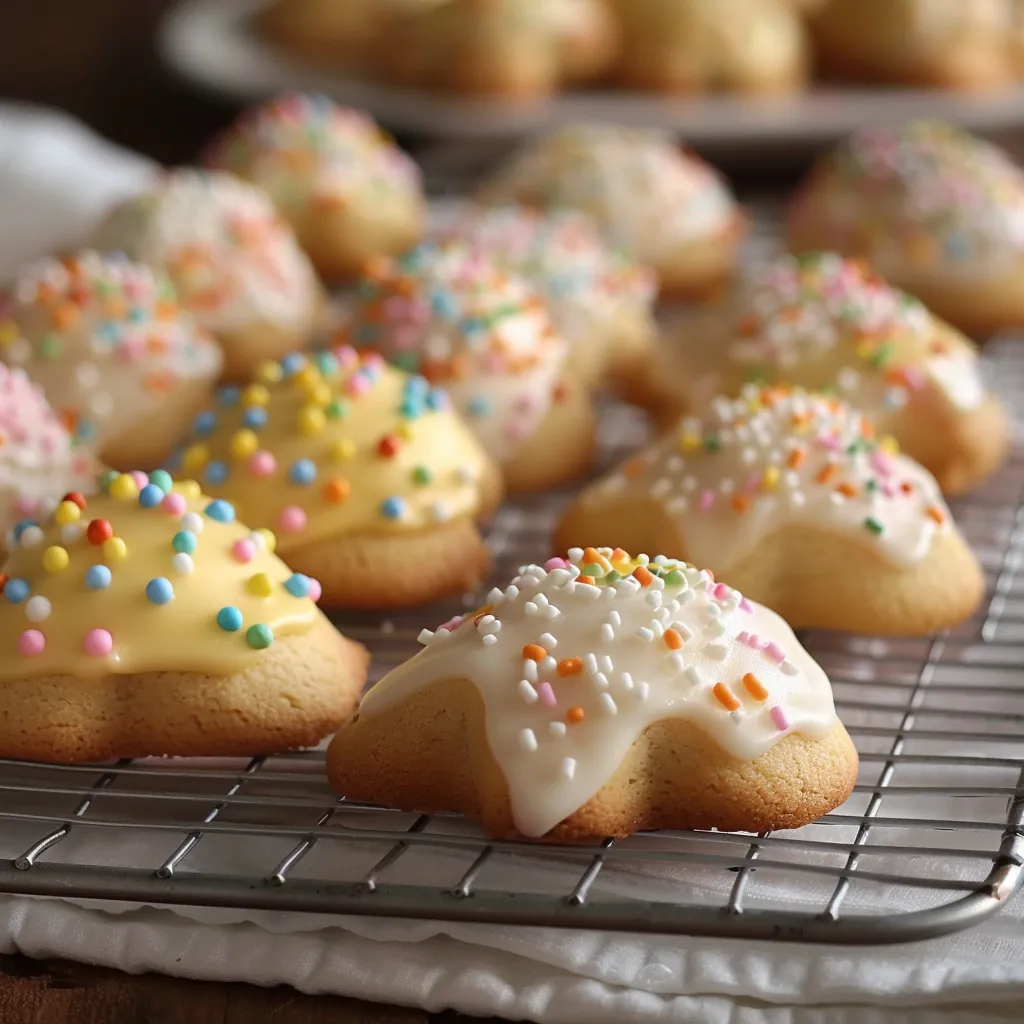
- Glaze and decorate. Dip cooled cookies into lemon glaze and add sprinkles right away before the icing sets.
Keep The Dough Tender
The dough should feel soft, but it should not smear all over your hands. If it is too warm, chilling fixes it better than dumping in extra flour. Too much flour is the usual reason Italian Easter Cookies turn dry. Spoon and level your flour, or use a scale if you have one. The King Arthur ingredient weight chart is useful if you bake by grams.
When shaping, roll each piece with relaxed hands. Pressing hard can make the rope crack. If a rope splits, pinch it back together and keep going. These cookies are supposed to look handmade, and the glaze hides small rough spots.
Glaze That Sets Cleanly
The glaze should be thick enough to coat the top of a cookie, but loose enough to drip back into the bowl. Add lemon juice slowly. A teaspoon can change the texture fast. If it gets too thin, whisk in more powdered sugar until it looks smooth and glossy.
Dip only cooled cookies. Warm cookies melt the glaze and make it slide off in patches. Add sprinkles right after dipping each cookie because the surface starts to set quickly. For a holiday tray with the same soft, glazed style, add Soft Italian Christmas Cookies or the buttery bite of Traditional Italian Wedding Cookies.
Flavor Swaps That Fit
Lemon is bright and easy to love, but orange zest works beautifully too. Anise is more traditional in many families, especially for Italian sprinkle cookies, but it is strong. Use a small amount if your crowd is mixed. Almond extract is another good option when you want a bakery flavor without the licorice edge.
You can shape the dough into rings, twists, knots, or small braids. For a more playful Easter plate, serve these beside Easter Cookies Recipe or Mini Easter Orange Cheesecakes. Keep the icing colors soft if you want the tray to look classic instead of candy-bright.
Storing And Freezing
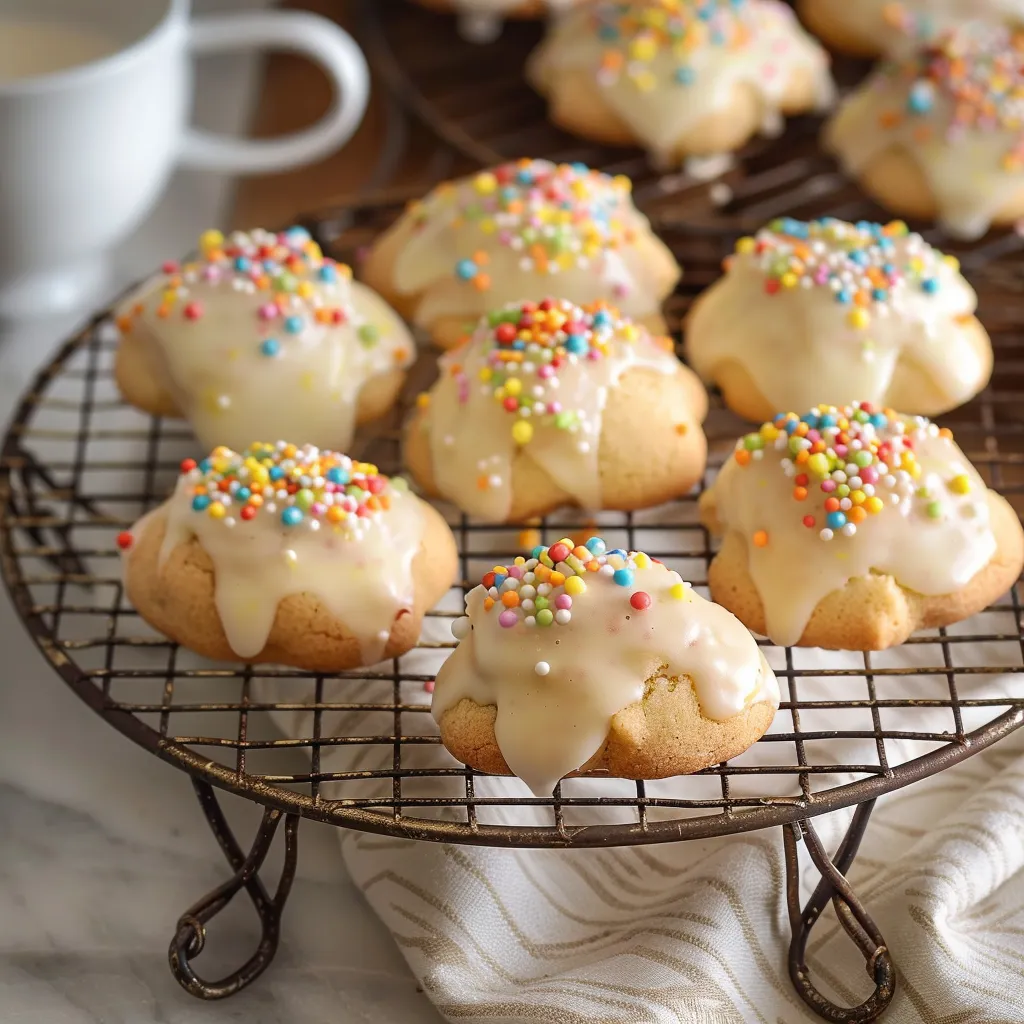
Store glazed cookies only after the icing is dry to the touch. A wire rack helps air move around them, and parchment between layers keeps the tops neat. They stay good at room temperature for 3-4 days in an airtight container.
For longer storage, freeze the baked cookies without glaze. Let them cool, pack them tightly, and freeze for up to two months. Thaw at room temperature, then glaze and decorate. Since this dough uses eggs, handle them cleanly and avoid leaving raw dough warm on the counter for long. The USDA egg safety guide has clear storage guidance.
Summary
These glazed Italian Easter Cookies are soft, lightly lemony, and easy to shape into rings or knots. Bake them pale, cool them fully, then dip and sprinkle for a bright Easter dessert tray.
FAQs
- Are Italian Easter Cookies supposed to be soft or crunchy?
Most Italian-American Easter cookies are soft and tender, more like a small cake cookie than a crisp butter cookie. Sweet taralli versions can be firmer, especially if baked longer, but this recipe is meant to stay soft under the glaze.
- Can I use anise instead of vanilla?
Yes. Replace half or all of the vanilla extract with anise extract if you like that classic licorice note. Start with 1/2 teaspoon because anise can take over quickly.
- How do I keep the dough from sticking?
Chill the dough for about 20 minutes and flour your hands lightly before shaping. Add flour only a teaspoon at a time if the dough feels wet. Too much flour makes the cookies heavy.
- Can I make Italian Easter Cookies ahead?
Yes. Bake the cookies one day ahead and store them unglazed in an airtight container. Glaze and sprinkle them the day you serve so the icing looks smooth and the sprinkles stay bright.
- How should I store glazed Easter cookies?
Let the glaze dry fully, then store the cookies in a single layer or with parchment between layers. Keep them covered at room temperature for 3-4 days.
- What should I serve with Italian Easter Cookies?
They are great with coffee, espresso, black tea, or a citrusy Easter dessert spread. For a larger holiday tray, pair them with softer cookies, cream-filled pastries, and a chilled fruit dessert.
