 Pin it
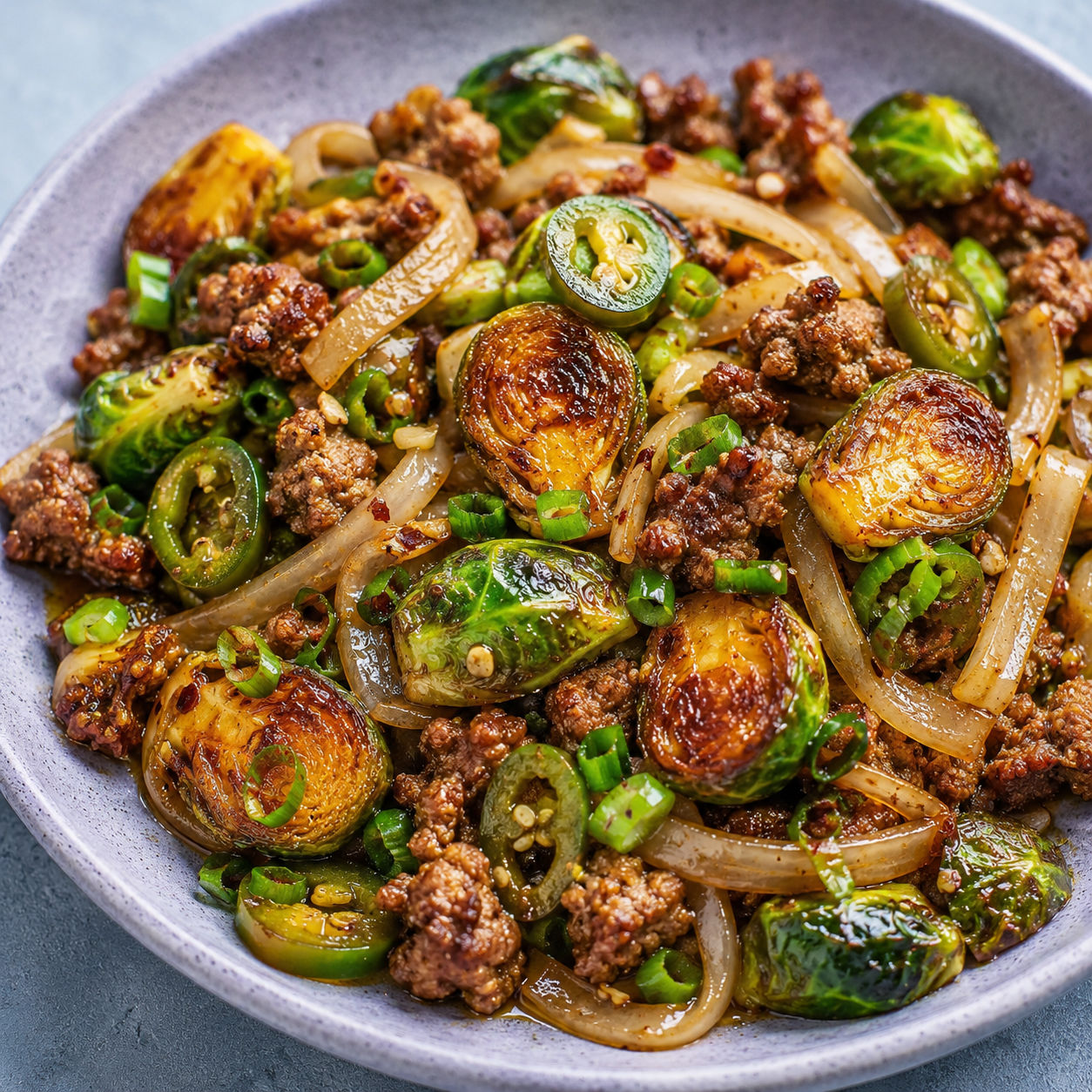
Savory Five-Spice Brussels Sprouts with Sausage and Aromatic Stir-Fry is the kind of skillet dinner that smells ready before it is even finished. The sausage gets browned and a little crisp, then the Brussels sprouts pick up that fat and char around the cut sides.
The sauce stays simple. Soy sauce brings salt and depth, vinegar sharpens the edges, and Chinese five-spice adds warm spice without making the dish taste sweet. Serve it over rice for dinner or set it out as a bold side with roasted meat.
The Skillet Lineup
Choose firm Brussels sprouts with tight leaves and trim only the dry stem end. For the sausage, bulk hot Italian sausage gives the richest pan flavor, but any fresh pork or chicken sausage works if it browns well.
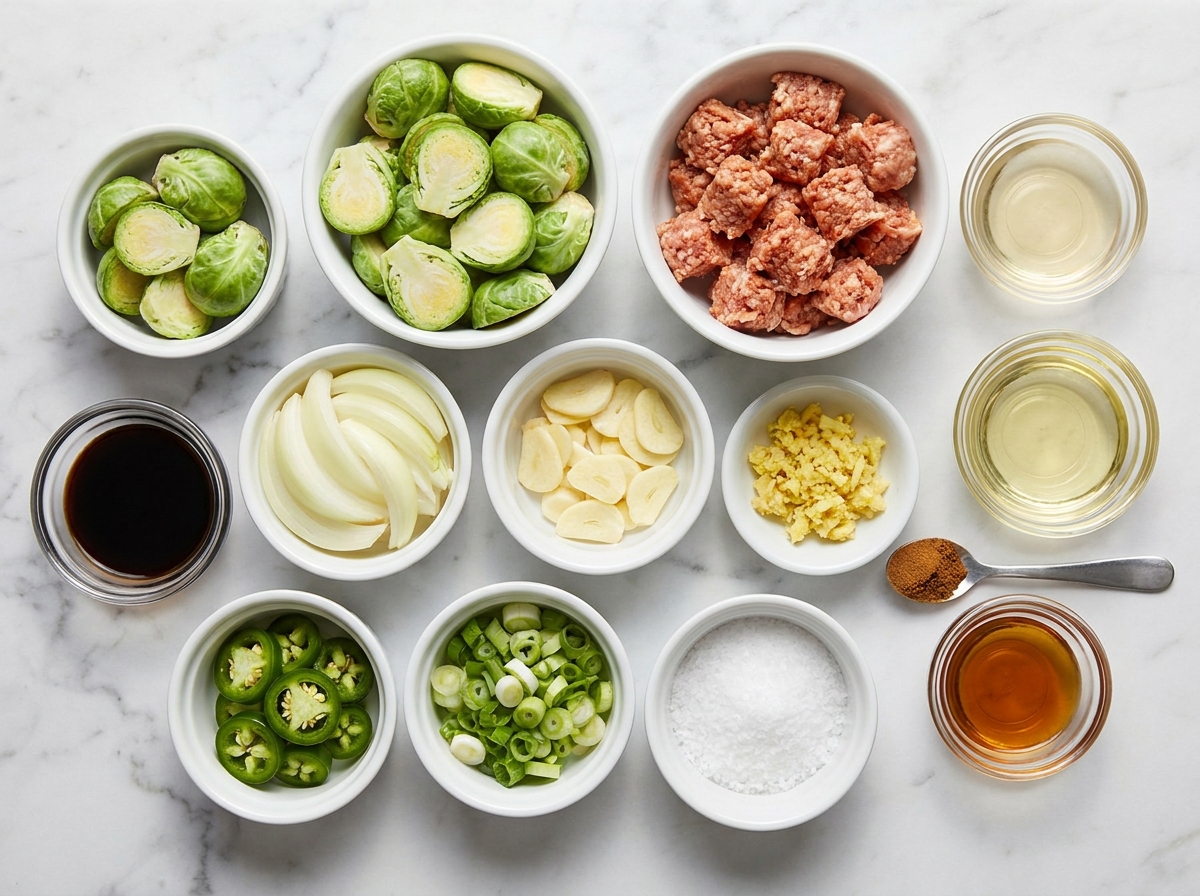
- Brussels sprouts. They turn nutty and sweet when the cut sides sit against a hot pan.
- Fresh sausage. It seasons the whole stir-fry as it browns and leaves flavorful fat behind.
- Onion. Thin slices soften quickly and add sweetness without needing sugar.
- Garlic and ginger. These aromatics wake up the sausage fat and keep the dish sharp.
- Jalapeno. A little heat balances the warm spice. Remove the seeds for a milder pan.
- Soy sauce. It adds salt, color, and savory depth.
- Rice vinegar. A final splash cuts through the richness.
- Chinese five-spice. Warm notes of star anise, fennel, cinnamon, clove, and pepper make the sprouts taste deeper.
How The Stir-Fry Moves
- Brown the sausage. Cook it in a hot skillet, breaking it into bite-size pieces until the edges are golden and the meat is cooked through.
- Soften the aromatics. Use some of the sausage fat to cook onion, garlic, ginger, and jalapeno until fragrant and glossy.
- Sear the sprouts. Add more fat if the pan looks dry, place the Brussels sprouts cut side down, and let them brown before tossing.
- Steam briefly. Add soy sauce and water, cover the pan, and cook just until the sprouts are tender but not limp.
- Finish off heat. Return the sausage and aromatics, then toss with vinegar and five-spice so the spice stays warm and fragrant.
Why High Heat Matters
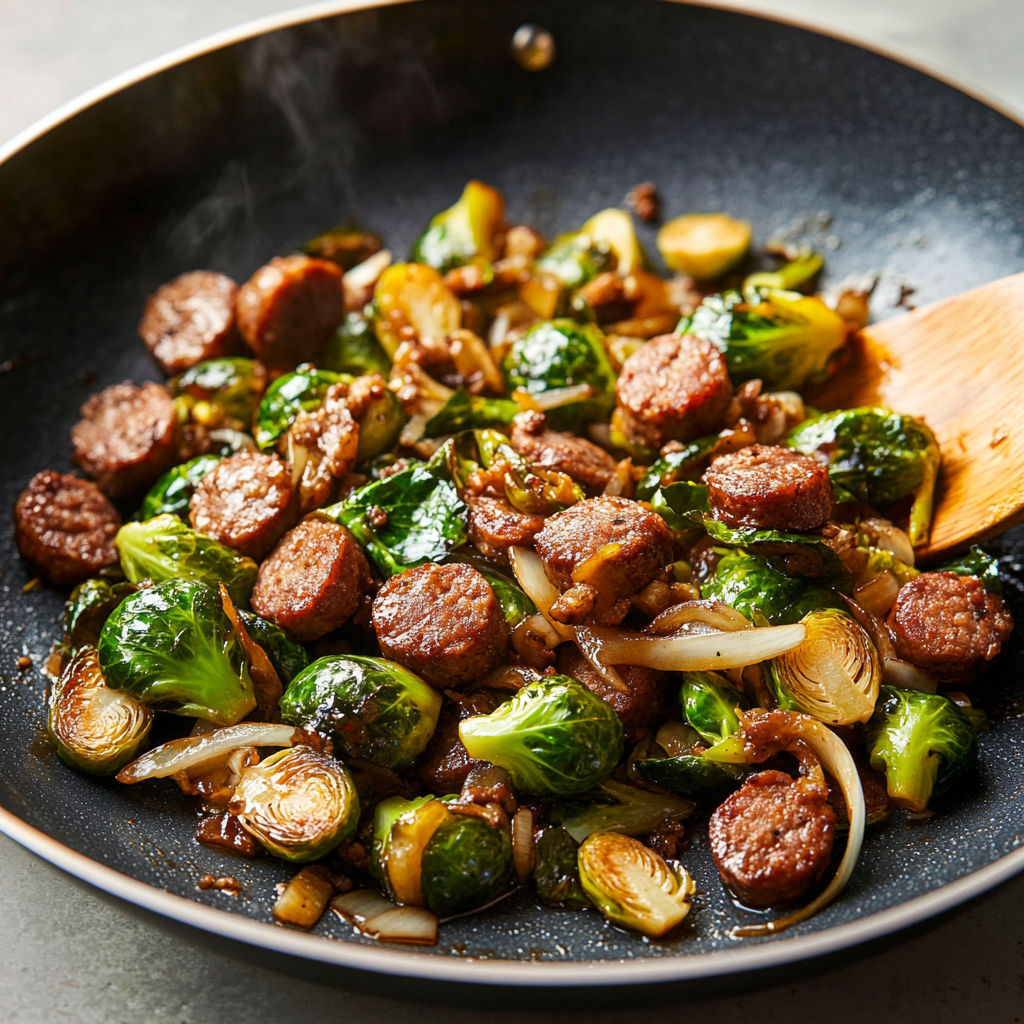
Brussels sprouts need direct contact with the pan to taste roasted instead of boiled. After you add them, give them a full few minutes without constant stirring. The cut sides should show dark golden patches before you move them.
A wide skillet or wok helps. Crowding traps steam, which makes the sprouts soften before they brown. If your pan is small, cook the sprouts in two batches. The same heat logic helps with spicy beef and veggie stir fry and other fast skillet meals.
The Five-Spice Balance
Five-spice is bold. Add it at the end instead of frying it hard at the start. Heat wakes it up, but too much direct heat can make the clove and star anise taste dusty.
The vinegar is just as important as the spice. It brightens the sausage fat and keeps the dish from feeling heavy. If you want a saucier version, stir in a spoonful of the all-purpose stir fry sauce with soy, garlic, and ginger during the final toss.
Sausage Swaps That Fit
Hot Italian sausage gives the dish a peppery base, but it is not the only choice. Mild Italian sausage makes a family-friendly version. Chicken sausage works if you add a little extra oil because it renders less fat. Chinese sausage also works, but slice it thin and use less soy sauce because it is already sweet-salty.
For food safety, fresh sausage should be cooked through before it goes back into the pan. The USDA lists 160°F for ground pork and ground beef, and 165°F for ground poultry on its safe minimum temperature chart.
Serving It Well
Serve this straight from the skillet with rice, noodles, or a pile of crisp greens. It also works as a holiday side when you want Brussels sprouts with more punch than the usual roast. For a sweeter bacon-style side, try crispy Brussels sprouts with honey and bacon. For a fresher contrast, pair it with fresh shaved Brussels sprouts salad with apple and feta.
Leftovers Without Soggy Sprouts
Let leftovers cool before sealing them, then refrigerate for up to 3 days. Reheat in a dry skillet first to warm the sausage and drive off moisture. Add a tiny splash of water only if the soy glaze looks too tight.
Freezing is not my pick here. Brussels sprouts turn watery after thawing, and the sausage loses its crisp edges. If you want to prep ahead, halve the sprouts, slice the onion, and mix the soy sauce and vinegar in a small jar. Cook everything fresh when you are ready to eat.
Summary
This stir-fry is best eaten hot from the pan while the sprouts still have a little bite and the sausage edges are crisp.
FAQs
- Can I use smoked sausage instead of Italian sausage?
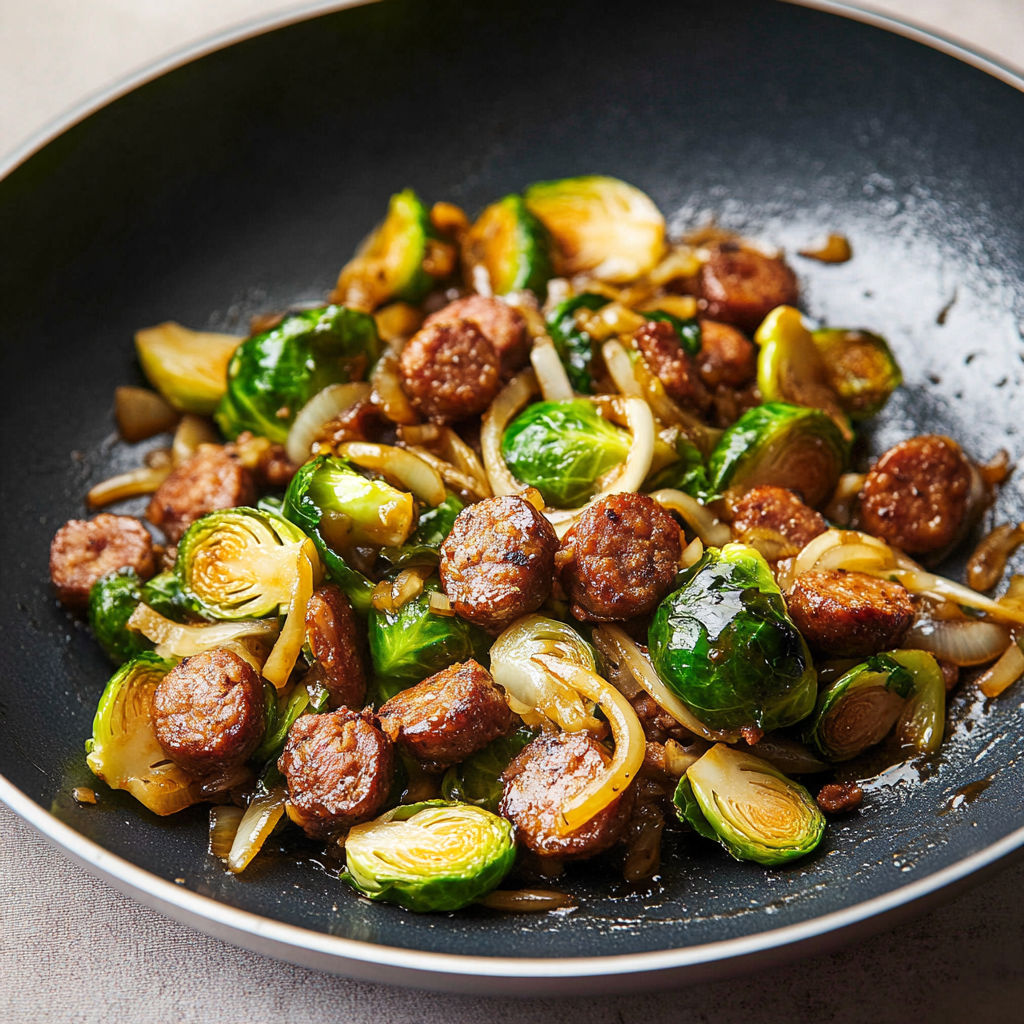
Yes. Slice smoked sausage into coins and brown it well before adding the vegetables. It will be saltier than bulk sausage, so start with less soy sauce and adjust at the end.
- Do I need to blanch the Brussels sprouts first?
No. Halved Brussels sprouts cook through in the skillet when you brown them first, then add a small splash of water and cover the pan briefly. That keeps the centers tender without losing the browned edges.
- What can I substitute for Chinese five-spice?
Use a small pinch each of ground cinnamon, fennel seed, clove, and black pepper if you do not have five-spice. Go lightly. These spices are strong and should sit in the background.
- How do I store leftovers?
Store leftovers in an airtight container in the refrigerator for up to 3 days. Reheat in a skillet over medium heat so the sausage can crisp again and the sprouts do not turn soggy.
- Can this be gluten-free?
Yes, if you use certified gluten-free sausage and tamari instead of regular soy sauce. Always check the sausage label since fillers and flavorings can vary by brand.
- What should I serve with it?
Steamed jasmine rice is the easiest match because it catches the soy-vinegar pan juices. It is also good with noodles, cauliflower rice, or a simple fried egg on top.
