 Pin it
There are nights when only something creamy and nostalgic will do. This pot pie pasta gives you exactly that feeling without rolling out crust or turning on the oven. It is a stovetop dinner that tastes like it took twice the effort.
I like to make this when the fridge holds a few carrots and half an onion and I do not want to think too hard. Everything cooks in one pot, the pasta drinks up a savory broth, and a little cream at the end ties it all together. If you love the filling of a classic pot pie, this is the shortcut you have been waiting for.
What goes into the pot
The ingredient list reads like the inside of a pot pie, which is exactly the point. Use fresh carrots and celery if you can. They hold their shape and give the sauce a real backbone.
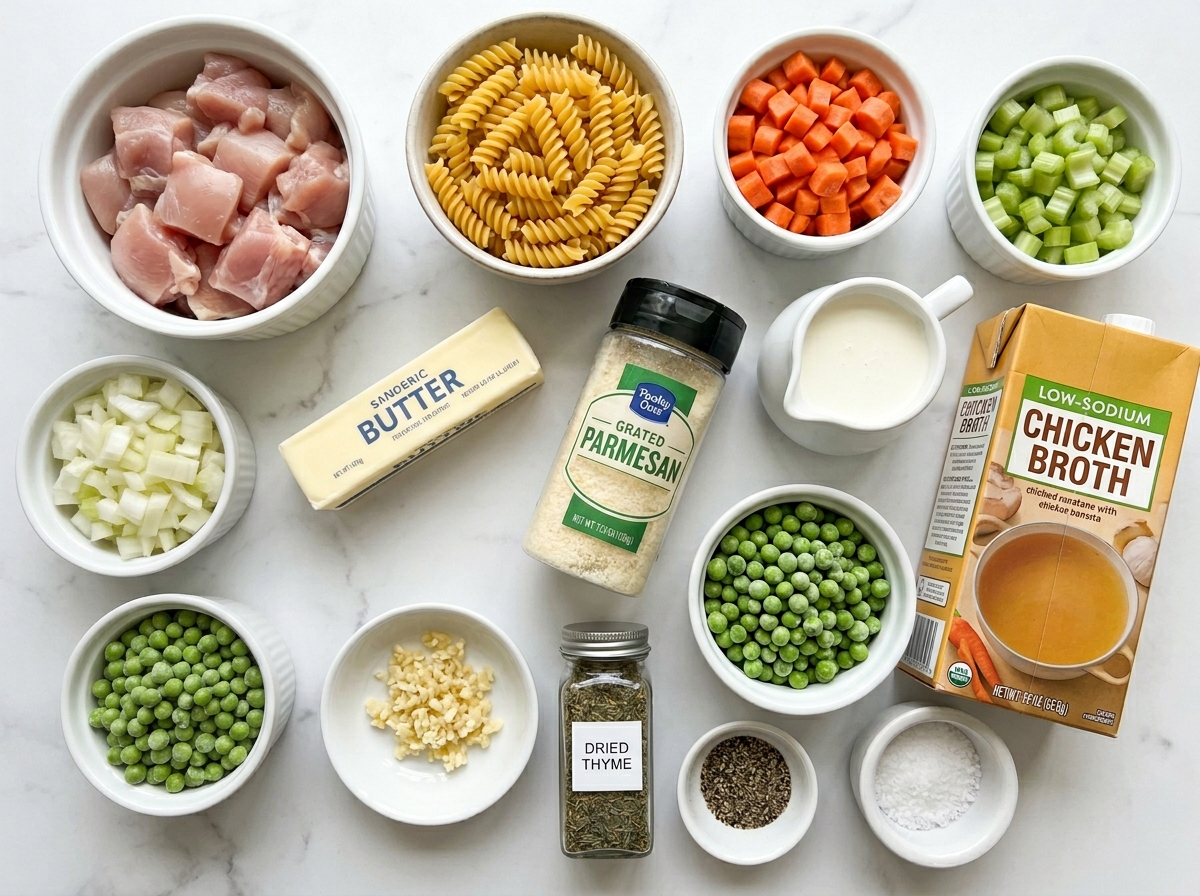
- Chicken thighs. Dark meat stays tender even when simmered with pasta. Breast works too, but pull it a minute early so it does not dry out.
- Butter. Just enough to brown the chicken and soften the vegetables. It also carries the flour for the sauce.
- Carrots, celery, and onion. The classic pot pie trio. Dice them small so they cook through in the same time as the pasta.
- Garlic and dried thyme. Thyme gives that slow-simmered flavor fast. Fresh works if you have it.
- All-purpose flour. Thickens the broth into a light gravy that clings to each piece of pasta.
- Low-sodium chicken broth. Four cups gives the pasta enough liquid to cook and leaves you with a silky sauce.
- Short pasta. Rotini, penne, or fusilli trap the creamy sauce in their ridges.
- Frozen peas. Stirred in at the end so they stay bright green and pop when you bite.
- Heavy cream and parmesan. The final richness. A half cup of cream and a handful of cheese transform broth into comfort.
- Fresh parsley. A bright finish on top.
How it all comes together
- Brown the chicken. Melt butter in a deep skillet or Dutch oven over medium-high heat. Season the chicken with salt and pepper, then sear until golden on a couple sides. It does not need to be cooked through yet. Remove it to a plate.
- Sauté the vegetables. Add the onion, carrot, and celery to the same pot. Cook for about five minutes until they soften and the onion turns translucent. Stir in the garlic and thyme for the last thirty seconds.
- Build the base. Sprinkle the flour over the vegetables and stir constantly for one minute. The flour should look lightly toasted but not dark. This step prevents a raw, pasty sauce later.
- Deglaze and simmer. Slowly pour in the chicken broth while scraping up any browned bits stuck to the bottom. Return the chicken and any juices to the pot, then add the dry pasta. Stir well and bring to a gentle boil. Reduce the heat to medium-low, cover, and simmer for twelve to fifteen minutes. Stir once or twice so the pasta does not stick.
- Finish the sauce. When the pasta is just tender, stir in the frozen peas, cream, and parmesan. Simmer uncovered for two to three minutes until the sauce thickens and the peas are hot. Remove from the heat and let it sit for five minutes. The sauce will continue to tighten as the pasta absorbs liquid. Top with parsley and serve.
The broth-to-pasta balance
Getting the liquid right is the only slightly tricky part of a one-pot pasta. Too much and the dish turns soupy. Too little and the pasta clumps before it cooks through. Four cups of broth for twelve ounces of short pasta usually hits the sweet spot in a wide pot, but every pasta shape absorbs differently. If the pot looks dry before the pasta is tender, add a splash of hot water or broth a quarter cup at a time. The goal is a loose, creamy sauce that tightens into a coating as it cools on the plate.
Why chicken thighs win here
Boneless thighs forgive a lot. They stay juicy when simmered and carry more flavor than breast meat. If you only have chicken breast, cut it into evenly sized cubes and watch the timer closely. As soon as the pieces turn opaque in the center, pull the pot off the heat. Overcooked breast turns stringy fast, and no amount of cream will fix it.
Swaps that keep it cozy
This recipe bends without breaking. Swap in rotisserie chicken or leftover turkey and skip the browning step. Add it back when you stir in the peas. Egg noodles work instead of short pasta, though they cook faster so check early. You can also toss in a handful of frozen corn or diced green beans with the peas. If you want a slightly different flavor profile, our Creamy Chicken Pot Pie Pasta uses a similar method with a few extra herbs.
Storing and reheating
Leftovers keep in an airtight container in the refrigerator for up to three days. The pasta will absorb more sauce as it sits, so expect a thicker texture the next day. Reheat gently in a skillet with a few tablespoons of broth or water to loosen things back up. The microwave works in a pinch, but stir halfway through and add that splash of liquid or the sauce can separate.
What to serve alongside
A simple green salad with lemon vinaigrette cuts the richness nicely. Crusty bread is optional but welcome for scraping the bowl. On colder nights, start with a light chicken pot pie soup to extend the theme without doubling up on heaviness. If you are a fan of easy one-pot dinners, our One-Pot Chicken Parmesan Pasta uses the same minimal-cleanup approach with a different flavor profile.

FAQs
- Can I use rotisserie chicken instead of raw?
Yes. Shred about three cups of cooked chicken and stir it in when you add the peas. Since it is already cooked, you only need to warm it through for a couple minutes.
- What pasta shape works best?
Short pasta with ridges or holes grabs the sauce best. Rotini, penne, and fusilli are all excellent choices. Egg noodles are traditional in pot pie but can turn soft quickly, so check them a couple minutes early.
- Can I make this gluten-free?
Yes, with a few adjustments. Use your favorite gluten-free short pasta and reduce the broth by half a cup at first, since GF pasta often releases less starch. You can also swap the all-purpose flour for a gluten-free flour blend or use cornstarch mixed with cold water to thicken at the end.
- Can I substitute half-and-half for the heavy cream?
Absolutely. Half-and-half gives a slightly lighter sauce that is still creamy. Whole milk works too, but the sauce will be thinner and less rich. Avoid skim milk here.
- How do I store and reheat leftovers?
Refrigerate in an airtight container for up to three days. Reheat in a skillet over medium-low heat with a splash of chicken broth or water to revive the sauce. Stir often so it heats evenly.
- Can I freeze chicken pot pie pasta?
You can, though the texture of the pasta softens after thawing. For best results, freeze the creamy chicken and vegetable base without the pasta, then cook fresh pasta when you reheat. If you freeze the whole dish, thaw overnight in the fridge and reheat gently with extra liquid.
- Why is my sauce too thick or too thin?
Pasta keeps absorbing liquid even after the heat is off. If the pot looks thick, add broth a tablespoon at a time. If it looks soupy, let it rest uncovered for five minutes before serving. The sauce should coat the back of a spoon.
- Is this safe to meal prep?
Yes. Portion into containers once cooled and refrigerate for up to three days. The U.S. Department of Agriculture recommends keeping cooked chicken at 40°F or below during storage. See the USDA poultry safety guidelines for more details.
