 Pin it
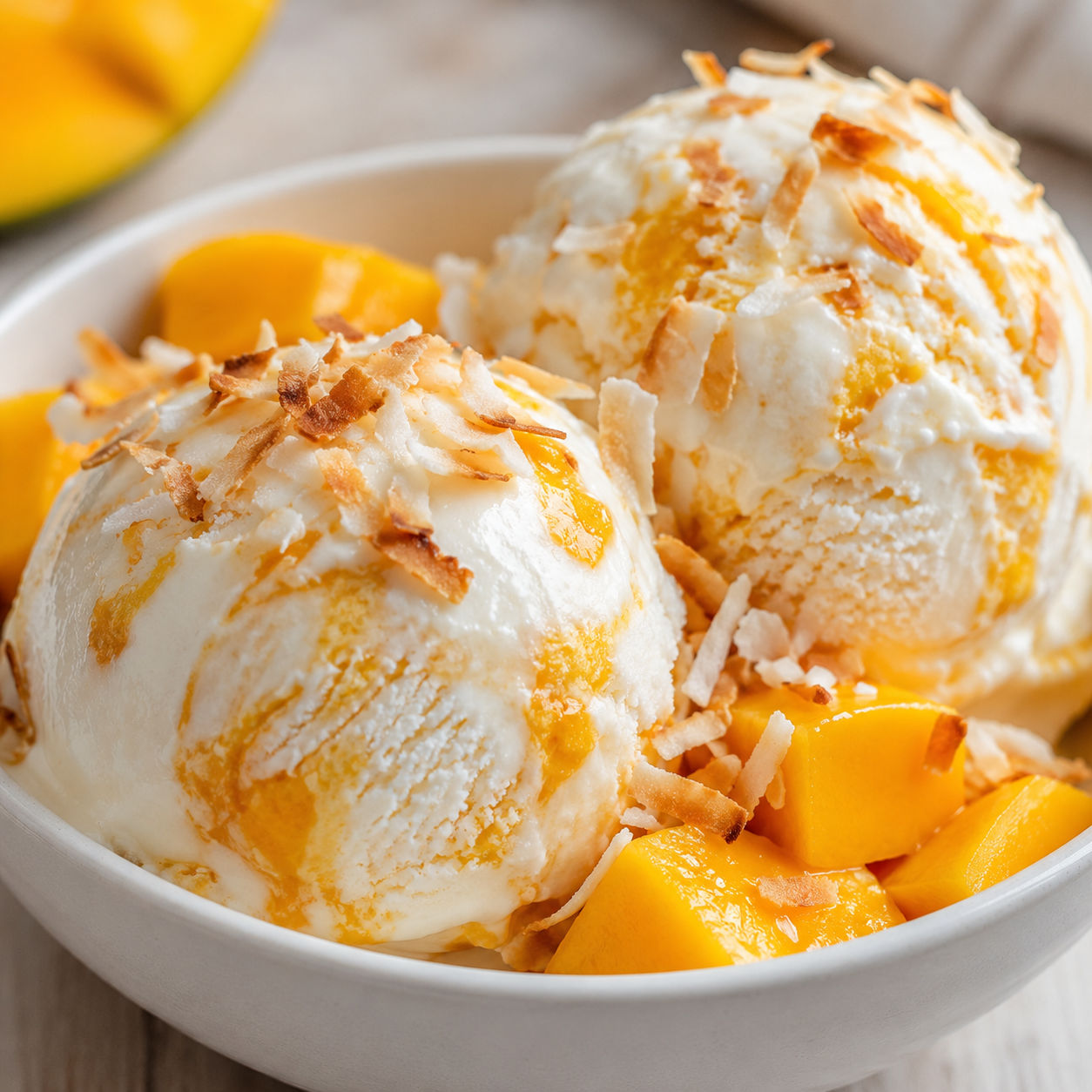
This is the dessert I pull out when the afternoon sun is relentless and I want something that tastes like a vacation. It is creamy, deeply mango-forward, and the coconut adds a round richness that makes every spoonful feel indulgent.
The best part is that you do not need an ice cream machine. A hand mixer or a sturdy whisk and a freezer are all it takes. The method is simple: whip cream, fold in condensed milk and coconut cream, swirl in fresh mango puree, and wait.
The creamy tropical lineup
Quality matters here because the ingredient list is short. Choose mangoes that yield slightly to pressure and smell sweet at the stem. Full-fat coconut cream, scooped from the top of a chilled can, gives the base its silkiness without any churning.
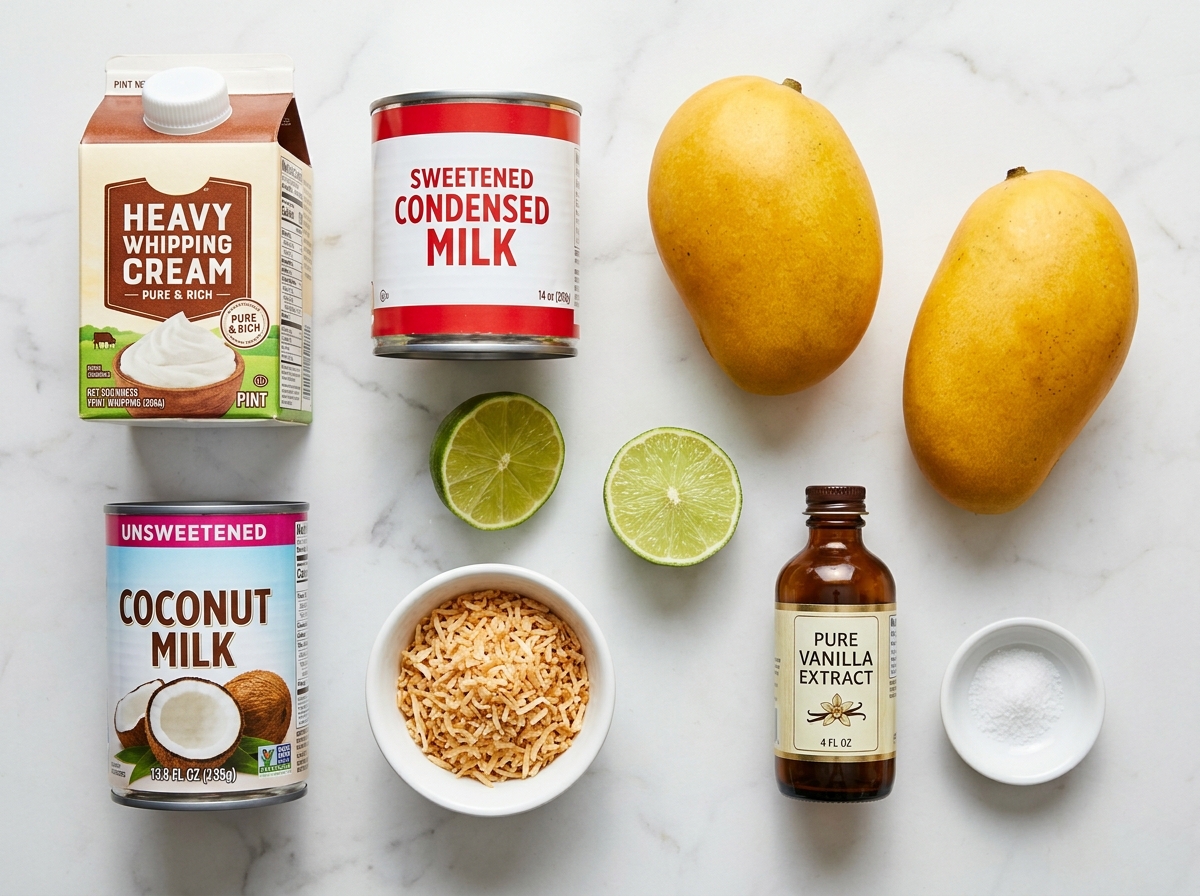
- Heavy whipping cream. The structure of the ice cream. When whipped to stiff peaks, it traps air that keeps the texture light once frozen.
- Sweetened condensed milk. Sweetens the base while the sugar content lowers the freezing point, so the ice cream stays scoopable.
- Full-fat coconut cream. The thick layer from a chilled can adds tropical richness and a velvety mouthfeel.
- Ripe fresh mangoes. The flavor driver. Ataulfo or Champagne varieties are smooth and fiber-free, which blends into a silky puree.
- Fresh lime juice. A small splash brightens the mango and keeps the flavor from tasting flat.
- Vanilla extract and salt. Vanilla rounds out the tropical notes, and a pinch of salt makes the sweetness taste fuller.
- Toasted shredded coconut. Folded in for texture and sprinkled on top for a light crunch.
Swirl layer and freeze
- Make the mango puree. Peel and dice the mangoes, then blend with the lime juice until completely smooth. Scrape into a bowl and set aside.
- Whip the cream. Pour the cold heavy cream into a large bowl. Beat with a hand mixer on medium-high speed until stiff peaks form, about 3 to 4 minutes.
- Fold the base together. Gently fold in the sweetened condensed milk, coconut cream, vanilla, and salt. Use a spatula and a light hand so you do not deflate the whipped cream.
- Layer and marble. Spread half the cream mixture into a 9-by-5-inch loaf pan. Dollop half the mango puree over the top. Repeat with the remaining cream and puree. Drag a butter knife through the layers in loose figure-eights to create a swirl.
- Freeze until firm. Cover the surface directly with plastic wrap or parchment, then add a tight lid. Freeze for at least 6 hours, preferably overnight.
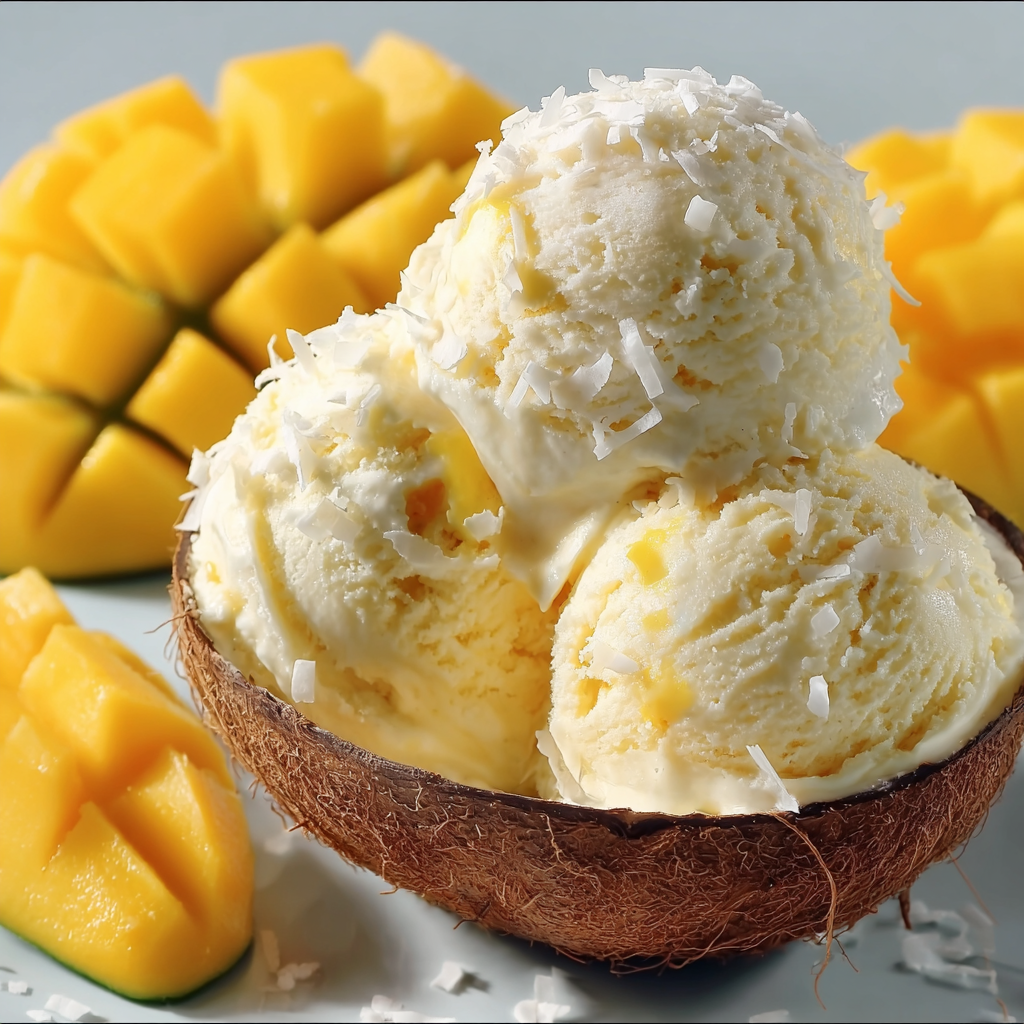
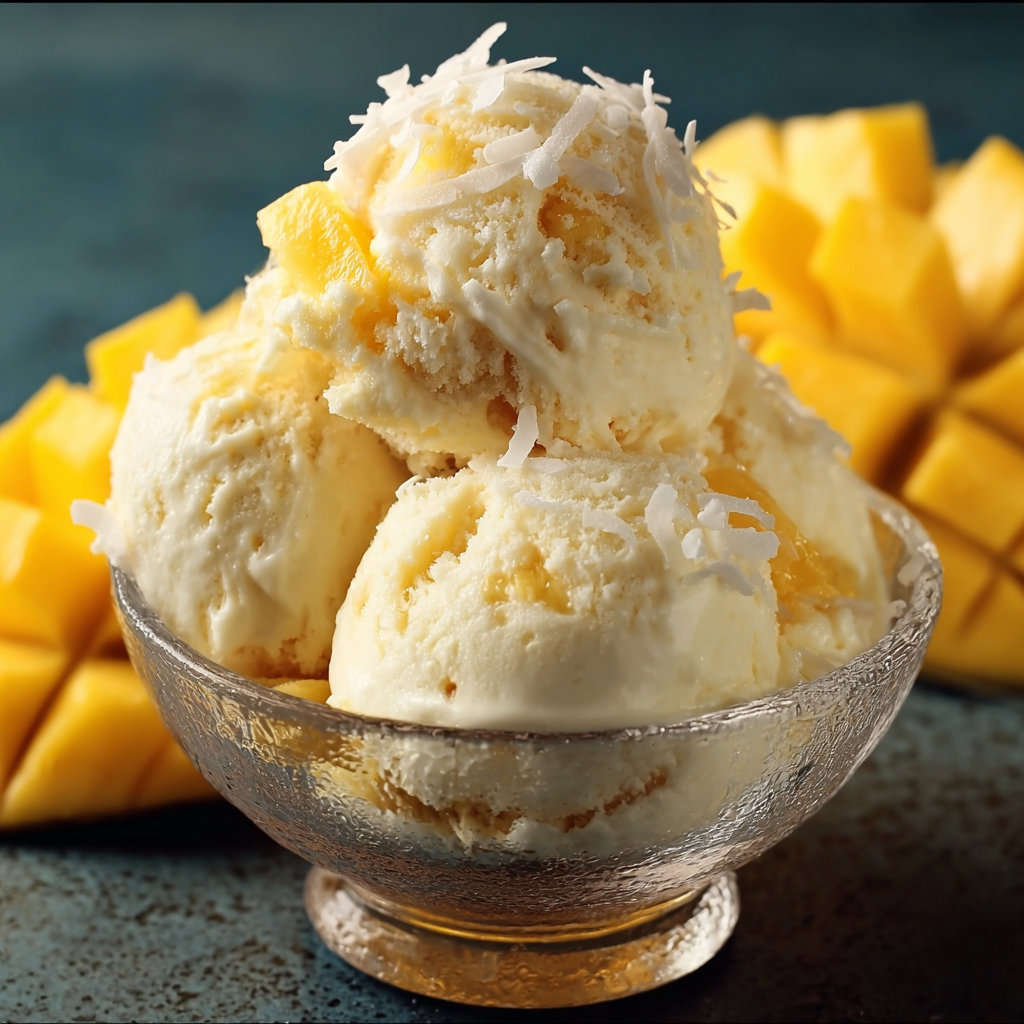
- Serve. Let the pan sit at room temperature for 5 to 10 minutes to soften slightly. Scoop into bowls and garnish with toasted coconut and extra mango chunks.
Why no-churn stays creamy
Traditional ice cream relies on constant churning to break up ice crystals as they form. In a no-churn recipe, the heavy cream is whipped before freezing, so the air is already trapped inside. The high fat from the cream and coconut cream, combined with the sugar in condensed milk, further interferes with large ice crystals. The result is a texture that is rich and scoopable without any special equipment. If you enjoy frozen treats without the fuss, our coconut cream popsicles use a similar philosophy.
Picking mangoes that blend smooth
A stringy mango will ruin the texture no matter how well you whip the cream. Ataulfo mangoes, sometimes labeled Champagne or Honey, have almost no fiber and a buttery flesh that purees into silk. Tommy Atkins work too, but make sure they are fully ripe and soft. If you press the nose and it gives gently, it is ready. Avoid mangoes with green shoulders or a sour smell.
The coconut cream secret
Do not shake the can of coconut milk before opening it. Chill it overnight, then open from the bottom and pour off the thin liquid. The thick cream that remains is what you want. It should feel like softened butter. This fat emulsifies into the whipped cream and carries the coconut flavor without watering down the base. For another coconut-forward dessert, try our tropical pineapple coconut balls.
Storing it without ice crystals
Air is the enemy of homemade ice cream. Press a sheet of parchment or plastic wrap directly onto the surface before you snap on the lid. Store in the coldest part of your freezer and try to finish it within two weeks for the best texture. The U.S. FDA offers guidance on safe freezer storage at their food-safety portal.
Ways to serve it special
A simple scoop is perfect on its own, but you can turn this into a full dessert. Sandwich a thick slab between two sugar cookies for an ice cream sandwich twist, or float a scoop in sparkling limeade for a tropical float. It also pairs beautifully with pineapple ice cream summer for a split bowl of two island flavors. If you want to keep it classic, just add a crisp coconut tuile on the side.
FAQs
- Can I use frozen mango instead of fresh?
Yes. Thaw frozen mango chunks completely and drain off any excess liquid. Too much water will create icy crystals in the finished ice cream.
- How do I make this dairy-free?
Replace the heavy cream with an equal amount of full-fat coconut cream and use coconut condensed milk. Whip the chilled coconut cream until fluffy before folding everything together.
- Why did my ice cream turn out icy?
Ice crystals usually mean too much water got into the base. Make sure your mango puree is thick, drain thawed frozen mango well, and press wrap directly onto the surface before freezing.
- How long will this keep in the freezer?
Stored airtight with the surface covered, it stays at its best for up to two weeks. After that it is still safe to eat but may start to taste slightly stale.
- Can I add mix-ins like chocolate or nuts?
Absolutely. Fold in small bits of white chocolate, macadamia nuts, or extra toasted coconut after you have mixed the base. Keep pieces small so they do not sink.
- Do I need an ice cream maker?
No. This is a no-churn recipe. The whipped cream provides the air, and the condensed milk keeps the texture smooth.
- What kind of mango is best?
Ataulfo, Champagne, or Honey mangoes are ideal because they are smooth and virtually fiber-free. Kent and Keitt also work if they are fully ripe and soft.
