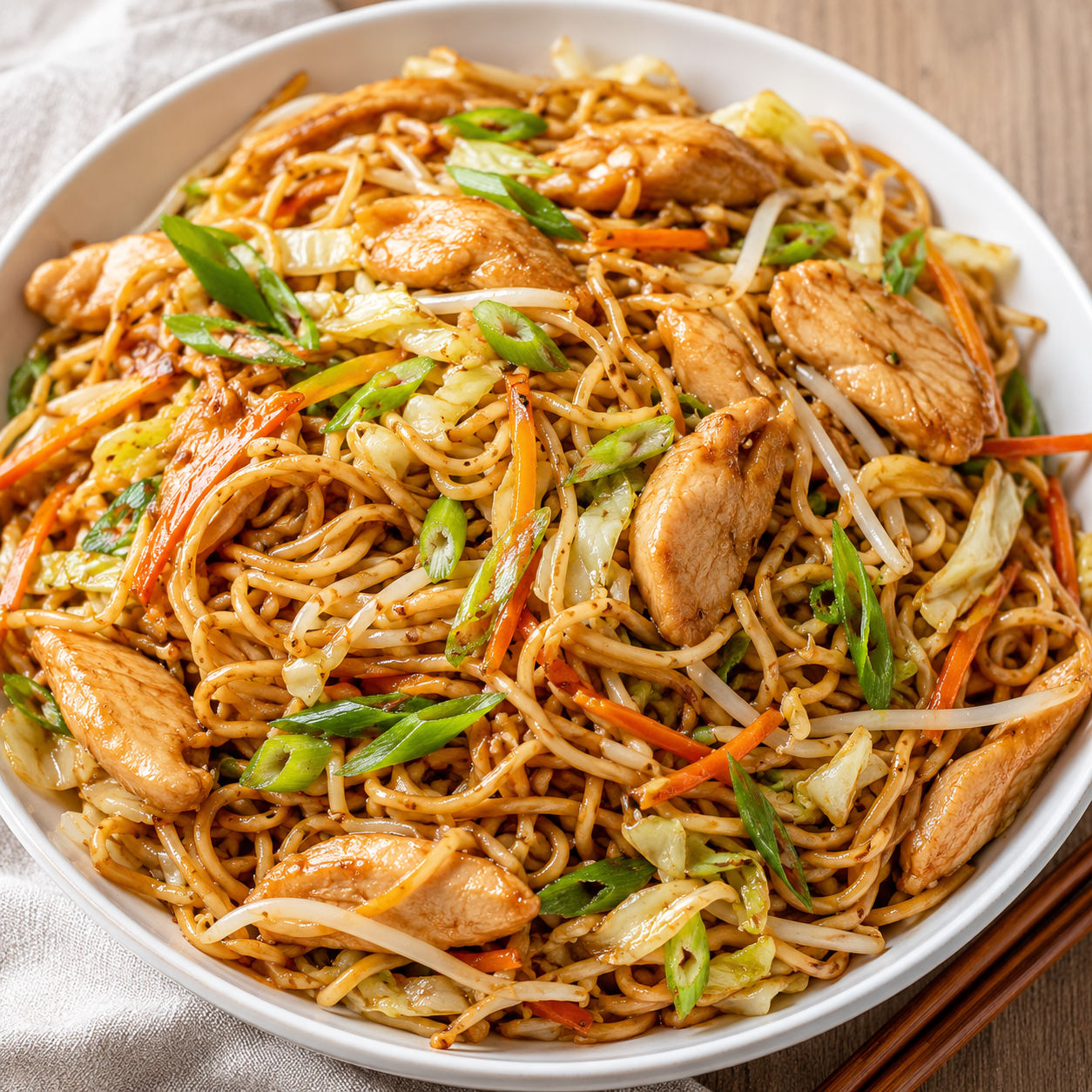
 Pin it
Delicious Chow Mein Noodles with Chicken is the kind of dinner that feels like takeout, but it tastes fresher because the vegetables still have crunch and the noodles are not drowning in sauce.
The best version comes from high heat, thin slices of chicken, and a sauce that coats instead of pools. I like cabbage and carrots here because they stay crisp and sweet, while garlic, ginger, sesame oil, and scallions make the pan smell right almost instantly.
Chow Mein Chicken Essentials
Keep the ingredient list focused and cut everything before the pan gets hot. Thin noodles, sliced chicken, shredded vegetables, and a punchy sauce are what make the dish taste like chow mein instead of plain chicken pasta.
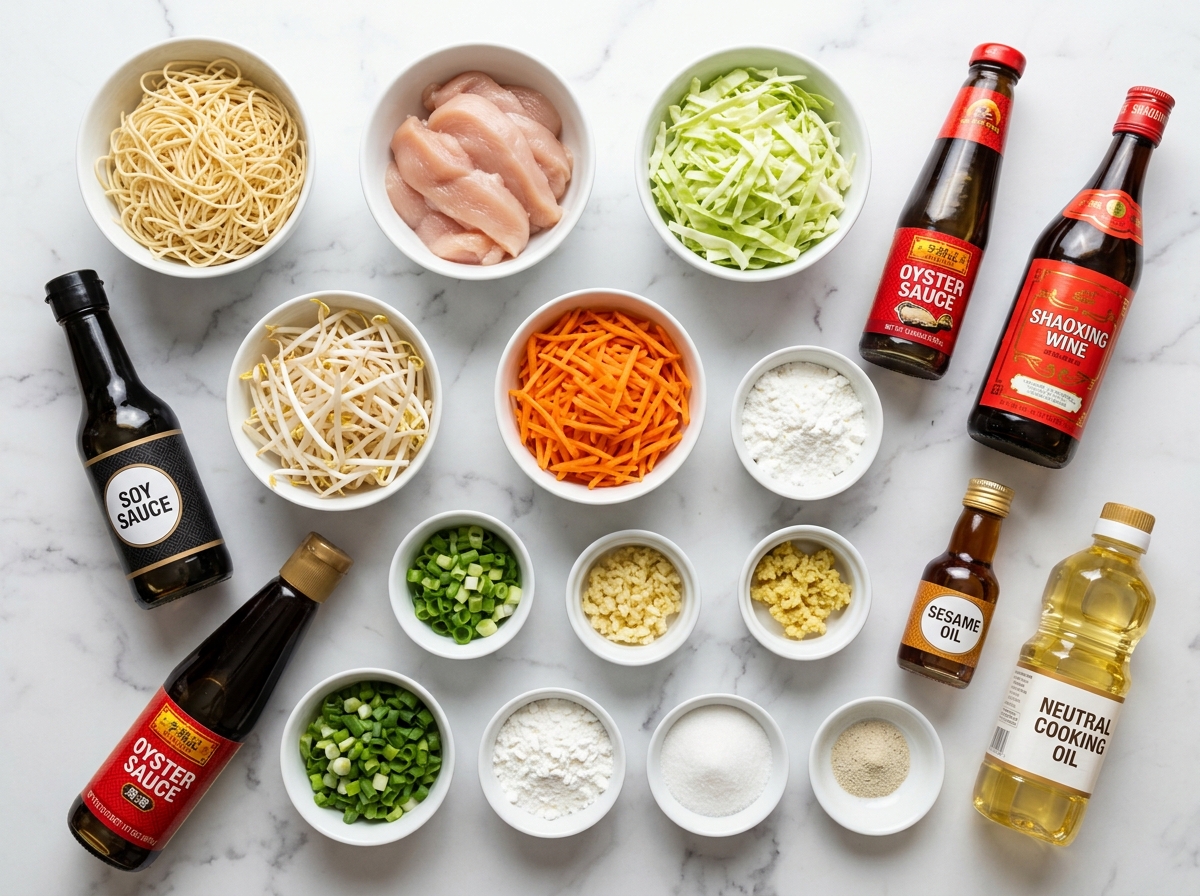
- Chow mein noodles. Thin wheat noodles give the dish its chewy bite and stand up to quick stir-frying.
- Chicken thighs or breast. Thin strips cook fast and soak up the savory marinade.
- Soy sauce. Adds salt, color, and the base flavor for the sauce.
- Oyster sauce. Brings glossy body and deep savory flavor without needing a long simmer.
- Shaoxing wine. Adds aroma and helps the chicken taste rounded. Dry sherry works too.
- Cornstarch. Lightly coats the chicken and helps the sauce cling to the noodles.
- Cabbage and carrots. They add sweetness, color, and crunch that holds up in the hot pan.
- Garlic, ginger, and scallions. These aromatics make the stir-fry bright and fragrant.
- Sesame oil. A small amount at the end gives the noodles a toasted finish.
Stir-Fry It Fast
- Mix the sauce. Whisk soy sauce, oyster sauce, Shaoxing wine, sesame oil, sugar, white pepper, and cornstarch until smooth. Spoon a little over the chicken so it seasons while you prep the pan.
- Cook the noodles. Boil or soak the chow mein noodles according to the package, stopping while they still have bite. Drain well and toss with a teaspoon of oil if they seem sticky.
- Sear the chicken. Heat a wok or large skillet until hot, add oil, and spread the chicken in a single layer. Let it brown before tossing, then cook until just done.
- Cook the vegetables. Add cabbage, carrots, garlic, and ginger. Stir-fry for 2-3 minutes until the vegetables soften at the edges but still snap.
- Toss the noodles. Add the drained noodles, return the chicken, and pour in the sauce. Toss with tongs until the noodles turn glossy and everything is hot.
- Finish and serve. Fold in bean sprouts and scallions for the last minute. Taste, adjust with soy sauce if needed, and serve right away.
Delicious Chow Mein Noodles With Chicken
The whole dish depends on heat and timing. A hot pan gives chicken a lightly browned edge before it has time to leak juices. That browned flavor matters because the sauce is quick and simple. If you add the chicken to a lukewarm skillet, it turns pale and watery, then the noodles soak up extra moisture.
Work in a wide pan and keep the food moving once the vegetables go in. Cabbage should soften, but it should not collapse. Carrots should stay bright. If you like the noodle style here, the site already has Chow Mein Chicken and Chicken Stir Fry Rice Noodles for more quick dinner ideas.
The Sauce Should Cling
Chow mein is not meant to be soupy. The sauce should coat the noodles with a shiny layer and leave only a little glaze in the bottom of the pan. Cornstarch helps with that, but it settles quickly, so whisk the sauce again right before pouring it in.
Oyster sauce is salty and savory, while soy sauce gives a cleaner saltiness. Sugar rounds the edges without making the dish sweet. Toasted sesame oil is strong, so keep it modest. For poultry safety, cook chicken to 165°F as explained by the USDA chicken safety guide.
Good Swaps For Busy Nights
If you cannot find chow mein noodles, use thin lo mein noodles or spaghetti in a pinch. The texture will be softer, but the sauce still works. For vegetables, shredded cabbage is reliable, but bok choy, snow peas, celery, broccoli slaw, or bean sprouts can all slide in. Keep the pieces thin so they cook at the same speed.
For a garlic-heavy version, take a look at Garlic Chicken Lo Mein. For a lighter vegetable noodle dinner, Garlic Chicken Zucchini Noodles Stir-Fry is useful when you want less wheat and more vegetables.
Noodle Texture Matters Most
Cook the noodles just shy of tender because they spend another couple of minutes in the skillet. If they are fully soft before stir-frying, they can break when tossed. Rinsing dried noodles briefly under cool water can remove surface starch and slow the cooking. Fresh noodles may only need loosening, so follow the package closely.
When the noodles hit the pan, lift and toss instead of pressing down. Tongs are better than a spoon because they separate strands without crushing them. If the noodles stick, add one tablespoon of water around the edge of the pan and toss again. That tiny bit of steam loosens the sauce without watering it down.
Store It Without Mush
Chicken chow mein tastes best straight from the pan, but leftovers are still good if you reheat them gently. Pack them in a shallow airtight container and refrigerate for up to 3 days. A skillet is the best way to bring them back. Add a splash of water, cover for one minute, then uncover and toss until hot.
Avoid reheating it for too long. Chicken can dry out and bean sprouts lose their crunch. If you plan on leftovers, hold back a few fresh scallions and sprinkle them over the reheated noodles right before eating.
Summary
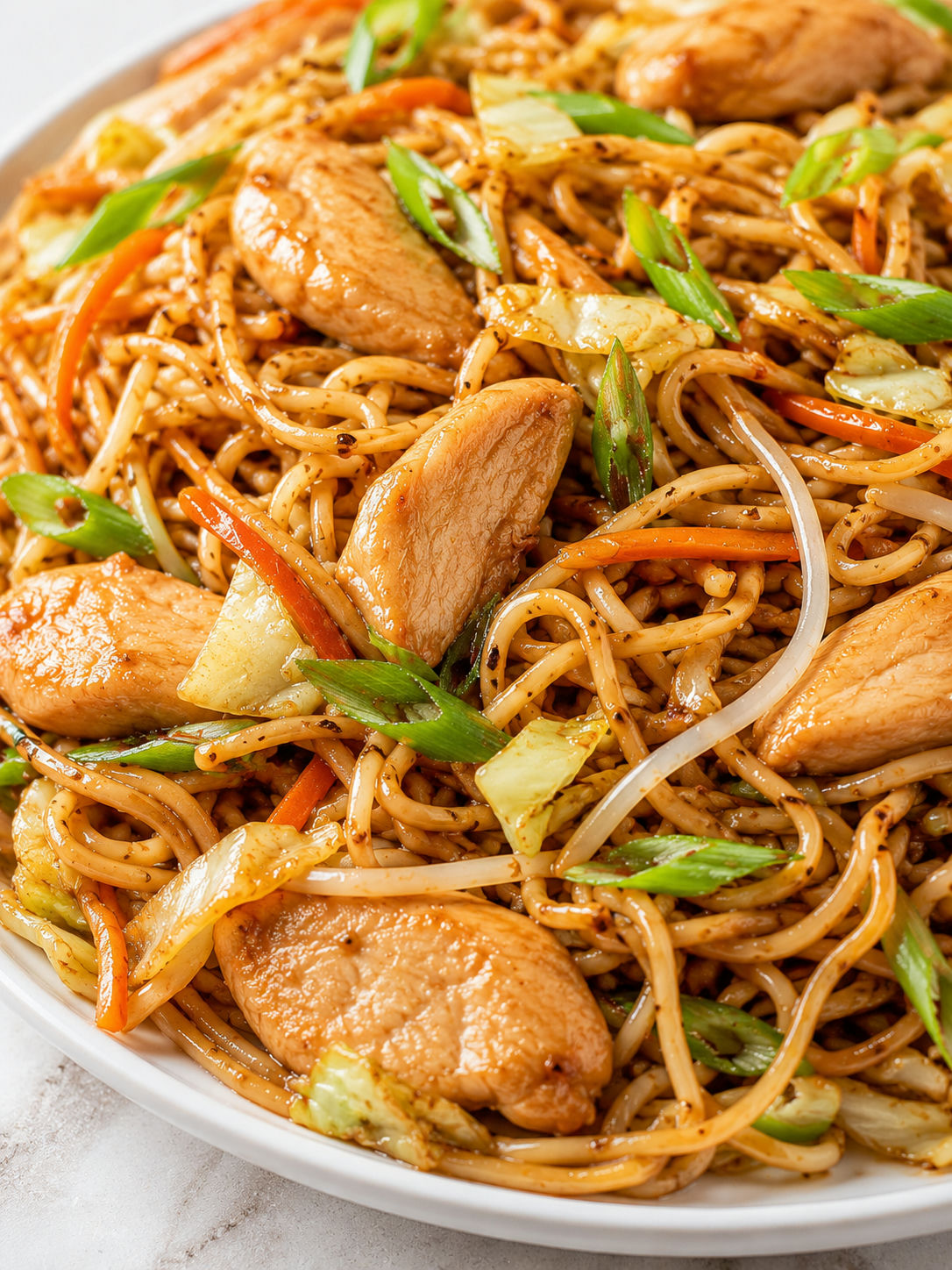
This chicken chow mein is quick, saucy, and built for a hot skillet. Prep everything before cooking, then move fast once the oil hits the pan.

FAQs
- What noodles should I use for chicken chow mein?
Use thin chow mein noodles or stir-fry egg noodles if you can find them. Fresh noodles give the best chewy texture, but dried chow mein noodles work well if you cook them a minute short and rinse them briefly so they do not clump.
- Can I use chicken breast instead of thighs?
Yes. Slice chicken breast thinly across the grain and do not overcook it. Chicken thighs are a little more forgiving, but breast stays tender when it is marinated with cornstarch and cooked quickly.
- How do I keep chow mein from getting soggy?
Drain the noodles well and use a wide hot skillet or wok. Stir-fry in batches if your pan is crowded, because too much moisture steams the noodles and vegetables.
- Can I make chicken chow mein ahead?
You can slice the chicken, mix the sauce, and prep the vegetables up to one day ahead. For the best texture, cook the noodles and stir-fry everything right before serving.
- How long do leftovers keep?
Leftover chicken chow mein keeps in an airtight container in the fridge for up to 3 days. Reheat it in a skillet with a small splash of water to loosen the sauce and wake up the noodles.
- Can I make this without oyster sauce?
Yes. Replace oyster sauce with hoisin sauce for a sweeter finish, or use vegetarian mushroom stir-fry sauce for a similar savory depth. Taste before adding extra salt because these sauces vary a lot.
- What can I serve with chicken chow mein?
It is a full meal on its own, but cucumber salad, steamed broccoli, or a simple egg drop soup fit nicely. If you want a bigger spread, pair it with a lighter stir-fry or lettuce cups.
