 Pin it
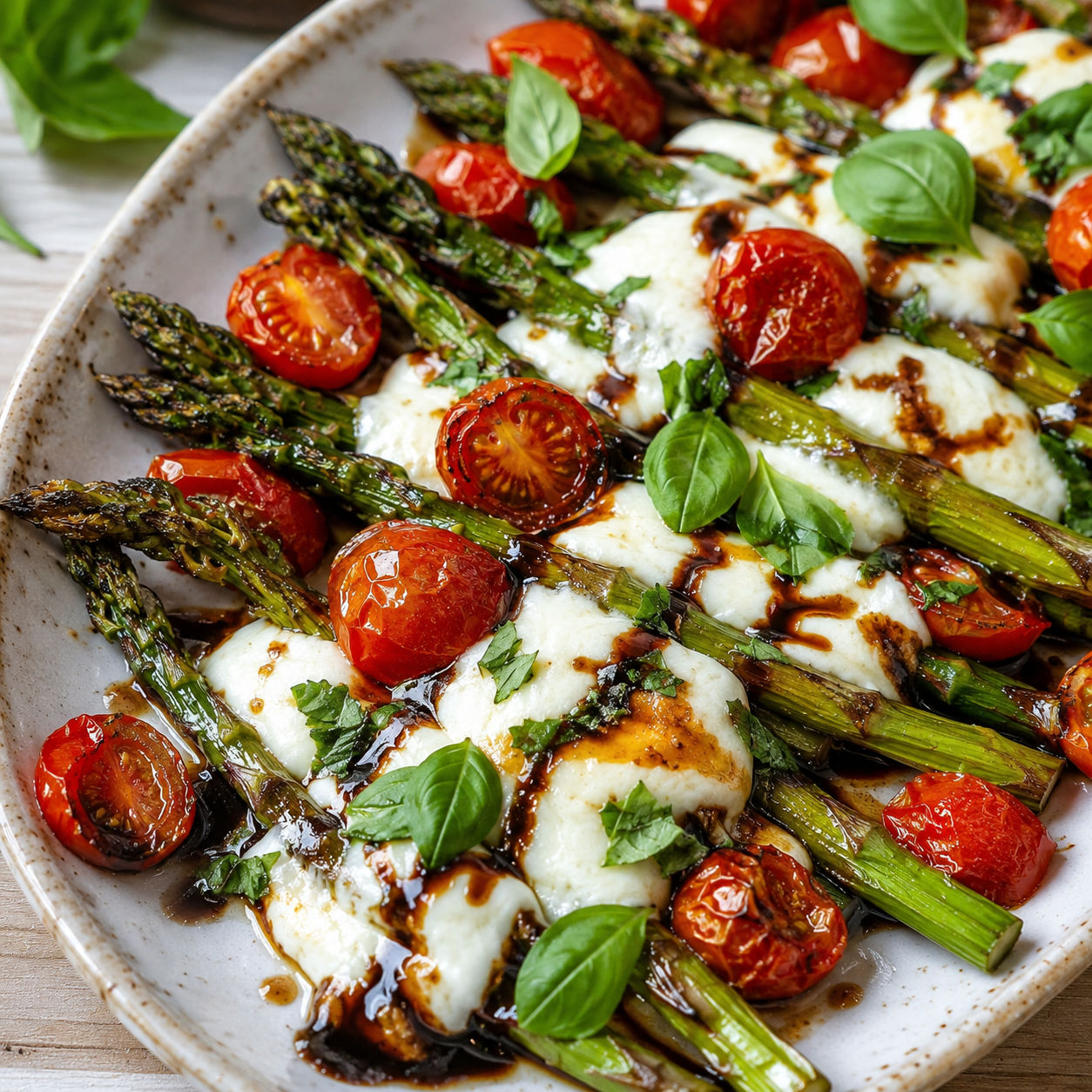
This is the side dish I pull out when I want something that looks fancy but requires almost no work. Roasted asparagus gets topped with bubbling mozzarella and sweet blistered tomatoes, then finished with basil and a thick balsamic glaze. It takes one sheet pan and about half an hour.
What goes on the pan
Quality matters when the ingredient list is this short. Look for firm, bright green asparagus with tight tips and cherry tomatoes that feel heavy for their size. Fresh mozzarella melts into creamy patches, while a drizzle of thick balsamic glaze at the end ties everything together.
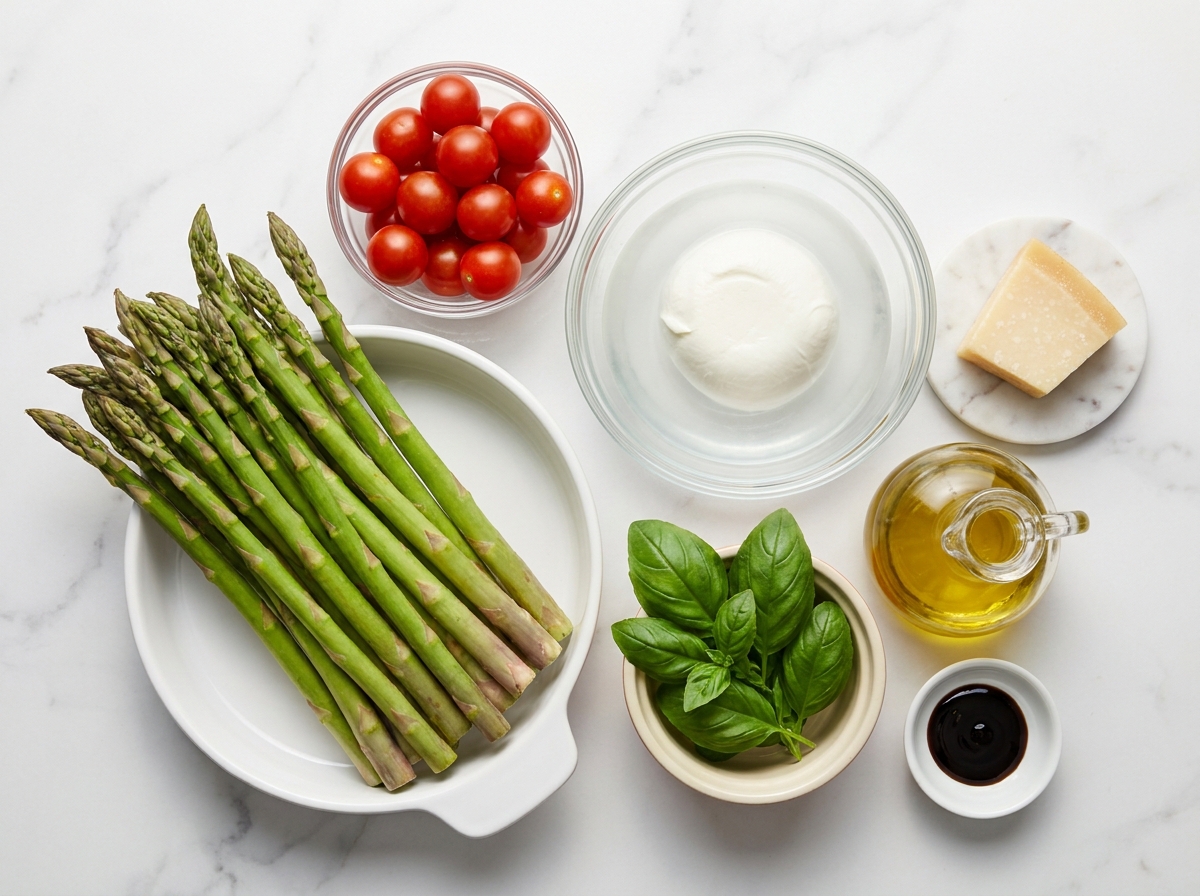
- Asparagus. The base of the dish. Roasting brings out a nutty sweetness and keeps the stalks tender but not limp.
- Cherry tomatoes. They soften and concentrate in the oven, adding little bursts of acidity that balance the rich cheese.
- Fresh mozzarella. It melts faster and tastes milder than blocks meant for pizza. Tear it into pieces so it tucks between the stalks.
- Parmesan. A light grating adds a salty, savory edge and helps the topping turn golden.
- Fresh basil. Added after roasting so it stays bright and fragrant.
- Balsamic glaze. The syrupy reduced vinegar adds sweet-tart depth without watering anything down.
How it comes together
- Prep and season. Preheat your oven to 425°F. Snap off the woody ends of the asparagus and halve the cherry tomatoes. Spread them on a large sheet pan, drizzle with olive oil, and season with salt and pepper. Toss until every piece is coated.
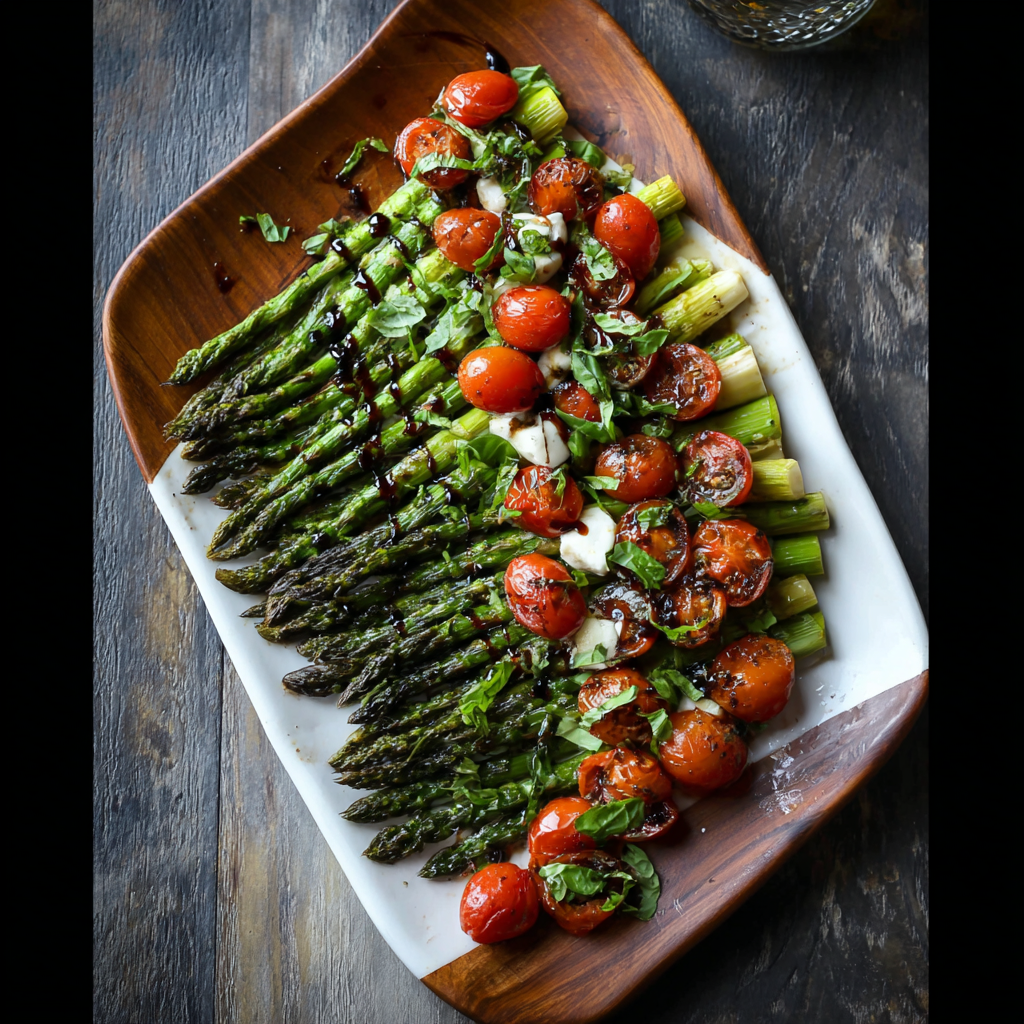
- Partial roast. Roast for 8 to 10 minutes. The asparagus should be bright green and just starting to soften. This step drives off extra moisture so the cheese can melt without turning everything soggy.
- Add the cheese. Scatter torn mozzarella and grated Parmesan over the hot vegetables. Return the pan to the oven.
- Melt and brown. Bake another 6 to 10 minutes until the cheese bubbles and turns lightly golden at the edges. Watch closely so it does not burn.
- Garnish and serve. Immediately shower the pan with torn basil and drizzle with balsamic glaze. Serve warm or at room temperature.
The pre-roast step
Adding cheese right at the start seems logical, but it traps steam and leaves you with wet asparagus. The partial roast gives the vegetables a head start and evaporates surface moisture. Once the cheese goes on, it melts directly onto hot stalks and tomatoes instead of swimming in released juices. If you enjoy easy oven sides, our Caprese Roasted Asparagus Bake uses a similar technique with a slightly different assembly.
Mozzarella choices
Fresh mozzarella packed in water melts into soft, creamy patches. Low-moisture shredded mozzarella gives you a more even, stretchy layer and browns faster. Both work, so use what you have. Just avoid buffalo mozzarella that is too wet, or blot it first so it does not flood the pan. For another cheesy vegetable idea, try our Roasted Potatoes with Baked Feta and Garlic.
Make it your own
Add a pinch of red pepper flakes with the salt for gentle heat. Swap the basil for fresh oregano or arugula. You can also add cooked Italian sausage or shredded rotisserie chicken on the pan for a full meal. A caprese twist on pasta is another way to use the same flavors, like our Fresh Caprese Pasta with Basil and Mozzarella.
What to serve with it
This side pairs with grilled chicken, seared salmon, or a simple risotto. It also works beautifully alongside Garlic Butter Asparagus Orzo with Parmesan and Lemon for a vegetable-heavy spread. The bright acidity from the tomatoes and balsamic cuts through rich mains.
Leftovers and reheating
Store cooled leftovers in an airtight container in the refrigerator for up to three days. Reheat on a sheet pan at 400°F for about 8 minutes until the cheese softens again. The microwave works in a pinch but will soften the asparagus more than the oven. The FDA offers general guidance on safe produce handling here.
FAQs
- Can I use frozen asparagus?
No, fresh is best here. Frozen asparagus releases too much water and turns mushy when roasted. If it is all you have, roast it straight from frozen and expect a softer texture.
- What if I do not have balsamic glaze?
Simmer half a cup of balsamic vinegar in a small saucepan over medium heat until it reduces by half and coats the back of a spoon, about 10 minutes. Let it cool slightly before drizzling.
- Can I make this ahead?
You can trim the asparagus, halve the tomatoes, and tear the mozzarella up to a day ahead. Store them separately in the refrigerator and assemble just before roasting.
- Is this gluten-free?
Yes. All the ingredients are naturally gluten-free, making this a safe side for celiac guests. Just double-check that your balsamic glaze does not contain added thickeners with gluten.
- How do I keep the asparagus crisp?
Do not overcrowd the pan. Spread the stalks in a single layer with a little space between them. Trapped steam leads to limp vegetables.
- Can I use a different cheese?
Yes. Fresh mozzarella is classic, but provolone or fontina melt beautifully. For a sharper finish, try a little crumbled feta after roasting instead of Parmesan.
- What main dishes pair well with this?
It works beside grilled steak, roasted chicken, or pan-seared fish. It is also great as part of a vegetarian spread with crusty bread and white beans.
