 Pin it
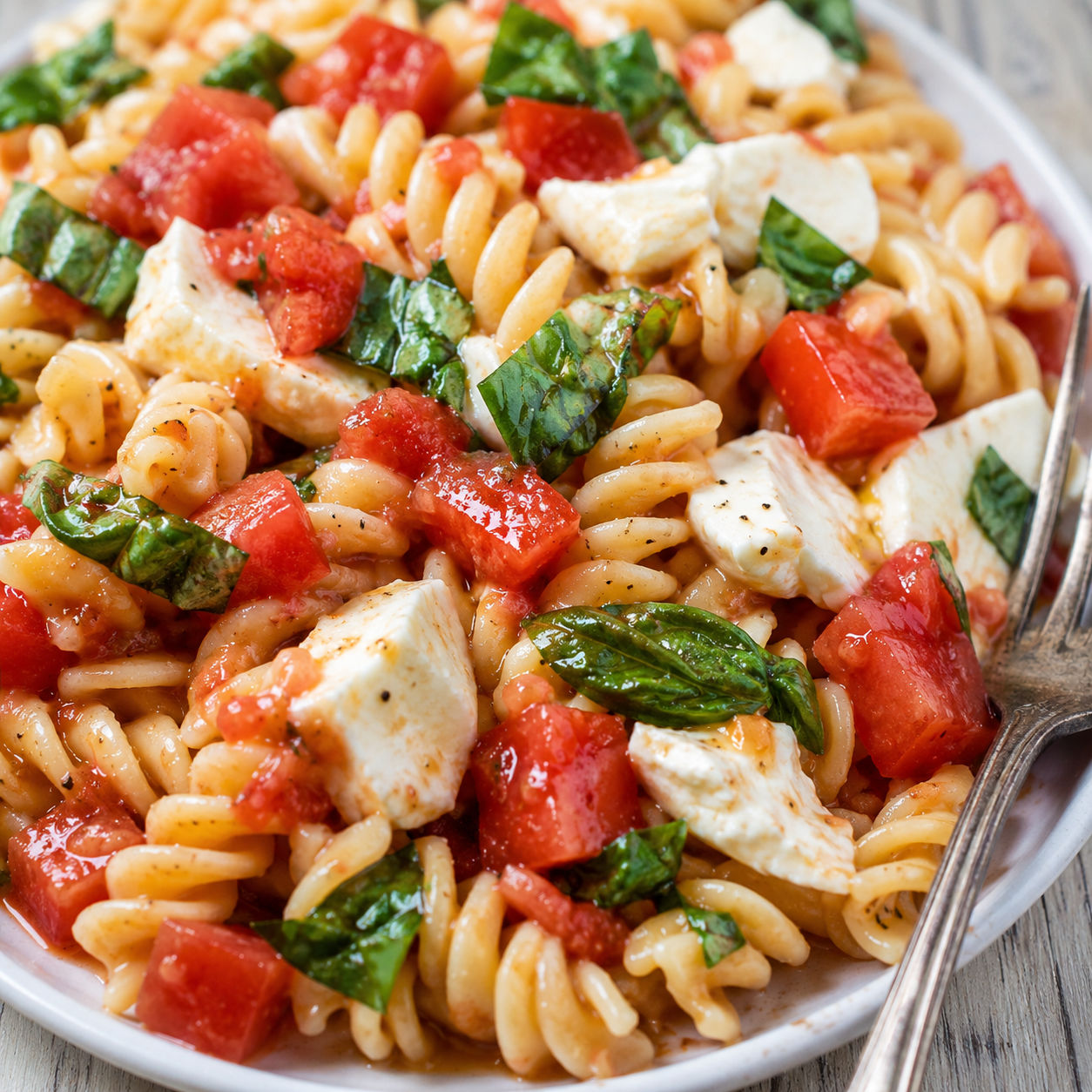
Some nights I want a dinner that feels like summer on a plate without turning on the stove beyond the pasta pot. This is that dish. Ripe tomatoes, soft mozzarella, and plenty of basil get tossed with hot pasta and good olive oil. The heat from the noodles does the rest.
It is fast enough for a Tuesday and nice enough for guests. The whole thing takes about twenty minutes if you chop while the water boils. And because the sauce never sees a pan, the tomatoes stay bright and the basil stays green.
What Goes Into the Bowl
This dish lives or dies by the quality of its few ingredients. Buy tomatoes that smell like something and mozzarella that comes in water, not the dry shredded kind.
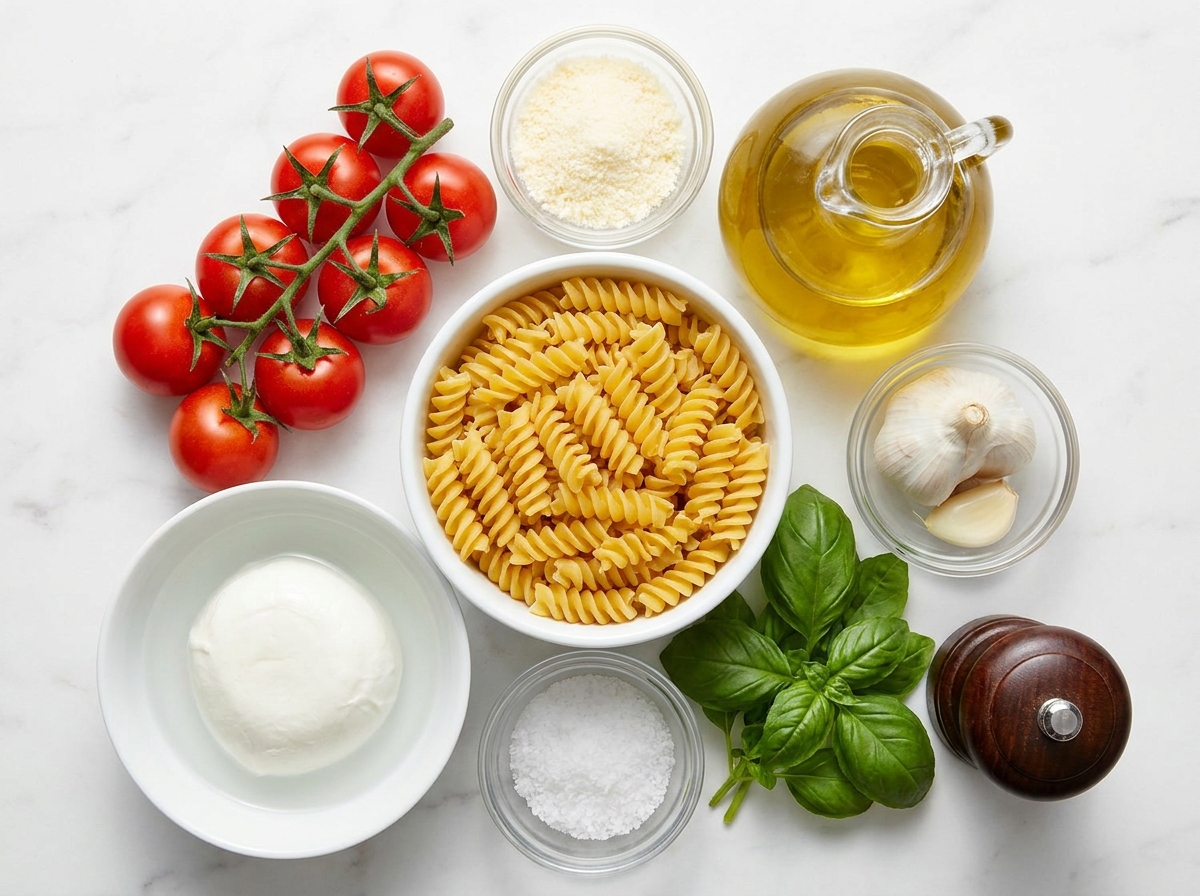
- Short pasta. Fusilli, penne, or cavatappi trap the juicy sauce in every ridge.
- Ripe tomatoes. Vine-ripened or heirloom varieties break down into a sweet, chunky dressing.
- Fresh mozzarella. The soft ball kind, torn into pieces so it melts in ragged, creamy edges.
- Fresh basil. Genovese basil gives the strongest peppery aroma; add it at the very end.
- Garlic. One small clove, finely grated so it disappears into the tomato juices.
- Extra-virgin olive oil. A fruity, peppery oil turns tomato water into a real sauce.
- Parmesan. Optional, but a small handful of finely grated cheese adds a savory backbone.
- Kosher salt and black pepper. Draw moisture from the tomatoes and season the whole bowl.
How the No-Cook Sauce Works
- Dice the tomatoes. Cut them into small, uneven cubes so they break down fast and create a chunky base.
- Build the raw sauce. Toss the tomatoes in a large bowl with olive oil, grated garlic, salt, and pepper. Let them sit while the pasta cooks so the salt draws out flavorful juices.
- Cook the pasta. Boil in well-salted water until just al dente. Scoop out one cup of starchy water right before you drain it.
- Toss and melt. Add the hot pasta directly to the tomato bowl along with the torn mozzarella. Stir vigorously. The heat from the noodles slightly warms the cheese and tomatoes into a light, creamy coating. Add pasta water a splash at a time if it looks dry.
- Finish with basil. Tear the basil leaves by hand and fold them in at the last second so they stay bright and fragrant. Top with parmesan if you like.
Why Hot Pasta Makes the Sauce
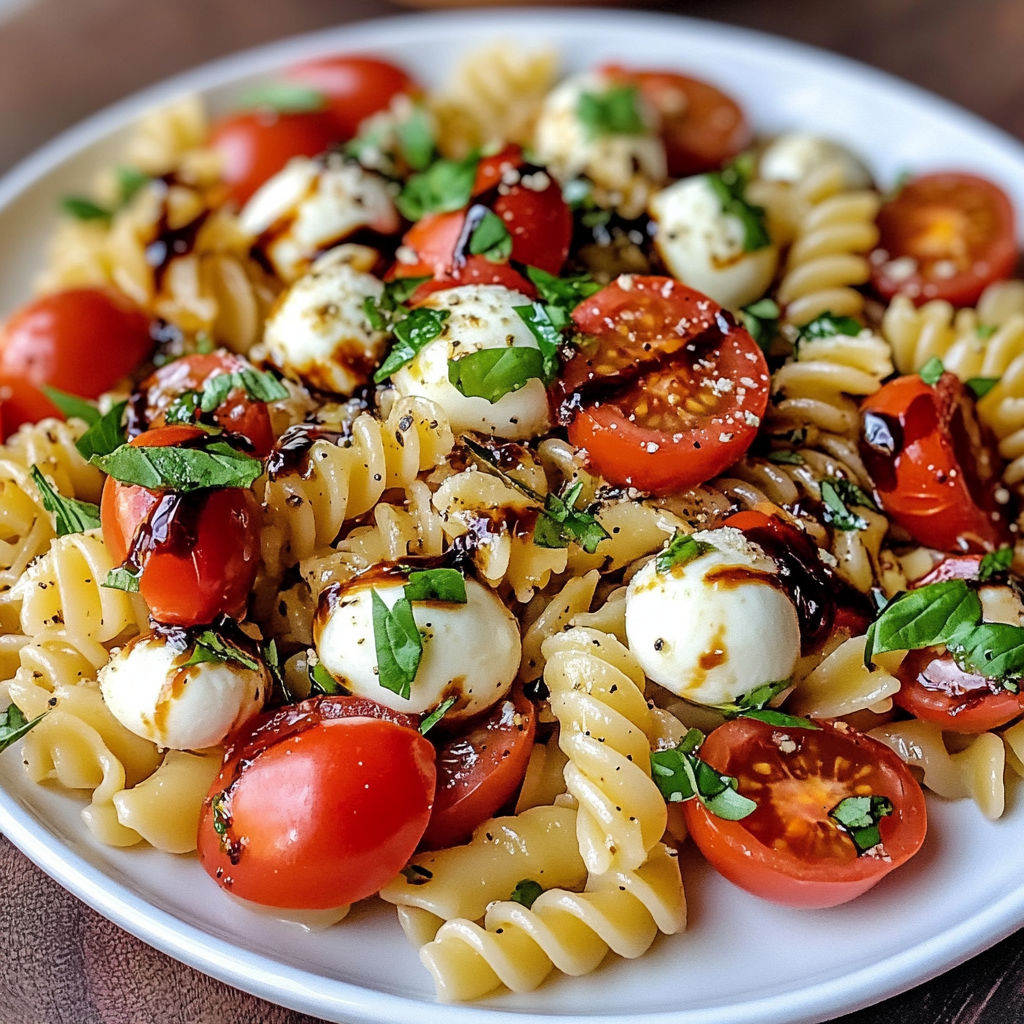
The secret is timing. When the steaming pasta hits the raw tomatoes and mozzarella, everything softens just enough. The cheese releases a little milk and the tomatoes collapse into a loose, glossy dressing. A splash of starchy pasta water helps emulsify the oil and tomato juice into something that clings instead of pooling. This same idea works in our caprese pasta salad, though that version is served cold.
Picking Tomatoes That Actually Taste Like Something
Summer beefsteaks or San Marzanos are ideal when they are in season. They should feel heavy and smell earthy at the stem. In winter, reach for small cherry or grape tomatoes. They are more reliable year-round and still burst with juice. Avoid pale, mealy tomatoes. They will give you a watery bowl with no flavor.
Smart Swaps and Quick Additions
If you want a richer dish, stir in a spoonful of pesto instead of plain basil. For protein, add shredded rotisserie chicken or white beans. A drizzle of thick balsamic glaze at the end adds sweetness and a little tang. You can also channel the same flavors into burrata bruschetta for an appetizer, or try a heartier tomato pasta like our zucchini pasta. If you prefer a creamier basil pasta, our pesto pasta is a good next step.
Storing and Serving Leftovers
This pasta is best eaten immediately while the mozzarella is still soft and the basil is green. If you must save some, refrigerate it in an airtight container for up to one day. The pasta will absorb the dressing as it sits, so revive it with a drizzle of olive oil and a fresh crack of pepper before serving cold or at room temperature. Do not freeze it. The raw tomatoes and fresh cheese will turn mushy and weep.
FAQs
- Can I use dried basil instead of fresh?
Fresh basil is essential here. Dried basil lacks the bright, peppery aroma and will taste dusty in a no-cook sauce. Tear the leaves just before adding them.
- What pasta shape works best?
Short, ridged shapes like fusilli, penne, or cavatappi trap the tomato juices best. Long pasta like spaghetti works but does not hold the chunky sauce as well.
- Can I make this ahead of time?
You can dice the tomatoes and tear the mozzarella up to a few hours ahead. Keep them separate and at room temperature. Cook and toss the pasta right before serving so the basil stays green and the cheese melts properly.
- Is this served hot or cold?
It is best warm or at room temperature right after tossing. Leftovers are tasty cold the next day, though the texture softens.
- Can I add protein to this pasta?
Yes. Shredded rotisserie chicken, canned white beans, or even grilled shrimp stirred in at the end make it a fuller meal without extra pans.
- How do I store leftovers?
Refrigerate in an airtight container for up to one day. The pasta will soak up the dressing, so add a little olive oil before serving again. Do not freeze. For general guidance on handling fresh produce safely, see the FDA food safety page.
- Where does caprese pasta come from?
It is a pasta interpretation of the classic Italian Caprese salad from the island of Capri, traditionally made with sliced tomatoes, mozzarella, basil, and olive oil. You can read more about the original salad on Wikipedia.
