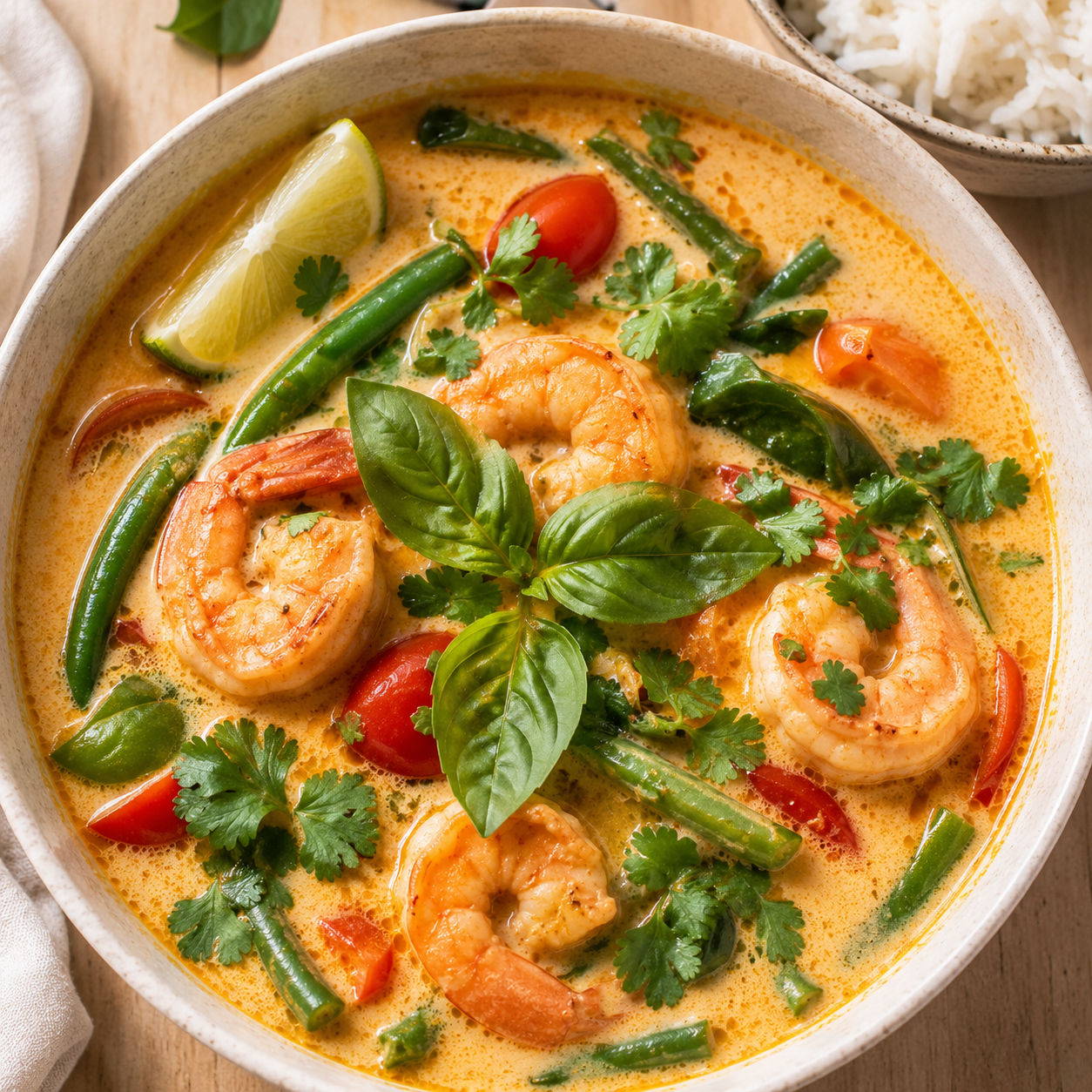
 Pin it
Easy Cambodian Coconut Shrimp Soup is the kind of bowl that feels soothing without tasting heavy. The broth is creamy from coconut milk, but it stays bright because lemongrass, lime, and fresh basil cut through the richness.
I like this version for weeknights because the paste does the heavy lifting. Once the aromatics hit the coconut cream, the kitchen smells warm, citrusy, and a little earthy from turmeric.
Serve it with jasmine rice if you want dinner to feel complete. Leave the rice out and it is still a full, brothy soup with sweet shrimp and crisp-tender vegetables.
The Coconut Broth Lineup
Choose full-fat coconut milk for the best texture. Shake the can if you want an even broth, or scoop the thick cream from the top first and fry the paste in it for deeper flavor.
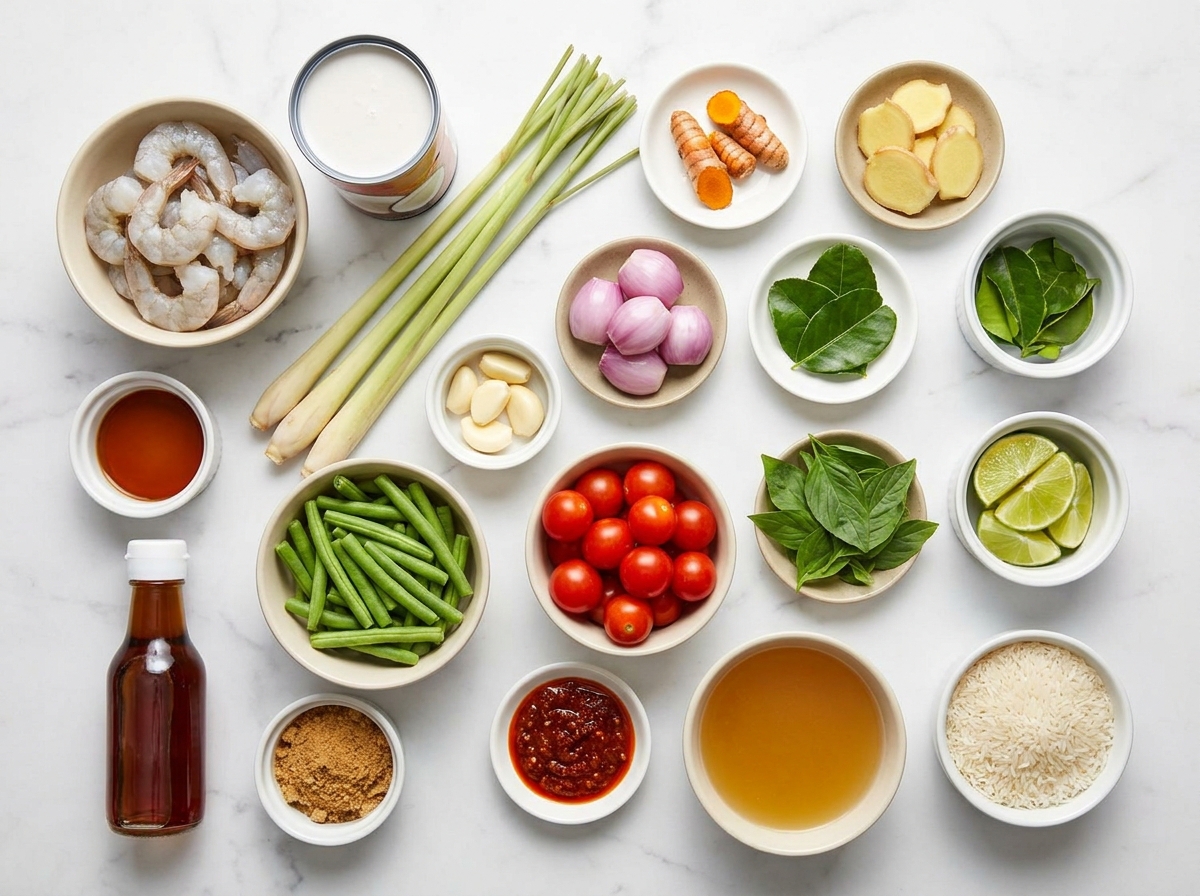
- Shrimp. Sweet, quick-cooking shrimp make the soup feel generous without a long simmer.
- Coconut milk. Full-fat coconut milk gives the broth body and a soft richness.
- Lemongrass. The tender inner stalk brings a clean citrus flavor that defines the soup.
- Turmeric. Fresh turmeric adds golden color and earthy warmth.
- Ginger or galangal. Either one adds heat and sharpness to the aromatic paste.
- Makrut lime leaves. These add floral lime perfume. Use lime zest if you cannot find them.
- Fish sauce. It seasons the broth with savory depth instead of plain saltiness.
- Green beans, tomatoes, and basil. The vegetables keep the soup fresh, and basil finishes it with a sweet herbal lift.
Build The Soup Gently
- Make the paste. Trim the lemongrass to the tender pale center, then blend it with turmeric, ginger, shallot, garlic, and makrut lime leaf until finely chopped.
- Cook the aromatics. Warm oil and the thick coconut cream in a pot, then stir in the paste for 2 minutes until it smells citrusy and rich.
- Simmer the broth. Add the remaining coconut milk, stock, fish sauce, brown sugar, and chile paste if using. Keep it at a gentle simmer for 5 minutes.
- Add the vegetables. Stir in green beans and simmer until barely tender, then add tomatoes for the last minute so they soften without collapsing.
- Cook the shrimp. Add shrimp and simmer gently for 2-3 minutes, just until pink and opaque.
- Finish bright. Turn off the heat, stir in lime juice and basil, then taste for fish sauce, sugar, or more lime.
Why The Paste Matters
The soup gets most of its flavor from the paste, not from a long simmer. Thinly slicing the lemongrass before blending helps it break down instead of leaving woody strands in the broth. If your blender struggles, add a spoonful of coconut milk to get it moving.
Khmer cooking uses aromatic pastes called kroeung in many soups and curries. A basic yellow kroeung often includes lemongrass, turmeric, galangal, garlic, and makrut lime leaf, as shown in this Cambodian cooking reference. This recipe keeps that idea simple for a home kitchen.
Keep The Shrimp Tender
Shrimp cook faster than the vegetables, so they go in last. The broth should be steaming and gently bubbling, not boiling hard. As soon as the shrimp curl and turn opaque, pull the pot from the heat.
The FDA's seafood guidance is a helpful reference for buying and serving shrimp safely, especially if you are thawing frozen seafood. You can read it in the FDA seafood-safety guide.
Easy Swaps That Fit
Galangal is lovely here, but ginger is easier to find and still tastes good. If makrut lime leaves are not available, use a wide strip of lime zest while the broth simmers, then remove it before serving. For a thicker bowl, add cooked rice noodles or serve the soup over jasmine rice.
If you like coconut soups, try the richer coconut curry pumpkin soup or the brighter Thai-style coconut lime fish soup next. Both use coconut milk in a different way.
Storage Without Rubbery Shrimp
Leftovers keep in an airtight container in the fridge for up to 2 days. Reheat over low heat until the broth is hot. Do not let it boil once the shrimp are already cooked.
For make-ahead cooking, stop before adding shrimp and basil. Chill the broth and vegetables, then reheat and cook the shrimp fresh. For another quick shrimp dinner, the shrimp fried rice is a good pantry option.
What To Serve With It
Steamed jasmine rice is the easiest pairing. Spoon the soup around the rice rather than drowning it, so every bite has creamy broth and a little texture. Rice vermicelli also works if you want a noodle soup feel.
Put lime wedges, cilantro, sliced chili, and extra basil on the table. If someone wants a creamier bowl, a spoonful of coconut cream stirred in at the end works nicely. For a similar weeknight coconut soup with poultry, try the Thai coconut chicken soup.
Summary
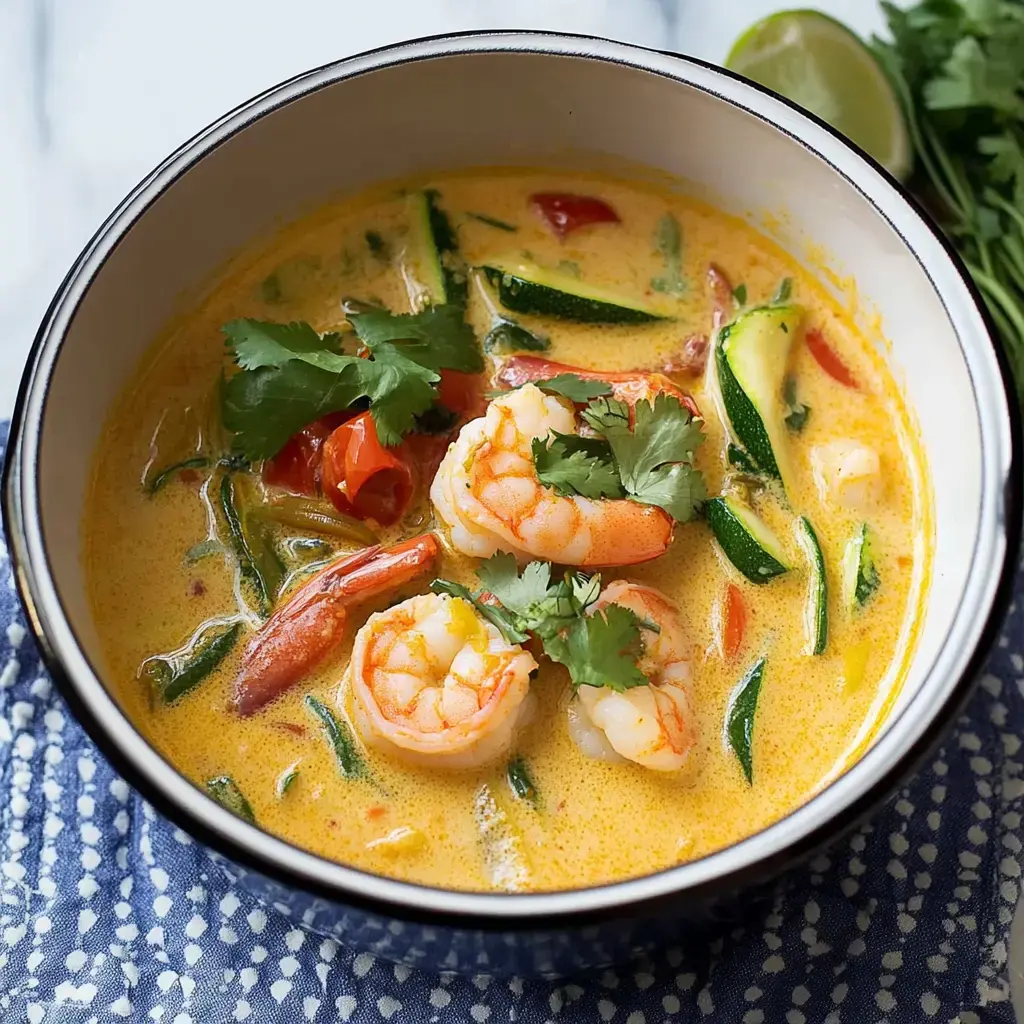
This Easy Cambodian Coconut Shrimp Soup is creamy, fragrant, and quick enough for a weeknight. The key is a fresh lemongrass paste, full-fat coconut milk, and adding the shrimp at the very end.
FAQs
- What makes this soup Cambodian?
The flavor is built around a Khmer-style aromatic paste with lemongrass, turmeric, ginger or galangal, garlic, shallot, and makrut lime leaf. Coconut milk, fish sauce, fresh herbs, and a sweet-sour balance are common in Cambodian soups and curries.
- Can I use frozen shrimp?
Yes. Thaw frozen shrimp in the refrigerator overnight or under cold running water, then pat them dry. Add them near the end and simmer only until pink and opaque.
- What can I substitute for lemongrass?
Fresh lemongrass gives the cleanest flavor. If you cannot find it, use 1 teaspoon lemon zest, 1 teaspoon lime zest, and a squeeze of lime at the end. The taste will be less herbal, but still bright.
- Can I make Cambodian coconut shrimp soup ahead?
You can make the broth and vegetables up to two days ahead. Add the shrimp only when reheating so they do not turn firm. Warm the soup gently and avoid a hard boil.
- Is this soup spicy?
This version is mild unless you add chile paste or fresh chilies. For more heat, stir in a small spoonful of sambal or sliced Thai chile with the aromatic paste.
- What should I serve with it?
Jasmine rice is the easiest choice because it soaks up the coconut broth. Rice noodles also work well. For a lighter meal, serve the soup with extra herbs, lime wedges, and sliced cucumber on the side.
References
Sources cited in this recipe.
- https://www.cambodiaacountryfullofcharm.com/khmer-cooking/recipes-of-cambodia/shrimp-soup-with-coconut-milk
- https://www.hslb.org/wp-content/uploads/Cambodian-American-Collection/History-and-Culture/Cambodian-Cooking/Kroeung-Cambodian-Cooking-with-Chef-T-All.pdf
- https://www.fda.gov/food/buy-store-serve-safe-food/selecting-and-serving-fresh-and-frozen-seafood-safely
