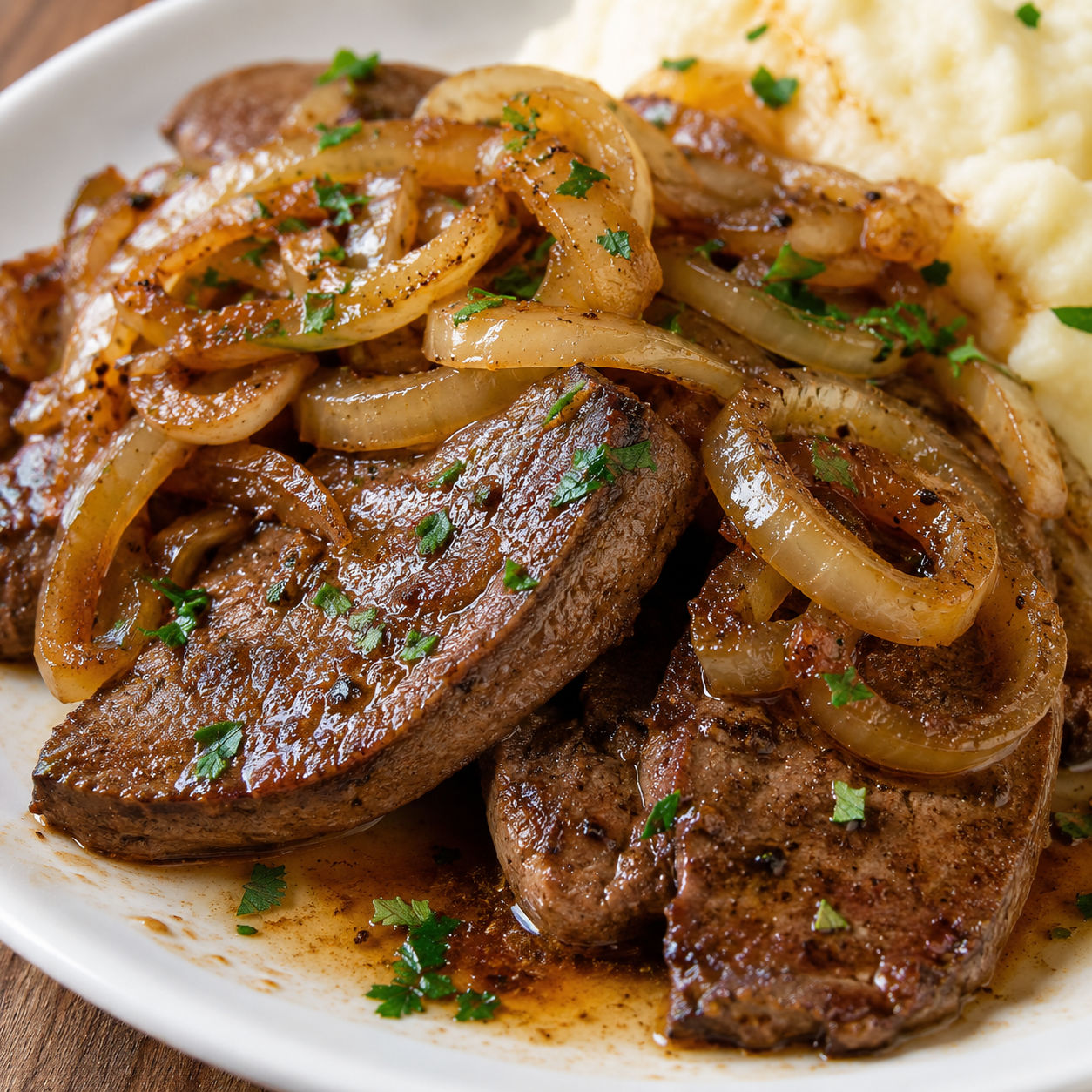
 Pin it
Classic Beef Liver with Sweet Onions is old-school comfort food, but it only works if you treat the liver gently. A short milk soak mellows the mineral edge, and slow-cooked onions bring the sweetness this dish needs.
The big mistake is cooking liver like steak. It is lean and delicate, so a few minutes per side is enough. When the edges brown and the center is still just a little pink, pull it from the pan.
Classic Beef Liver with Sweet Onions
Choose liver sliced 1/4 to 3/8 inch thick so it cooks quickly before it turns firm. Sweet onions matter here because they balance the deep flavor of the meat without needing much else.
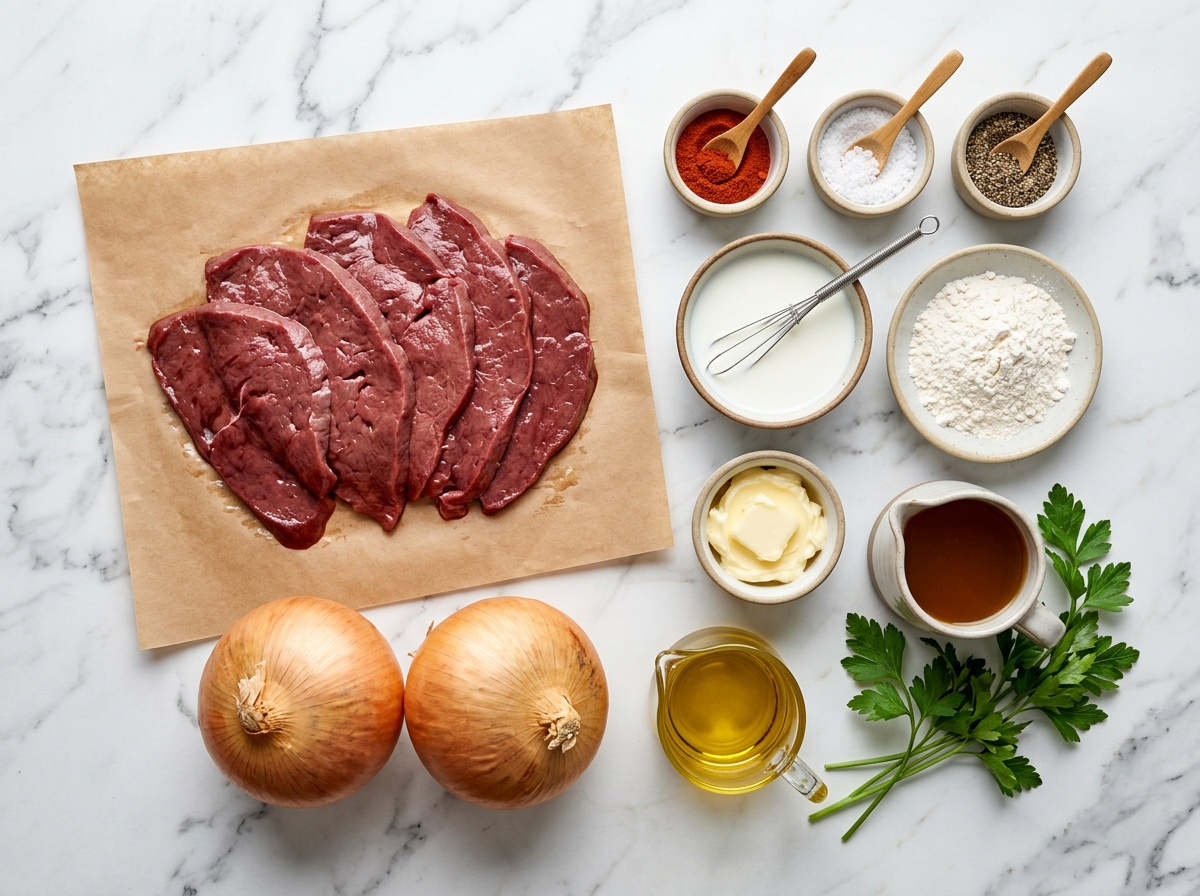
- Beef liver. The main ingredient, rich and lean, best cooked quickly while still tender inside.
- Milk. A simple soak that softens the strong mineral taste and helps the liver brown more evenly.
- Sweet onions. Vidalia or another mild onion cooks down soft and sweet beside the liver.
- All-purpose flour. A light coating gives the liver a thin crust and helps catch the pan juices.
- Butter and olive oil. The mix adds flavor while keeping the butter from scorching too fast.
- Beef broth. A small splash loosens the browned bits and glazes the onions.
- Parsley. A fresh finish that keeps the plate from tasting too heavy.
Skillet Steps That Matter
- Soak the liver. Rinse the slices, cover them with milk, and chill for 30 minutes. Pat them dry very well before seasoning.
- Cook the onions. Melt butter with a little oil and cook the sliced onions slowly until soft and golden. Move them to a plate once they taste sweet.
- Dredge lightly. Mix flour with salt, pepper, and paprika. Coat the liver on both sides, then tap off the extra so the crust stays thin.
- Sear fast. Cook the liver in the hot skillet for 2-3 minutes per side. Work in batches so the pan stays hot.
- Glaze and serve. Return the onions with a splash of broth, scrape up the browned bits, and spoon everything over the liver right away.
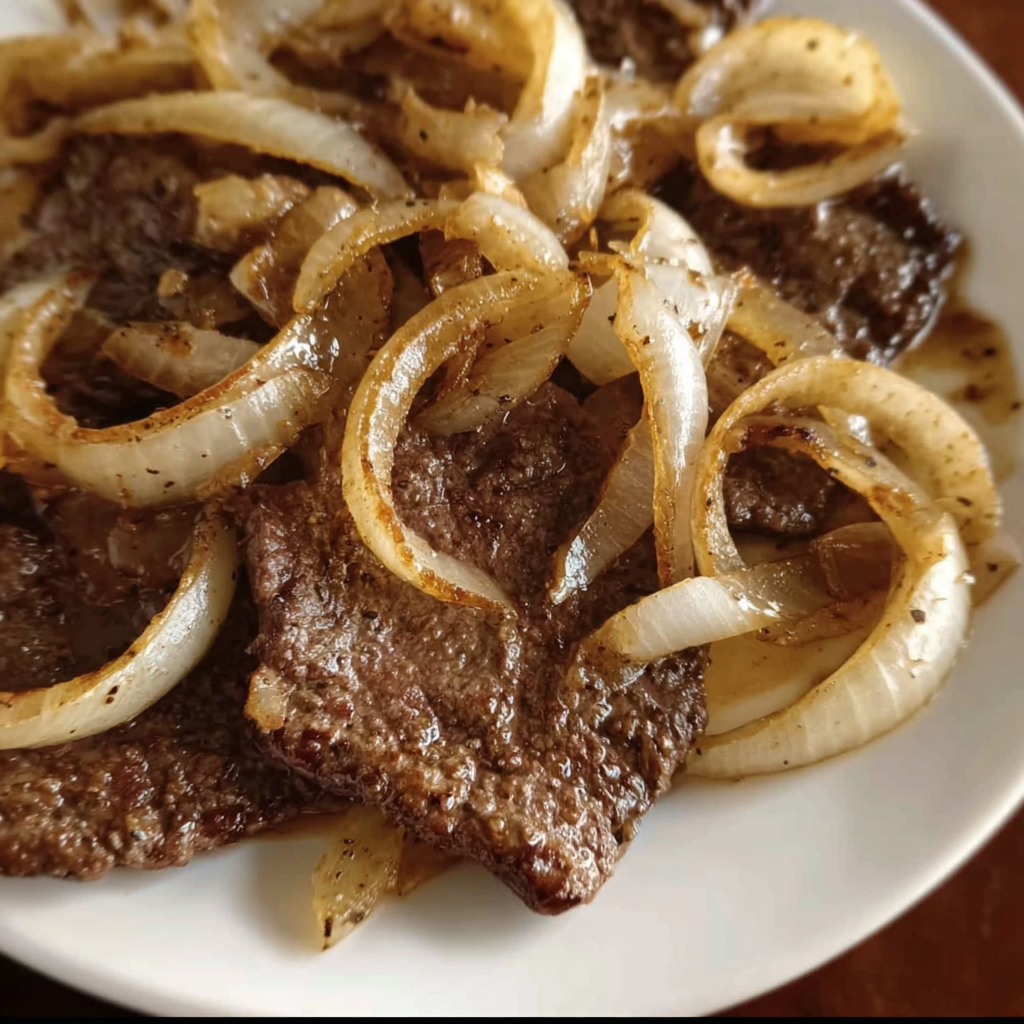
Keep The Liver Tender
Beef liver gets a bad reputation because it is often overcooked. It should not sit in the pan until it feels stiff. The slices should brown quickly, then come out while the middle still has a little give. If your skillet is crowded, the liver steams and turns gray, so cook in two batches if needed.
The milk soak is simple, but drying the liver after soaking is just as important. Wet liver will not brown. Pat each piece with paper towels before it touches the flour. For another take on this same comfort-food pairing, try the site's Beef Liver and Onions.
Why Sweet Onions Work
Sweet onions do more than sit on top. They soften the flavor of the liver and give the pan juices body. Cook them before the liver, not after, because they need time to relax and turn golden. A quick onion will taste sharp. A slow onion will taste round and sweet.
If you like onion-heavy beef dinners, the Oyster Sauce Beef and Onion Stir-Fry goes in a faster, saucier direction. For this skillet, keep the onions simple. Butter, patience, and a small splash of broth at the end are enough.
Smart Swaps And Additions
Calf liver works beautifully here and tastes milder. Bacon fat can replace the olive oil if you want a deeper diner-style flavor. For a sharper finish, add a teaspoon of balsamic vinegar to the broth when you glaze the onions. Horseradish on the side is also classic, and the version from Beef It's What's For Dinner uses that bright contrast.
To make the dish gluten-free, use rice flour instead of wheat flour. To make it dairy-free, soak the liver in cold water with a spoonful of lemon juice and cook with oil instead of butter. The flavor changes, but the method still works.
Safe Cooking Without Drying
Liver is thin, so it can move from tender to chalky in a minute. A thermometer is useful if you are unsure, especially when cooking for someone who needs extra caution. The USDA safe temperature chart is the best place to check current guidance.
For everyday cooking, watch the texture. The liver should brown at the edges and release easily from the skillet. If it sticks hard, give it another 30 seconds before turning. If it curls tightly and feels springy, it has probably gone too far.
Serving And Leftovers
Serve this right away with mashed potatoes, buttered rice, or a simple green vegetable. The pan onions are rich enough to act like a sauce. If you want another cozy beef plate for the same table, Classic Beef Tips and Gravy is a good match for mashed potatoes too.
Leftovers keep, but they need gentle heat. Warm them in a covered skillet with a splash of broth. Avoid blasting them in the microwave. It tightens the meat and brings back the stronger liver flavor.

FAQs
- Do I have to soak beef liver in milk?
You do not have to, but I recommend it for beef liver. Milk softens the sharp mineral taste and helps the slices cook up a little more tender. Even 30 minutes makes a difference.
- Can I use calf liver instead of beef liver?
Yes. Calf liver is usually milder and more tender than mature beef liver. Cook it the same way, but start checking it a minute earlier because thinner slices can dry out fast.
- How do I know when beef liver is done?
The outside should be browned and the inside should still look faintly pink. For food safety, use a thermometer when needed and follow USDA temperature guidance. Do not leave it in the pan once it firms all the way through.
- Can I make liver and onions gluten-free?
Yes. Replace the all-purpose flour with fine rice flour or a 1-to-1 gluten-free flour blend. You can also skip the flour, but the liver will have less crust and the pan juices will be thinner.
- How should I store leftovers?
Refrigerate leftovers in an airtight container for up to 3 days. Reheat gently in a covered skillet with a spoonful of broth or water. High heat makes leftover liver tough.
- What should I serve with beef liver and onions?
Mashed potatoes are the classic choice because they soften the rich flavor of the liver. Buttered noodles, rice, green beans, or a crisp salad also work well.
